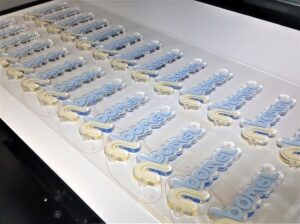
Peak season can create major opportunities for retailers, wholesalers, distributors, and brands. Holiday campaigns, promotional events, product launches, and seasonal sales can all increase demand for custom merchandise.
However, a successful peak-season order requires more than placing a bulk order early. You need to forecast demand, confirm product specifications, approve samples, coordinate production, and leave enough time for shipping and receiving.
If you source custom promotional gifts or branded merchandise from a supplier in China, early planning can help you reduce avoidable delays and manage inventory more effectively.
In this guide, we explain how to prepare a custom merchandise order for peak season, from demand forecasting to final delivery.
1. Define Your Peak-Season Sales Calendar
Start by identifying the date when you need your products ready for sale or distribution.
Your deadline may depend on a holiday, retail promotion, trade show, corporate event, product launch, or seasonal campaign.
Work backward from that date and identify the major milestones:
- Final product and artwork approval
- Sample development and approval
- Material preparation
- Bulk production
- Quality inspection
- Packaging and shipment preparation
- International transportation and customs clearance
- Warehouse receiving and distribution
Do not treat the expected delivery date as your production deadline. Your products may need to arrive at your warehouse well before the campaign starts.
For example, if you plan to sell custom merchandise before a holiday, you need time to receive the goods, check the shipment, prepare your listings, and distribute stock to your sales channels.
Practical tip: Build your schedule around the date you need the products available, not simply the date the factory expects to finish production.
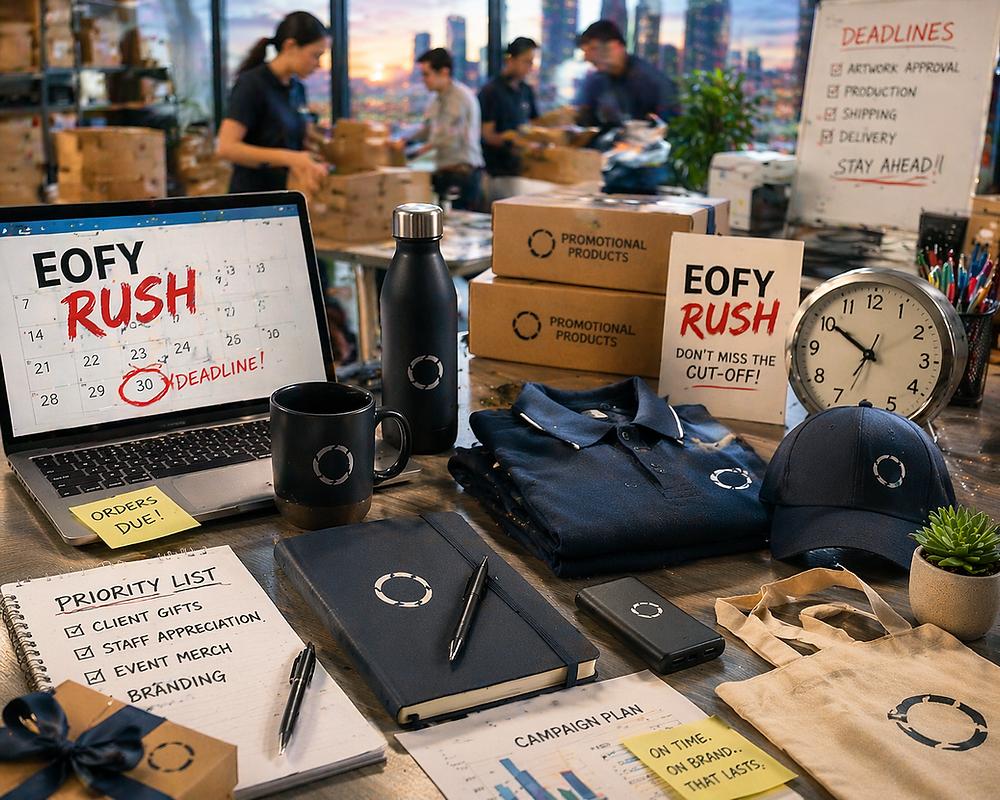
2. Forecast Demand Before You Place a Bulk Order
Ordering too little can lead to stockouts during peak season. Ordering too much can tie up cash and leave you with unsold inventory after the campaign ends.
Use available sales data and campaign plans to estimate demand.
Consider these factors:
- Sales from previous peak seasons
- Current inventory and items already in transit
- Confirmed customer orders
- Planned promotions and marketing campaigns
- Expected sales growth
- Product popularity and seasonal relevance
- The time you need to replenish stock
If you launch a new product without historical sales data, avoid relying on assumptions alone. Consider a smaller test order, customer pre-orders, or other demand signals before committing to a larger quantity.
Calculate Your Initial Order Quantity
You can use a simple planning formula:
Required order quantity = Forecast demand + Target ending inventory − Available inventory − Confirmed incoming stock
For example, assume your forecast demand reaches 5,000 units. You want 500 units left as safety stock, and you already have 800 units available plus 700 units arriving before the selling period.
Your estimated order quantity would be:
5,000 + 500 − 800 − 700 = 4,000 units
This example illustrates the calculation only. Your actual quantity should reflect forecast accuracy, product shelf life, budget, MOQ, and replenishment lead time.
3. Choose the Right Products for Peak Season
Not every product suits every seasonal campaign. Choose merchandise that matches your customers, budget, sales channels, and campaign goals.
For example, your product mix might include:
- Custom acrylic standees and keychains for licensed or brand merchandise collections
- Badges, lanyards, and wristbands for events and promotional campaigns
- Tote bags, caps, and T-shirts for brand marketing
- Custom gift sets for corporate gifting and customer appreciation
- Seasonal accessories for holiday promotions
When you plan multiple products, consider their roles within the collection. A core product may generate most of your sales, while lower-cost accessories can support bundles or add-on purchases.
Avoid adding too many new SKUs just before peak season. Every additional design, material, package, or product variation may require more approvals and production coordination.
A focused product range can simplify forecasting, sampling, quality checks, and inventory management.
4. Confirm Product Specifications Before Requesting a Quote
Incomplete specifications can create delays, unexpected costs, and disagreements during production.
Before you request wholesale pricing, prepare a clear product brief.
Include the following information:
- Product type and intended use
- Dimensions, materials, and thickness where relevant
- Artwork files and color references
- Printing, cutting, finishing, or assembly requirements
- Individual packaging and retail presentation
- Carton and labeling requirements
- Estimated order quantity
- Destination country and required delivery date
For custom acrylic merchandise, for example, you may need to confirm the acrylic thickness, artwork layout, white ink requirements, cutting details, base or attachment design, and protective packaging.
If you need several products in one bulk order, prepare a separate specification for each SKU. This helps your manufacturer quote each item accurately and identify potential production issues early.
Practical tip: Keep one approved version of each specification and artwork file. Clearly label revisions so your team and supplier can identify the correct version.
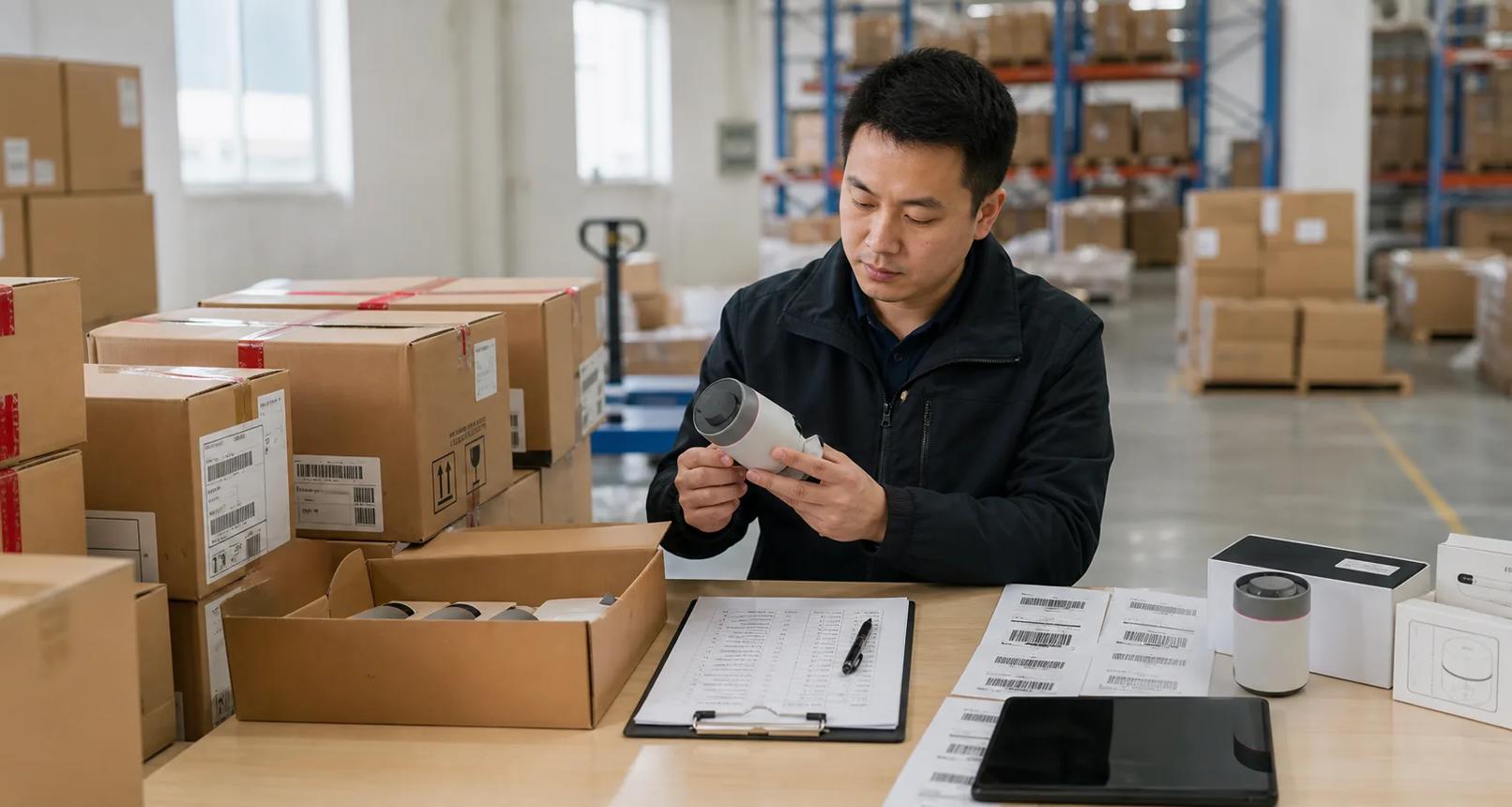
5. Request Samples and Approve Them Early
Sample approval is one of the most important milestones in custom manufacturing.
A sample gives you an opportunity to evaluate the product before you commit to mass production. It can also reveal problems with dimensions, colors, materials, printing, assembly, or packaging.
During sample review, check:
- Product dimensions and overall appearance
- Material quality and surface finish
- Artwork placement and color consistency
- Printing details and assembly
- Product function and durability
- Packaging fit and protection
Record any changes clearly. If you request a revision, confirm the updated sample before production whenever the change affects the agreed specifications.
Do not leave sample approval until the last minute. Your manufacturer may need additional time to revise artwork, adjust production methods, source materials, or prepare another sample.
If you manage a large collection, prioritize products with complex designs, unfamiliar materials, or multiple assembly steps.
6. Confirm MOQ, Wholesale Pricing, and Production Capacity
Peak-season planning requires a realistic understanding of your supplier’s capabilities.
Before you place an order, discuss three important factors.
Minimum Order Quantity (MOQ)
Ask for the MOQ for each product and design. Different materials and production processes may have different minimum quantities.
If you need a lower MOQ for a new product, discuss possible options with your manufacturer. The supplier may need to consider material costs, setup requirements, production efficiency, and available production methods.
Wholesale Pricing
Request a quotation based on your confirmed specifications and quantities.
Check whether the price includes individual packaging, accessories, printing, assembly, and other required services. Confirm any setup charges, sample fees, and additional costs before you approve the order.
If you order multiple products, request a clear breakdown by SKU so you can manage your budget and compare costs accurately.
Production Capacity
Ask whether the manufacturer can accommodate your order during your intended production period.
Discuss the planned production start date, estimated completion date, material availability, and any capacity constraints that may affect your schedule.
Do not rely on general claims about factory size or production capacity alone. Confirm that the supplier can meet your specific quantity, specifications, and deadline.
7. Build a Realistic Production and Shipping Timeline
Your production timeline should include more than the time required to manufacture the goods.
A complete schedule may include:
- Artwork and specification confirmation
- Sample development and approval
- Material sourcing and preparation
- Bulk production
- Quality inspection and corrections, if needed
- Packaging and shipment preparation
- International freight and customs clearance
- Warehouse receiving and distribution
Ask your supplier to provide estimated durations for the relevant stages. Then work backward from your required arrival date.
Also, clarify which activities can run in parallel and which must wait for approval. For example, the factory may be able to prepare some materials while you finalize other details, but it should not proceed in a way that creates avoidable waste or specification errors.
International shipping schedules can change, particularly during busy periods. Leave a reasonable contingency window based on your shipping method, destination, and risk tolerance.
Important: Your supplier should confirm the production schedule against the actual order, rather than promise a standard lead time that may not fit your project.
8. Establish Quality Control Before Mass Production
Peak-season pressure should not lead you to skip quality checks.
Before production starts, agree on measurable acceptance criteria and the process your supplier will use to verify them.
Before Production
- Approve the final sample and product specifications.
- Confirm materials, dimensions, colors, printing, and packaging.
- Document any critical quality requirements.
During Production
- Check important production stages based on product risks.
- Monitor recurring defects or deviations.
- Confirm any proposed changes before implementation.
Before Shipment
- Inspect finished products against the approved sample and specifications.
- Verify quantities, packaging, labels, and carton information.
- Document any defects and agree on corrective actions.
For large or complex orders, discuss inspection timing with your supplier before production begins. If you plan to use a third-party inspection service, include the arrangements in your schedule.
A clear quality control plan helps your team identify issues earlier, when corrective action may be easier to manage.
9. Plan Packaging, Cartons, and Shipping Early
Packaging affects product protection, warehouse handling, retail presentation, and shipping costs.
If you need custom retail boxes, inserts, labels, barcodes, or gift sets, include those requirements in the initial product brief.
Confirm:
- Individual packaging specifications
- Packaging artwork and approval deadlines
- Carton dimensions and packing quantities
- Product protection during transportation
- Shipping marks and labeling
- Palletization requirements, if applicable
- Shipping method and destination details
For a multi-product gift set, check that every component fits correctly inside the packaging. You should also confirm that the packaging protects products during transit and meets your retail or distribution requirements.
Do not wait until production finishes to discuss carton sizes or shipping arrangements. Late packaging changes can create extra work and affect the dispatch schedule.
10. Prepare a Backup Plan for Delays
Even a carefully planned order can encounter problems. Materials may arrive late, samples may need revisions, production may take longer than expected, or transportation schedules may change.
Identify your highest-risk items before the order starts.
You can reduce risk by:
- Prioritizing critical SKUs
- Approving samples and artwork early
- Confirming material availability
- Setting milestone dates with your supplier
- Tracking production progress
- Keeping reasonable inventory buffers
- Evaluating alternative shipping options where practical
- Agreeing on an escalation process for urgent issues
If you manage several products, consider whether a delay in one SKU would affect the entire campaign. You may be able to prioritize essential products or plan separate shipments when the cost and logistics make sense.
Discuss these options with your supplier before a problem occurs. Last-minute changes often create additional cost and coordination work.
11. Keep Communication Clear During Peak Season
A successful bulk order depends on clear communication between your purchasing team, manufacturer, shipping partners, and warehouse.
Agree on one main contact for each party and establish a practical update schedule.
Your order tracker should include:
- Product name and SKU
- Order quantity
- Approved specification and artwork version
- Sample approval status
- Production status
- Quality inspection status
- Packaging status
- Planned dispatch date
- Estimated arrival date
- Outstanding issues and responsible person
For multiple SKUs, ask your supplier to report progress by product rather than giving only one general update for the entire order.
Keep important approvals and changes in writing. This helps prevent confusion when several people manage the same project.
12. Use This Peak-Season Order Checklist
Before you confirm your custom merchandise order, make sure you can answer the following questions.
Product planning
- Have you defined the campaign and required arrival date?
- Have you forecast demand and checked current inventory?
- Have you selected the products and quantities for each SKU?
Supplier and quotation
- Have you confirmed MOQ and wholesale pricing?
- Has the supplier reviewed your specifications?
- Have you checked production capacity and material availability?
Samples and production
- Have you approved the final samples and artwork?
- Have you agreed on quality standards?
- Have you confirmed the production schedule and key milestones?
Shipping and risk
- Have you approved packaging and carton requirements?
- Have you planned freight, customs, and warehouse receiving?
- Have you allowed time for unexpected delays?
- Do you know whom to contact if the schedule changes?
If you cannot answer several of these questions, resolve the gaps before committing to a tight peak-season deadline.
13. Work With a Custom Merchandise Supplier That Plans Ahead
For B2B buyers, a reliable supplier does more than quote a unit price. The supplier should understand your specifications, order quantities, production requirements, quality expectations, and delivery deadline.
At BOCE GIFTS, we support business customers looking for custom promotional gifts and branded merchandise. Our product range includes custom acrylic standees, keychains, badges, and other promotional products.
If you are preparing for a seasonal campaign, a retail launch, or a large corporate gifting program, share your product ideas and estimated quantities early. We can discuss your OEM/ODM requirements, packaging needs, target MOQ, wholesale pricing, and production schedule based on your project.
Planning ahead gives both your team and your supplier more time to confirm details, identify risks, and coordinate the order.
Preparing a peak-season bulk order?
Contact BOCE GIFTS with your product specifications, estimated quantity, destination, and required delivery date. Let’s discuss a practical plan for your next custom merchandise order.
Frequently Asked Questions
When should I place a custom merchandise order for peak season?
Start planning as soon as you know your campaign dates and product requirements. Work backward from your required arrival date and allow time for specifications, samples, production, inspection, shipping, and unexpected delays. The exact timing depends on product complexity, quantity, and destination.
How can I reduce peak-season production delays?
Confirm specifications early, approve samples promptly, check material availability, agree on production milestones, and keep regular communication with your supplier. Avoid unnecessary changes after you approve the final sample.
Should I order extra inventory for peak season?
Your safety stock should reflect forecast uncertainty, current inventory, replenishment lead time, budget, and the risk of stockouts. Use historical sales and confirmed orders where available rather than choosing an arbitrary extra percentage.
Can I combine several custom products into one bulk order?
Yes, when your supplier can coordinate the relevant products and production requirements. Prepare separate specifications for each SKU and confirm whether different products require separate MOQs, sample approvals, or production schedules.
What information does a manufacturer need to quote a peak-season order?
Provide product images or artwork, dimensions, materials, printing requirements, packaging details, estimated quantities, destination country, and your required delivery date. Clear specifications help the manufacturer evaluate cost and production feasibility.
What should I do if my order may arrive late?
Contact your supplier as soon as you identify a risk. Confirm the affected SKUs, remaining production steps, revised schedule, and available options. Depending on the situation, you may consider prioritizing essential products or arranging separate shipments.
How can I maintain product quality when ordering in peak season?
Approve a reference sample, define measurable specifications, agree on inspection stages, and check finished products before shipment. Keep written records of approvals and changes so your supplier can follow the correct requirements.
Final Thoughts
Preparing a custom merchandise order for peak season requires coordinated planning across demand forecasting, product development, production, quality control, packaging, and shipping.
When you start early, confirm specifications, communicate clearly with your supplier, and build a realistic schedule, you give your business more control over cost, quality, and delivery risk.
For retailers, wholesalers, and brands, these steps can help you prepare for seasonal demand and build a stronger foundation for future repeat orders.