
When you source promotional gifts, custom merchandise, or branded products from China, choosing the right supplier can affect your costs, product quality, lead time, and future growth.
You may work directly with a manufacturer or purchase through a trading company. Both options can support your business, but they offer different advantages.
A factory direct supplier may give you closer access to production, technical communication, and custom manufacturing. A trading company may help you source products from different factories and coordinate a wider range of suppliers.
So, which option fits your business?
In this guide, we compare factory direct suppliers and trading companies across pricing, MOQ, customization, production capacity, quality control, communication, and repeat orders. You can use these factors to choose a wholesale partner that matches your business goals.
1. What Is a Factory Direct Supplier?
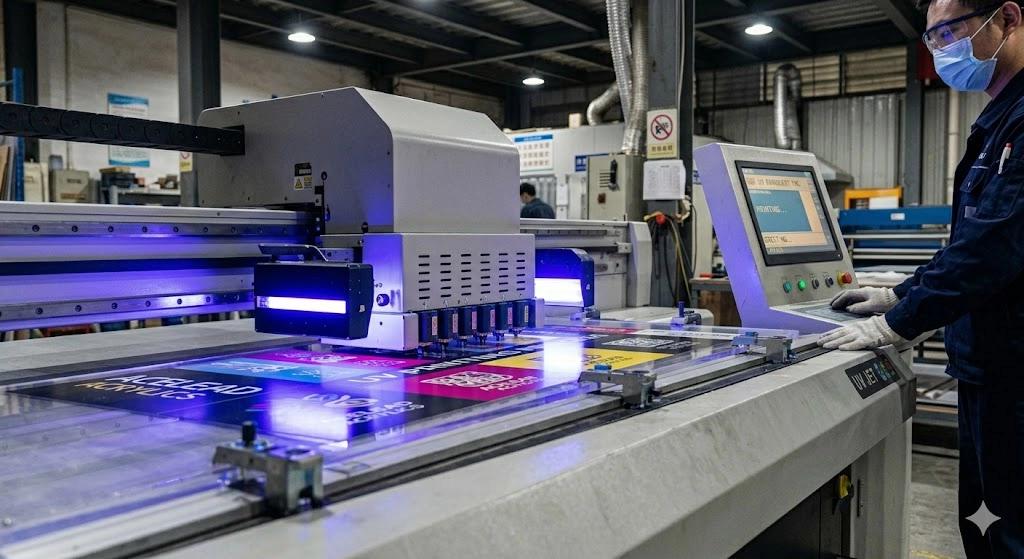
A factory direct supplier sells products from its own manufacturing operation or manages production through facilities it directly operates. You communicate more closely with the team responsible for manufacturing your products.
For custom promotional gifts and branded merchandise, a factory direct manufacturer may support services such as:
- Custom product development and manufacturing
- OEM and ODM services
- Material and production process recommendations
- Sample development and approval
- Production scheduling
- Quality inspections during manufacturing
- Packaging customization
- Repeat orders based on approved specifications
For example, if you want to develop custom acrylic standees, keychains, badges, or promotional gift sets, a capable manufacturer can help you review your artwork, material choices, product structure, printing requirements, and packaging before mass production.
This direct technical communication can help you identify production issues earlier and make informed decisions.
However, not every factory offers the same services. Before you place a bulk order, check the manufacturer’s actual production capabilities, product experience, quality standards, and order management process.
2. What Is a Trading Company?
A trading company sources products from manufacturers and sells them to customers. Some trading companies focus on specific product categories, while others offer products from multiple industries.
A reliable trading company can provide valuable services, including:
- Sourcing products from multiple manufacturers
- Coordinating different product categories
- Managing communication and order documentation
- Consolidating products for shipment
- Helping buyers who do not have established supplier networks
- Providing language and export coordination support
Suppose your business needs promotional pens, umbrellas, tote bags, acrylic keychains, and employee gifts in one order. A trading company with a strong supplier network may coordinate these categories for you.
The key question is whether the trading company can manage your requirements efficiently and maintain consistent product quality across suppliers.
You should also clarify which factory will manufacture each item, who handles quality checks, and how the supplier manages product changes or production delays.
3. Factory Direct vs. Trading Company: Key Differences

The best choice depends on your order requirements rather than the supplier’s label alone.
| Factor | Factory Direct Supplier | Trading Company |
|---|---|---|
| Production access | Usually offers closer access to manufacturing teams | Coordinates with external manufacturers |
| Wholesale pricing | May reduce intermediary costs, depending on the order | May include a service margin for sourcing and coordination |
| Custom manufacturing | Can offer direct technical input when the factory has the right capabilities | Can coordinate customization through its factory network |
| MOQ | Depends on materials, processes, setup costs, and factory policy | May negotiate with different factories or combine sourcing options |
| Production capacity | Can explain the capacity of its own production lines and equipment | Can coordinate capacity across its supplier network |
| Lead time | Can communicate directly with production planners | Must coordinate schedules with the relevant factories |
| Quality control | May inspect products at different manufacturing stages | Can inspect products directly or manage inspections through factories |
| Product range | Depends on its equipment, expertise, and partner network | May cover a broader range of product categories |
| Communication | Gives you closer access to production and technical teams | Provides a central contact for sourcing and order coordination |
| Repeat orders | Can reuse approved specifications when production conditions remain consistent | Can reorder through its network, subject to factory availability and consistency |
Important: These differences describe common business models, not guaranteed results. Some trading companies operate excellent quality systems, and some factories offer limited customer support. Always evaluate the specific supplier.
4. Which Option Offers Better Wholesale Pricing?
Many B2B buyers assume that factory direct always means the lowest price. In practice, the final cost depends on more than the supplier type.
Your wholesale pricing may depend on:
- Material type and material usage
- Product dimensions and design complexity
- Printing, cutting, assembly, and finishing processes
- Order quantity and production setup
- Individual packaging and shipping cartons
- Inspection requirements
- Freight, duties, and other import costs
- The supplier’s service and project management scope
A factory direct manufacturer may offer competitive pricing when your order matches its production capabilities and you can work directly with its team.
A trading company may also offer competitive total costs when it combines multiple orders, negotiates effectively with factories, or manages complex sourcing that would otherwise require substantial time from your team.
How to Compare Supplier Quotes
When you request quotations, ask each supplier to specify:
- Product specifications and materials
- Unit price at different order quantities
- MOQ and any setup charges
- Sample fees and sample lead time
- Packaging costs
- Production lead time
- Quality inspection requirements
- Shipping terms and excluded costs
Compare equivalent specifications before you decide.
A lower unit price does not necessarily mean a lower total cost. If one quote excludes packaging or uses a different material, you may not have a fair comparison.
5. Which Supplier Is Better for Custom Manufacturing?
If you need products that match your brand identity, artwork, dimensions, colors, materials, or packaging requirements, custom manufacturing deserves special attention.
A capable factory direct manufacturer can work with you on technical details and production feasibility.
For example, when you develop custom acrylic merchandise, you may need to confirm:
- Acrylic thickness and dimensions
- Artwork layout and cutting lines
- White ink and color printing requirements
- Assembly and fitting tolerances
- Surface protection and packaging
- Sample approval standards
Direct communication with the production team can help you resolve technical questions before you approve a sample or launch a bulk order.
However, a trading company with experienced product development staff can also manage complex customization. The important factor is whether the supplier understands your requirements and can coordinate the right technical team.
Ask These Questions Before You Start
- Can you review our artwork and product specifications?
- Can you recommend materials and production methods?
- Can we approve a physical sample before mass production?
- How will you document approved colors, dimensions, and tolerances?
- Who will manage technical questions during production?
- Can you manufacture the same specifications for future orders?
Your supplier should give clear answers and explain how its team will manage your project.
6. MOQ, Production Capacity, and Lead Time
MOQ, production capacity, and lead time can affect your purchasing plan, especially when you manage multiple products or seasonal campaigns.
Minimum Order Quantity (MOQ)
A factory may set its MOQ based on material purchasing, printing setup, machine time, labor, and assembly requirements.
A trading company may have access to several factories with different MOQ policies. This can help when you source different product categories or need to test a new product.
However, neither model guarantees a low MOQ. Ask the supplier to explain the minimum quantity for each specific product and whether it can offer a practical solution for a pilot order.
Production Capacity
A manufacturer should explain how its equipment, production lines, workforce, and production schedule support your order.
Do not evaluate capacity only by the size of a factory or the number of machines. Ask whether the supplier can meet your required quantity, product specifications, and delivery schedule during your intended production period.
If you need multiple product categories, check whether the supplier manufactures them in-house or coordinates production through partner factories.
Lead Time
Lead time may include artwork confirmation, sample development, sample approval, material preparation, production, quality inspection, packaging, and shipment preparation.
A factory direct supplier may communicate production progress more closely, while a trading company may need to coordinate updates across several factories.
Ask for a stage-by-stage schedule rather than relying only on a general delivery estimate. Confirm when the supplier starts counting lead time and what happens if you change specifications after sample approval.
7. How Do You Compare Quality Control?
Quality control matters regardless of whether you choose a factory or a trading company.
A professional supplier should explain how it checks product quality, records requirements, handles defects, and responds when a product fails to meet the agreed specifications.
Before placing a bulk order, confirm the following:
Before production
- Approve a sample that reflects your intended specifications.
- Confirm materials, dimensions, colors, printing, and packaging.
- Agree on measurable acceptance criteria.
During production
- Check important production stages based on product risks.
- Track recurring defects and production deviations.
- Document any approved changes.
Before shipment
- Inspect the finished products against the approved sample and specifications.
- Check quantities, packaging, labels, and carton information.
- Agree on how the supplier will handle nonconforming products.
A factory direct relationship may give you closer access to manufacturing checks. A trading company may coordinate inspections across different suppliers.
Neither approach guarantees quality on its own. Clear standards, reliable inspections, documented communication, and corrective actions matter more than the supplier label.
8. When Should You Choose a Factory Direct Manufacturer?
A factory direct supplier may suit your business if you:
- Need custom products with specific technical requirements
- Plan regular bulk orders or repeat orders
- Want closer communication with the manufacturing team
- Need to understand production capacity and scheduling
- Want to develop a consistent product range over time
- Need OEM/ODM services and custom packaging
- Want to work with a long-term manufacturing partner
For example, a retailer developing a series of custom acrylic standees and keychains may benefit from direct technical discussions about artwork, materials, printing, packaging, and repeat production.
A direct manufacturing relationship can also help your team document approved specifications and improve coordination as the product range grows.
Still, confirm that the manufacturer has the right capabilities and customer service process for your project.
9. When Should You Choose a Trading Company?
A trading company may suit your business if you:
- Need many unrelated product categories
- Prefer one contact to coordinate several factories
- Do not have an established supplier network in China
- Need help sourcing products outside one manufacturer’s core capabilities
- Want support with supplier coordination and shipment consolidation
- Have limited internal resources for managing multiple suppliers
For example, a company preparing a large corporate event may need apparel, bags, stationery, badges, and several types of promotional gifts. A trading company with reliable factory relationships may simplify coordination.
Before you commit, ask how the company selects manufacturers, verifies product quality, manages delays, and handles claims.
10. How to Verify a Supplier Before Your First Bulk Order
Whether you choose a factory direct manufacturer or a trading company, use a consistent evaluation process.
Step 1: Verify the Business and Its Role
Ask whether the company manufactures your products, works with partner factories, or combines both models.
Request relevant company information, product examples, and details about the manufacturing facilities involved in your order.
Step 2: Check Relevant Product Experience
Look for experience with products similar to yours. A supplier that specializes in acrylic merchandise may not have the same expertise in textiles, electronics, or other unrelated categories.
Ask for relevant samples and examples of its production process.
Step 3: Confirm Technical Capabilities
Share your drawings, artwork, materials, dimensions, packaging requirements, and target order quantity.
Ask the supplier to identify technical risks before it confirms the quotation and production schedule.
Step 4: Approve a Sample
Review the sample against your specifications. Record any required changes and confirm the final version before you authorize mass production.
Step 5: Agree on Quality Standards
Document the acceptance criteria, inspection process, defect handling procedure, and responsibilities of each party.
Step 6: Test the Working Relationship
Start with an order that matches your business needs and risk tolerance. Evaluate communication, documentation, sample accuracy, delivery performance, and problem-solving before expanding the relationship.
Step 7: Evaluate Repeat-Order Readiness
Ask how the supplier will retain approved specifications, manage artwork versions, track product changes, and maintain consistency across repeat orders.
A good supplier should support your current order and give you a practical process for future business.
11. Why B2B Buyers Choose BOCE GIFTS for Custom Promotional Merchandise
At BOCE GIFTS, we focus on custom promotional gifts and branded merchandise for business customers.
We help B2B buyers, retailers, distributors, and brands explore product options and develop custom merchandise for their business needs.
Our services can support projects involving:
- Custom promotional gifts and branded merchandise
- Acrylic standees, keychains, badges, and related products
- OEM/ODM and custom manufacturing requirements
- Product and packaging customization
- Bulk order planning and production coordination
- Quality requirements based on approved product specifications
When you work with a supplier in China, clear communication matters. We encourage buyers to share their artwork, target quantity, product specifications, packaging requirements, and expected delivery date at the start of a project.
This information helps us assess the requirements and discuss suitable production options.
If you plan to launch a new product line, develop a private label collection, or source custom gifts for a campaign, we can discuss your project and help you evaluate the next steps.
Looking for a wholesale supplier for your next custom merchandise project?
Contact BOCE GIFTS to discuss your product ideas, OEM/ODM requirements, target MOQ, wholesale pricing, and production schedule.
Send us your design, estimated order quantity, and project timeline so we can review your requirements.
Frequently Asked Questions
1. Is factory direct always cheaper than a trading company?
No. Factory direct suppliers may reduce intermediary costs, but your final price also depends on product specifications, order quantity, production efficiency, service scope, packaging, and shipping. Compare complete quotations for equivalent products.
2. Can a trading company provide custom manufacturing?
Yes. A trading company can coordinate custom manufacturing through its factory network. Ask who handles technical development, sample approval, production, and quality control.
3. Can factory direct suppliers accept small orders?
Some manufacturers accept small orders, while others set higher MOQs because of material, setup, or production costs. Ask about MOQ for your specific product and whether the supplier can support a pilot order.
4. How can I verify that a supplier owns a factory?
Ask for the registered business details, manufacturing address, production process information, and a live or in-person factory tour when practical. Confirm which facility will manufacture your products. Do not rely on marketing claims alone.
5. Which option works better for repeat orders?
A factory direct manufacturer may offer closer control over production specifications, while a trading company may coordinate repeat orders across several factories. In either case, confirm how the supplier records approved samples, artwork, materials, and product changes.
6. What should I send a supplier when requesting a quote?
Provide your product design or reference images, dimensions, materials, printing requirements, packaging details, estimated quantity, destination country, and target delivery date. Clear information helps the supplier prepare a more accurate quotation.
7. Should I use one supplier for every product category?
Not always. One supplier can simplify communication and order coordination when it has the right capabilities. For specialized products, you may need different manufacturers. Evaluate quality, cost, lead time, and coordination requirements before deciding.
Final Thoughts
Factory direct suppliers and trading companies can both support successful wholesale purchasing. The right choice depends on your product requirements, order complexity, budget, and internal resources.
Choose a factory direct manufacturer when you value close production communication and need capabilities that match your custom manufacturing requirements. Consider a trading company when you need broader sourcing support and coordinated access to multiple product categories.
Most importantly, evaluate the supplier’s actual capabilities, wholesale pricing, MOQ, lead time, quality control, and ability to support repeat orders.
When you choose a partner that understands your requirements and communicates clearly, you can make better purchasing decisions and build a more reliable supply chain.