Materials, Printing Techniques, and Manufacturing Strategies
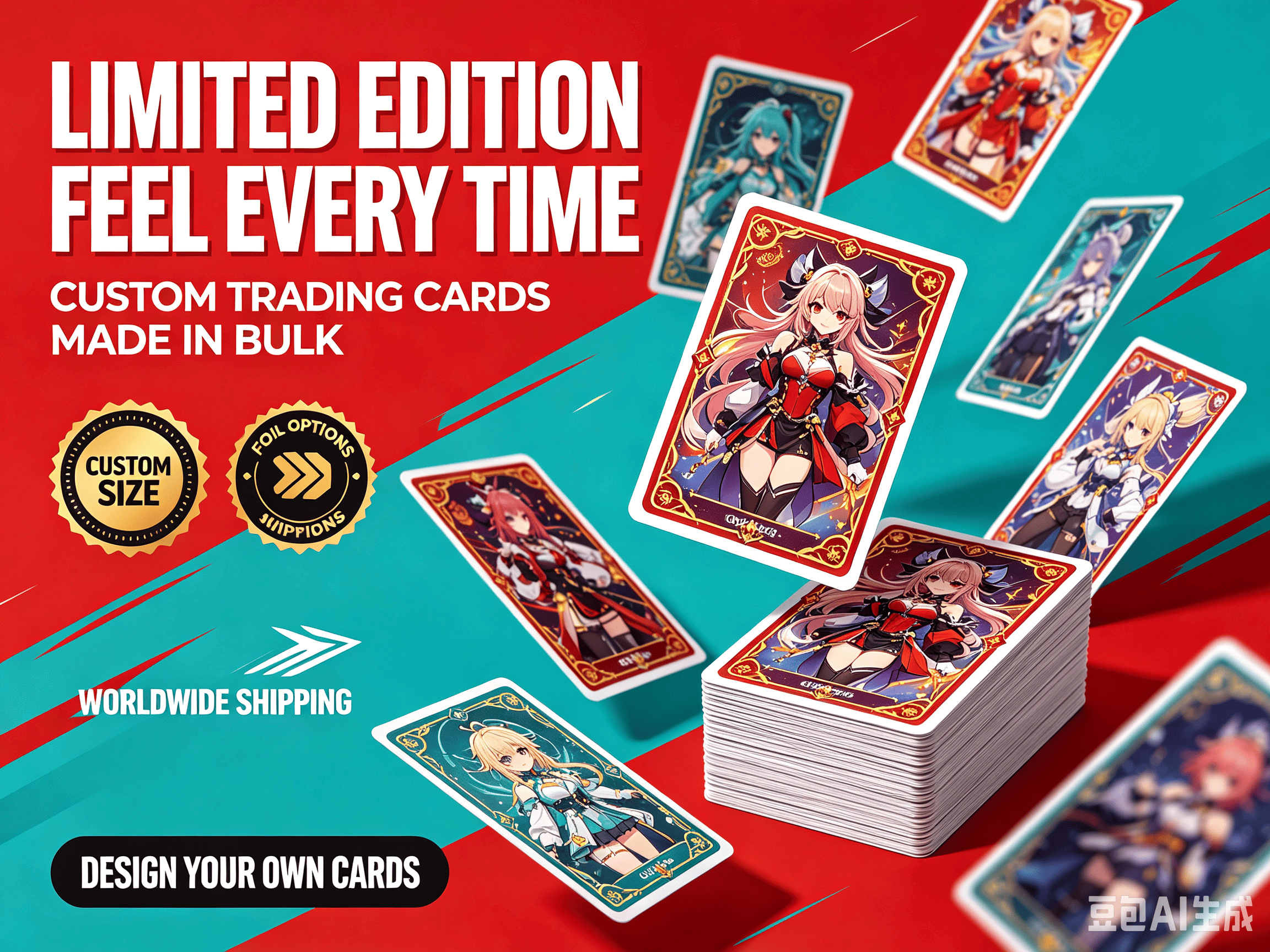
Custom photocards are a lucrative product line across K-pop, anime, gaming, and collectible merchandise markets. High-quality photocards boost product value, enhance customer satisfaction, and drive repeat sales.
Whether you are a retailer, distributor, or merchandise brand, this guide covers everything you need to know about material selection, printing prep, and choosing the right OEM/ODM partner.
1. Preparing Production-Ready Artwork
Artwork quality dictates the final output. While images may look sharp on mobile screens, low-resolution files result in blurry, pixelated physical prints.
Best Practices for Artwork
-
Resolution: Minimum 300 DPI.
-
Color Mode: CMYK (to ensure accurate print color translation from screen to paper).
-
Bleed Area: Standard 1.5mm to 3mm bleed around all sides.
-
Safe Zone: Keep key text, logos, and features at least 3mm inside the trim line.
💡 Pro Tip: Avoid thin, symmetrical borders along the card edges. Minor equipment shifts during high-speed cutting can make uneven borders visually obvious.
2. Standard Dimensions and Thickness Options
Popular Photocard Sizes
| Application | Common Dimensions |
| K-pop / Idol Photocards | $54 \times 85\text{ mm}$ or $55 \times 85\text{ mm}$ |
| Trading / Collectible Cards | $63 \times 89\text{ mm}$ (Standard TCG) |
Material Thickness Guidelines
-
Glossy / Matte Finishes: $\ge 0.35\text{ mm}$ (approx. 300–350 GSM)
-
Glitter / Holographic Finishes: $\ge 0.45\text{ mm}$ (due to multi-layer film lamination)
Always request samples measured in millimeters ($\text{mm}$) rather than relying solely on paper weight ($\text{GSM}$), as lamination layers alter the final rigid feel.
3. Selecting the Right Material & Lamination Finish
Different designs and target audiences require distinct surface treatments.
┌───────────────────────────────────────────────────────────┐
│                 Photocard Lamination Options              │
├───────────────┬───────────────┬─────────────┬─────────────┤
│    Glossy     │     Matte     │ Star Glitter│ Holographic │
│ (Vibrant/Std) │ (Sleek/Smooth)│  (Sparkle)  │  (Rainbow)  │
└───────────────┴───────────────┴─────────────┴─────────────┘
1. Glossy Lamination
-
Appearance: Reflective, highly vibrant colors.
-
Best For: K-pop idol photocards, celebrity merch, official-style collectibles.
-
Key Benefits: Maximizes color saturation and visual impact; closely mimics official album inclusions.
2. Matte Lamination
-
Appearance: Smooth, non-glare, anti-fingerprint surface.
-
Best For: Premium art prints, vintage concepts, high-end brand cards.
-
Key Benefits: Scratch-resistant, pleasant tactile feel, excellent for long-term collection.
3. Star Glitter Film
-
Appearance: Sparkling star patterns layered over the print.
-
Best For: Limited-edition releases, fan club exclusives, dark-themed art.
-
Key Benefits: High perceived value. (Best applied to darker backgrounds; overly light colors can dilute the sparkle effect).
4. Holographic (Rainbow) Film
-
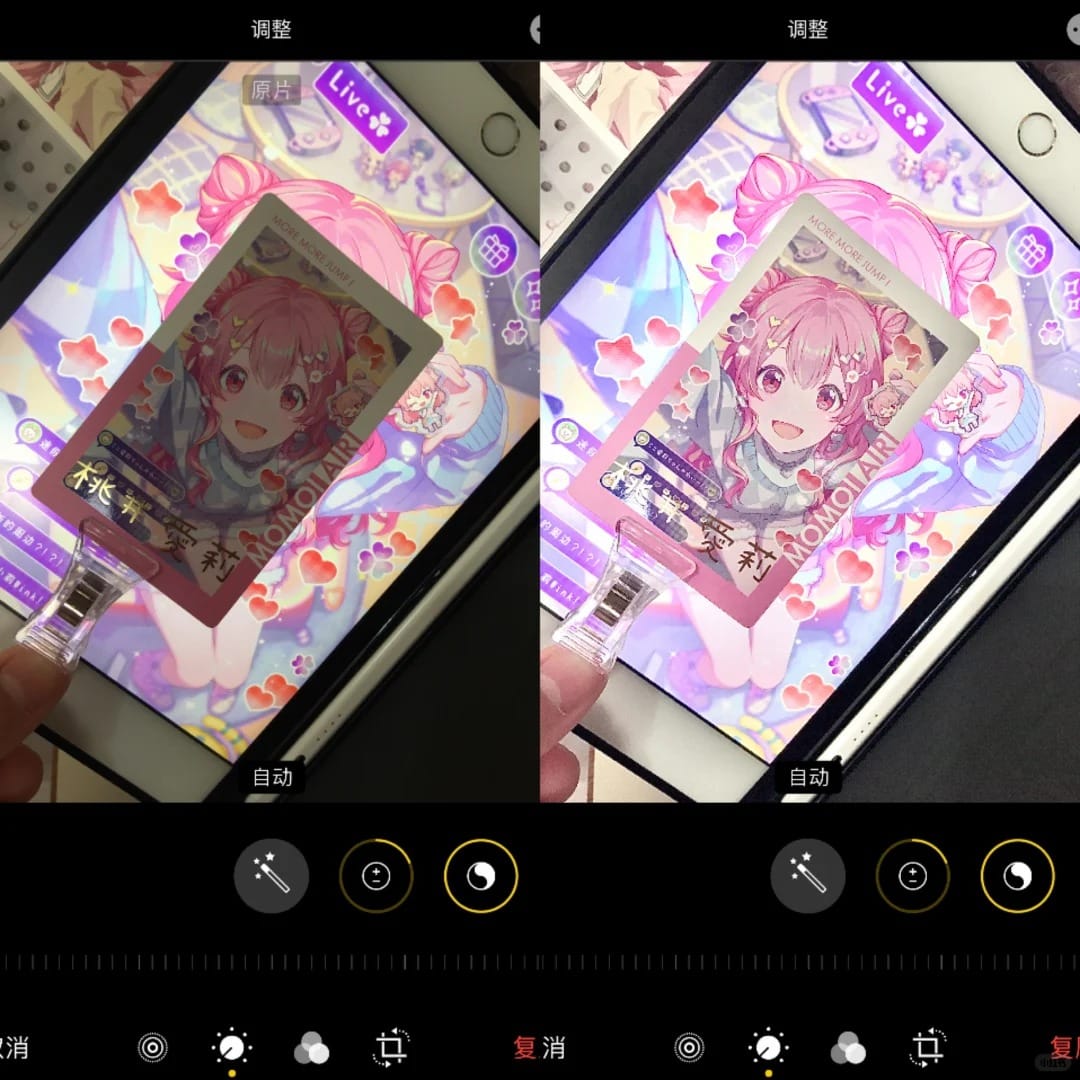
Appearance: Dynamic multi-color sheen that shifts with light angles.
-
Best For: Anime collectibles, gaming cards, fantasy-themed art.
-
Key Benefits: Eye-catching and interactive; works best with dynamic, full-color designs.
5. Pearl Paper
-
Appearance: Subtle, iridescent metallic sheen built into the paper texture.
-
Best For: Pastel palettes, cute anime art, soft aesthetic concepts.
-
Key Benefits: Elegant, soft light reflection without heavy foil overlays.
4. Top Mistakes to Avoid in Bulk Production
-
Mistake 1: Relying on RGB Files
Fix: Always convert artwork to CMYK before submitting to prevent unexpected color shifts.
-
Mistake 2: Ignoring Safe Zones
Fix: Keep essential design elements well within the safe margin to prevent key details from being trimmed off.
-
Mistake 3: Selecting Suppliers Solely on Unit Price
Fix: Ultra-low pricing often signals thin card stock, poor lamination adhesion, or inconsistent color management. Prioritize sample quality testing over base cost.
5. Partnering with a China-Based OEM/ODM Supplier
Sourcing directly from specialized printing manufacturers in China offers crucial advantages for scaling brands:
-
Direct Factory Pricing: Eliminates middleman markups to maximize profit margins.
-
Scalable Production: Flexible Minimum Order Quantities (MOQs) for market testing, with the capacity to handle large bulk runs.
-
Comprehensive Quality Control (QC): Multi-stage checks covering file prep, color proofing, precise cutting, and final packaging.
-
Custom Packaging & Private Labeling: Full support for custom tuck boxes, blind bags, foil wrapping, and branded backings.
Summary Checklist for Buyers
-
✅ Finalize artwork: 300 DPI, CMYK, proper bleed/safe areas.
-
✅ Confirm specs: Standard size ($55 \times 85\text{ mm}$), thickness ($\ge 0.35\text{ mm}$), and desired lamination.
-
✅ Request proofs: Review digital proofs or physical pre-production samples.
-
✅ Confirm packaging: Choose standard bulk bundling or individual blind/foil packaging for retail.