Your first anime merchandise production run is usually simple. You launch with a focused lineup: a standalone acrylic standee, a clear acrylic keychain, and perhaps an enameled or tinplate badge.
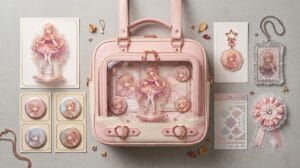
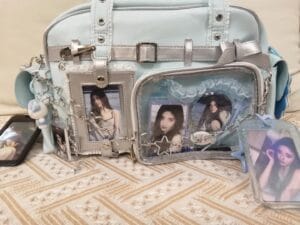
As your brand gains traction, your catalog naturally expands. You introduce Ita Bags, acrylic photocard holders, vinyl sticker packs, graphic T-shirts, and custom-printed canvas tote bags. Very quickly, a simple product launch turns into an operational bottleneck. You find yourself juggling four or five different factories, comparing incompatible proof sheets, chasing fragmented delivery schedules, and dealing with inconsistent print calibration across items.
This introduces a pivotal operational challenge for B2B buyers, indie publishers, and IP licensing teams: How do you scale multiple anime merchandise SKUs without compounding supply chain complexity?
When expanding an anime product line, consolidating production with a capable, factory-direct anime merchandise manufacturer does not mean abandoning supply chain diversity. Instead, it allows you to centralize communication, align quality control (QC) standards, synchronize production schedules, and streamline the re-order workflow under one unified manufacturing system.
1. Start by Building a Structured SKU Architecture
Managing dozens of products begins long before production starts. Chaos often stems from poor internal categorization: naming files by colloquial character names or vague descriptors like
standee-new-final-v2.ai.To manage multiple anime merchandise SKUs efficiently, build a systematic alphanumeric coding structure based on a four-tier taxonomy:
$$\text{Product Category} \longrightarrow \text{Character / IP} \longrightarrow \text{Variant / Finish} \longrightarrow \text{Unique SKU}$$
Product Category (e.g., AST = Acrylic Standee, AKC = Acrylic Keychain, BDG = Badge, ITB = Ita Bag)
 └── Character Code (e.g., CH01, CH02, CH03)
      └── Version / Finish (e.g., STD = Standard, LTD = Limited, HOL = Holographic)
           └── Unique SKU Code (e.g., AST-CH01-STD-001)
Example SKU Breakdown
-
Acrylic Standee → Character A → Standard Finish → SKU: AST-CH01-STD-001
-
Acrylic Standee → Character A → Holographic Base Variant → SKU: AST-CH01-HOL-002
-
Photocard Holder → Character A → Pastel Frame Edition → SKU: PCH-CH01-PST-003
-
Heart-Shaped Badge → Character B → Glitter Laminate → SKU: BDG-CH02-GLT-004
When you supply your manufacturer with clean SKU codes, purchase orders (POs), invoices, carton labels, and packaging specifications remain tied to a single source of truth.
2. Standardize Product Technical Specifications (Tech Packs)
When managing a catalog of 20+ SKUs across distinct materials, verbal instructions via email or chat will result in production drift. Every SKU requires a standardized technical specification sheet that locks down engineering variables.
A complete OEM / ODM specification sheet must cover:
-
Substrate & Grade: Acrylic resin grade (e.g., 100% virgin cast acrylic vs. extruded), PVC/PU fabric weight, or zinc alloy spec.
-
Dimensions & Tolerance: Exact height, width, and thickness (e.g., 75 mm height, 3.8 mm sheet thickness $\pm 0.1\text{ mm}$).
-
Print Configuration: Single-sided vs. double-sided sandwich printing, reverse UV direct-print, white ink backing layers.
-
Color Standards: Pantone (PMS) references or CMYK values pinned to physical color proofing swatches.
-
Hardware & Findings: Carabiner type, jump ring thickness, electroplating finish (gold, silver, matte black, rose gold).
-
Packaging Details: Header card thickness, individual OPP bag thickness, custom barcoding, choking hazard warnings.
+--------------------------------------------------------------+
|                    SPECIFICATION SHEET                       |
| SKU: AST-CH01-STD-001                                       |
+----------------------+---------------------------------------+
| Item                 | Character A Acrylic Desk Standee      |
| Character Height     | 75 mm (Base: 50 mm diameter)          |
| Material             | Grade-A Cast Acrylic Sheet (4.0 mm)   |
| Printing Method      | Double-Sided Sandwich UV Print        |
| Opaque Layer         | Spot White Undercoat (100% opacity)   |
| Cutline Tolerance    | Smooth diamond-polished cut edge      |
| Base Connector       | Snug-fit tab with 0.1 mm tolerance   |
| Hardware/Add-on      | None (Standee only)                   |
| Individual Packaging | OPP bag + 350g Coated Cardboard Mount |
+----------------------+---------------------------------------+
Once this spec is confirmed on the golden sample, subsequent bulk re-orders can be triggered simply by citing the SKU.
3. Structure Artwork and Production Assets Cleanly
Fragmented design assets are the leading cause of prepress errors, wrong plate exposures, and missed production cutoffs. Establish a mirrored cloud directory between your creative team and your anime merchandise supplier in China.
Organize folders by intellectual property hierarchy rather than product drops:
Plaintext
Project_Root_Anime_IP/
├── 01_Master_Color_Profiles/
│   └── Brand_Pantone_Swatches.ase
├── Character_A/
│   ├── AST_Standee/
│   │   ├── Artwork_Vector_CMYK/
│   │   ├── White_Ink_Layer_K100/
│   │   └── Cutline_Path/
│   ├── AKC_Keychain/
│   └── PCH_Photocard_Holder/
└── Character_B/
    ├── AST_Standee/
    ├── BDG_Badge/
    └── ITB_Ita_Bag/
Prepress Rules for Multi-SKU Submissions
-
Dedicated Layer Separation: Ensure separate vector layers for
Artwork (CMYK),White Ink Backing (Spot Color 100% K), andCut Path (1pt Stroke Spot Magenta). -
Bleed Allowances: Maintain at least 2.5 mm bleed outside cutting vectors to prevent raw substrate borders during high-speed laser cutting or die-stamping.
-
Raster Resolution: Lock all embedded raster elements to a minimum of 300 DPI at 1:1 reproduction scale.
4. Standardize Your Quality Control Process
The primary failure point of working with disparate suppliers is quality divergence. Factory A might produce vibrant badges with a warm tint, while Factory B prints the matching acrylic standee with a cold, greenish cast. To a dedicated collector, these discrepancies are immediately noticeable.
Partnering with one capable custom manufacturing partner allows you to establish a closed-loop quality assurance pipeline across every category:
[Approved Golden Sample]
         │
         ▼
[Production Run Proofing against Standard Swatches]
         │
         ▼
[In-Line Stage Inspections (Printing / Curing / Cutting)]
         │
         ▼
[Final Batch QC & Packaging Audit (AQL 2.5 Standard)]
-
Color Uniformity: All character files are proofed under standard D65 illuminants using unified ink profiles across UV flatbeds, dye-sublimation, and offset presses.
-
Surface Consistency: Scratch, peel, and adhesion tests (cross-hatch testing) are applied identically across keychains, standees, and badge laminates.
-
Tolerances: Joint connections between acrylic characters and display bases follow strict dial-caliper tolerances to eliminate loose wobbling or cracked inserts.
5. Manage Multiple Products Through One Consolidated Production Plan
Coordinating five different vendors means tracking five separate raw material procurement lead times, five distinct production bottlenecks, and five split shipping consignments.
Consolidating your catalog allows your manufacturing partner to balance production lines simultaneously, syncing finished goods into a single consolidated cargo dispatch:
| SKU Code | Product Category | Order Quantity | Production Process | Packaging Specification |
| AST-CH01-001 | Acrylic Standee | 2,000 pcs | UV Print + CNC Laser | Backer card + OPP bag |
| AKC-CH01-002 | Acrylic Keychain | 3,000 pcs | Double-layer sandwich acrylic | Star-clasp + Polybag |
| BDG-CH01-003 | Tinplate Pin Badge | 2,000 pcs | Matte film + Offset printing | Silver foil blind bag |
| PCH-CH01-004 | Photocard Holder | 1,000 pcs | High-clarity injected acrylic | Protective bubble sleeve |
| ITB-CH01-005 | Custom Ita Bag | 500 pcs | PU Leather + Clear PVC window | Non-woven dust bag + Carton |
Operational Advantages of Unified Scheduling
-
One Consolidated Shipment: Instead of handling five separate LCL (Less than Container Load) sea freight or express air shipments, your items are consolidated into a single master packing list, significantly reducing baseline freight and clearance costs.
-
Synchronized Product Drops: You avoid situations where badges and keychains sit idle in your warehouse for three weeks while waiting on delayed standees before you can launch the retail collection.
6. Leverage One Manufacturer for Product Development (OEM / ODM)
A reliable manufacturing partner does more than execute print commands; they provide Design for Manufacturability (DFM) support that helps scale your product ecosystem:
$$\text{Single Hero Product (Standee)} \longrightarrow \text{Peripheral Accessories (Keychains/Badges)} \longrightarrow \text{Functional Merch (Ita Bags)} \longrightarrow \text{Collector Box Sets}$$
When your factory understands your IP’s design parameters, cross-category development moves much faster:
-
Asset Repurposing: Existing vector cutouts developed for standees can be rapidly adapted into layered acrylic shaker keychains or photocard display borders without rebuilding assets from scratch.
-
Component Engineering: Your manufacturer can design modular bases that hold multiple character standees simultaneously, or engineer Ita Bag clear pockets with dimensions specifically matched to your custom badge sizes.
7. Coordinate MOQs Across Multiple Product Categories
Managing minimum order quantities (MOQ) across multiple SKUs is a major cash flow challenge for growing anime brands.
When dealing with disconnected, single-category factories:
-
Acrylic Factory requires 500 pcs/design.
-
Badge Factory requires 1,000 pcs/design.
-
Bag/Sewn Goods Factory requires 1,000 pcs/style.
To launch a collection of 4 characters across all 3 categories, your upfront capital must absorb thousands of units per item, creating significant inventory risk.
Independent Vendors:
[Acrylic Vendor: 2,000 pcs] + [Badge Vendor: 4,000 pcs] + [Bag Vendor: 4,000 pcs] = Extreme Capital Lockup

Consolidated OEM/ODM Partner:
[Flexible Tiered MOQs] ──► Low-volume new test designs + Higher-volume proven core SKUs
Working with an integrated manufacturing partner that offers factory-direct pricing and lower baseline MOQs for hard goods (like acrylics and badges) allows you to balance production capacity. You can order higher volumes of proven, core character standees while testing secondary characters or niche SKUs at lower quantities, maintaining a manageable overall order volume.
8. Make Re-Orders Frictionless
For anime retailers and e-commerce brands, speed to market on restocks determines whether you capture or lose fan hype.
When you spread production across isolated vendors, executing a restock requires re-confirming specs, re-submitting art files, and risking color discrepancies with new operators.
When one manufacturer maintains your production archive:
Step 1: Identify inventory deficit (e.g., Character A Standee out of stock).
Step 2: Submit PO: "Re-order SKU: AST-CH01-STD-001 | Quantity: 2,500 pcs."
Step 3: Factory pulls original pre-flight vector files, tooling offsets, and approved master swatches.
Step 4: Bulk production initiates immediately without duplicate sampling stages.
Archived digital master proofs and physical sample retains drastically shorten turnaround times, turning re-orders into a routine logistics operation rather than a product relaunch.
9. Unify Packaging and Branding Across All SKUs
Anime merchandise retail value is heavily influenced by packaging aesthetics. Inconsistent packaging across a product line makes a collection feel disjointed.
Disjointed Sourcing:
Badge (Generic Polybag) | Standee (White Cardboard) | Keychain (Hanging Header)
Result: Low perceived value, fragmented retail presentation.

Integrated Multi-SKU Production:
[Custom Backing Cards] + [Matching Matte Laminate Finishes] + [Uniform EAN/UPC Labeling]
Result: High perceived value, ready for chain retail / boutique distribution.
Consolidating manufacturing simplifies private label branding:
-
Uniform Paper Stocks: Standardize on 350 GSM artcard with identical matte soft-touch lamination across standee backers, blind boxes, and keychain cards.
-
Coordinated Retail Barcoding: Your factory can apply SKU-specific EAN/UPC labels, serialized anti-counterfeit holographic stickers, and language-specific regulatory tags in uniform positions across all cartons.
-
Kitting & Collation: The factory can assemble multi-product collector sets (e.g., 1 Standee + 1 Badge + 1 Photocard in a branded presentation box) directly on the packaging line, avoiding expensive third-party fulfillment center kitting fees.
10. Build One QC Standard Across Your Entire Collection
Rather than managing separate QC policies for each factory, establish one clear inspection protocol with your primary manufacturing partner based on six core verification pillars:
Plaintext
Collection-Wide Quality Control Standard
├── 1. Material QC     ──► Virgin acrylic sheets, metal plating alloys, non-toxic PVC
├── 2. Printing QC     ──► Pantone color matching (Delta-E < 2.0), no micro-banding, clean white underbase
├── 3. Assembly QC     ──► Secure clasp tension, precise tab-to-base insertion fit
├── 4. Appearance QC   ──► Zero surface scuffs, air bubbles, edge burrs, or laser scorching
├── 5. Packaging QC    ──► Clean seal lines, correctly aligned backer cards, straight barcode stickers
└── 6. Quantity QC      ──► Precise inner carton counts, overage buffers, clear master box markings
Applying one comprehensive standard across every SKU ensures that the customer opening an Ita Bag experiences the exact same material quality as the collector unboxing an acrylic diorama.
11. Create a Closed-Loop System for Re-Orders and New SKUs
Managing an anime merchandise catalog is not a linear transaction; it is an ongoing commercial cycle. An integrated manufacturing partner fits directly into this product lifecycle:
Plaintext
[ Existing Best-Sellers ] ──────► Rapid Bulk Re-Orders
          │
          ▼
[ Fan & Sales Data Ingestion ] ─► Identify Top Characters & Product Gaps
          │
          ▼
[ Expand Variants / SKUs ] ────► Holographic / Glitter / Seasonal Editions
          │
          ▼
[ Introduce New Categories ] ──► Expand from Acrylics into Ita Bags & Apparel
          │
          ▼
[ Private Label Expansion ] ───► Coordinated Gift Sets & Full Collection Drops
By routing this entire loop through one established manufacturing system, each new product release benefits from the technical baselines, packaging standards, and color profiles set by the previous run.
12. Know When One Manufacturer Makes Sense (and When It Doesn’t)
Consolidating your supply chain is effective, but it is important to assess your product line objectively.
When to Consolidate Under One Manufacturer:
-
Cross-Category Product Collections: Your drops feature matching characters across complementary lines (acrylic standees, keychains, badges, bags, photocard cases).
-
High Repeat-Order Cadence: You maintain a core catalog that requires predictable, high-frequency restocks.
-
Coordinated Packaging Requirements: You need retail-ready private label packaging, custom barcodes, and branded gift sets.
-
Lean Operations Team: Your brand operates with a focused team that cannot afford the bandwidth to oversee ten separate vendor channels.
When Specialized Split Sourcing Is Better:
-
Highly Divergent Industrial Categories: If you are sourcing 1/7 scale PVC cast figures alongside basic paper stickers, the specialized tooling requirements for scaled figures warrant using a dedicated PVC figure plant.
-
Extreme High-Volume Single-Product Runs: If you are ordering 500,000 basic silicone wristbands for a stadium concert, a factory that produces only silicone wristbands may offer niche efficiencies.
13. What to Look for in a Multi-SKU Anime Merchandise Manufacturer
Before entrusting a vendor with your multi-product collection, evaluate them against this ten-point manufacturing checklist:
-
[ ] 1. Broad Product Range: Demonstrable factory-direct capacity across hard goods (acrylic, metal) and cut-and-sew products (bags, soft peripherals).
-
[ ] 2. Multi-Line Production Capacity: Equipment footprint capable of processing multiple print, cut, and assembly lines without cross-order delays.
-
[ ] 3. Unified QC Infrastructure: Clear written quality assurance protocols and physical testing processes across every product group.
-
[ ] 4. Synchronized Lead Times: Ability to coordinate production phases so multiple distinct categories finish within the same shipping window.
-
[ ] 5. Flexible MOQ Tiers: Realistic initial order volumes for testing new character designs alongside high-capacity bulk order tiers.
-
[ ] 6. In-House OEM / ODM Engineering: Dedicated prepress and DFM teams that can correct vector paths, white ink layers, and structural die-lines.
-
[ ] 7. Comprehensive Packaging Capabilities: Support for custom backer cards, retail foil bags, barcode integration, and box-set assembly.
-
[ ] 8. Reliable Re-Order Archiving: Secure archiving of approved prepress files, pantone records, and physical sample retainers for fast, accurate repeat orders.
-
[ ] 9. Dedicated Account Management: A single point of contact who understands your IP guidelines and coordinates all internal workshops.
-
[ ] 10. Full Private Label Support: Complete compliance with custom branding, anti-counterfeit markings, and export-ready logistics standards.
14. Phased Roadmap: From 3 Test SKUs to a Full Merch Collection
To scale your catalog sustainably, follow this four-stage operational roadmap:
[ Phase 1: Market Validation (3-5 SKUs) ]
Focus on core merchandise to validate character demand with lower capital exposure.
• Acrylic Desk Standee (Hero Character)
• Standard Acrylic Keychain
• Collectible Tinplate Pin Badge
          │
          ▼
[ Phase 2: Category Expansion (10-15 SKUs) ]
Introduce complementary functional and display accessories for proven characters.
• Magnetic / High-Clarity Photocard Holders
• Die-Cut Vinyl Sticker Sheets
• Heart-Shaped / Glitter Badges
          │
          ▼
[ Phase 3: Collection Architecture (20-40 SKUs) ]
Expand to complex merchandise categories and coordinated collector packages.
• Dedicated Ita Bags with custom lining
• Layered Diorama Acrylic Stands
• Complete Character Collector Gift Box Sets
          │
          ▼
[ Phase 4: Data-Driven Optimization & Re-Orders ]
Automate replenishment and schedule continuous seasonal variants.
• Rapid bulk re-orders on top 20% best-sellers
• Limited-edition seasonal palette drops
• Introduction of secondary cast members across validated formats
15. The Goal Is Not Fewer Suppliers—It Is Better Control
Supply chain management in the anime merchandise market is not simply about reducing your factory count to a minimum. The real goal is to build an agile production system that you can control.
When your product catalog spans dozens of characters and product variants, managing multiple disconnected factories creates friction: communication breakdowns, color mismatches, fragmented shipments, and complex re-order cycles.
Partnering with an established, full-service anime merchandise manufacturer in China provides your business with an integrated production engine:
$$\text{Product Development} \longrightarrow \text{OEM / ODM} \longrightarrow \text{Production} \longrightarrow \text{Unified QC} \longrightarrow \text{Kitting} \longrightarrow \text{Bulk Dispatch} \longrightarrow \text{Fast Re-Order}$$
By streamlining multiple SKUs under one reliable manufacturing system, you shift operational focus away from daily factory firefighting—allowing your team to concentrate on developing great artwork, expanding your IP, and serving your community.
Ready to Scale Your Anime Merchandise Lineup?
Looking for an experienced China manufacturer to manage multiple anime merchandise SKUs under one production system?
BOCE GIFTS supports B2B buyers, retailers, wholesalers, and IP creators with factory-direct custom manufacturing. We coordinate acrylic standees, keychains, badges, Ita Bags, photocard holders, and retail-ready packaging under a unified quality control workflow.
-
OEM / ODM custom manufacturing
-
Flexible MOQs for new SKU testing
-
Consistent color fidelity and material quality
-
Synchronized bulk order delivery
-
Streamlined, rapid repeat orders
Send us your product list or artwork files today to review specs, receive sample proofs, and start building your next anime merchandise collection.