How We Protect Your IP When Producing Custom Merchandise
You spent months designing a character. Your artist poured real work into the line art, the color palette, the expression. Then, three weeks after your merch drops, you find the same character on a marketplace you have never heard of — printed cheaply, shipped from somewhere else, with no license and no credit.
If you are in games, animation, or IP licensing, you already know this is not a rare story. It is one of the biggest reasons companies hesitate before moving production overseas.
At BOCE, we manufacture custom acrylic merchandise for game studios, animation companies, IP owners, and the artists who draw the characters they love. We know your artwork is not just a file. It is the asset your whole business is built on. This article explains exactly what we do to keep it yours — from the first email to the sealed carton.
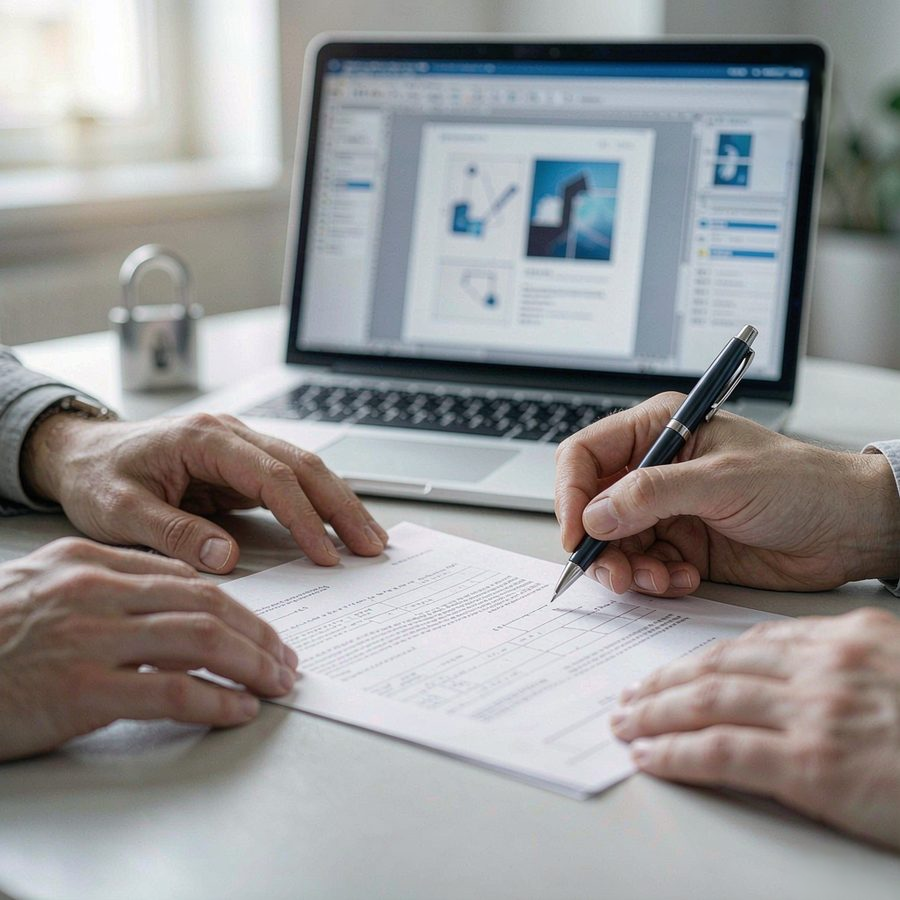
Why IP Protection Has to Start Before Production
Most IP leaks do not happen on the factory floor. They happen in the gaps: a design file emailed to a salesperson who forwards it to three factories, a subcontracted print shop that quietly keeps the artwork, a sample that ends up in a market stall.
That is why our protection system starts at the very first conversation — not when the machine starts running.
1. We Sign an NDA Before Any File Changes Hands
Before you send us a single artwork file, we sign a non-disclosure agreement. It covers your character designs, logos, technical specifications, and even the fact that we are working together. If you have your own NDA template, we will sign yours. If you do not, ours is ready to go.
This is not a formality. It gives you a legal foundation if anything ever goes wrong — and it sets the tone for how the whole project is handled.
2. Your Files Stay Inside a Controlled System
We do not scatter your artwork across personal email inboxes and USB drives. Every design file goes into one controlled project folder with restricted access. Only three people can open it: your project manager, our production lead, and the prepress technician preparing the print files.
When your order ships, the folder is archived. We never reuse, resell, or “keep on file” your artwork for another client.
3. Production Stays In-House — No Outsourcing
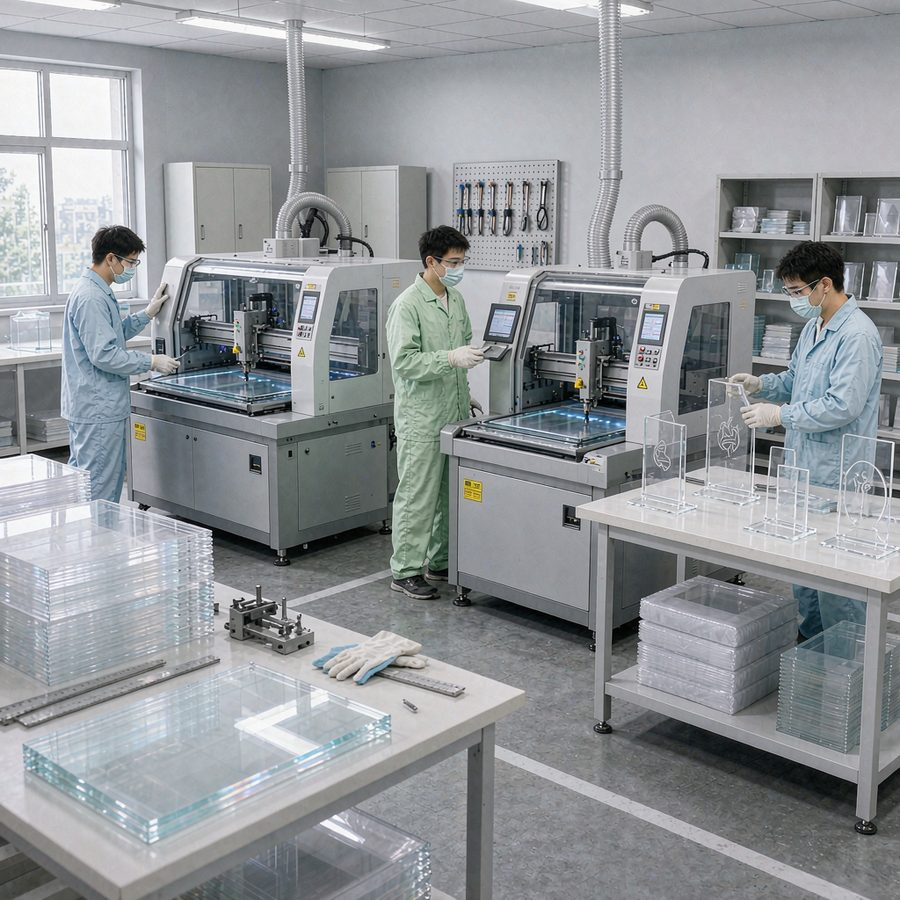
This is the single most important point. Many trading companies take your order and hand it to whichever factory is cheapest that week. Every handoff is another chance for your design to walk out the door.
We print, cut, polish, and assemble in our own facility. Your file goes from our prepress team to our machines — and nowhere else. When you work with an acrylic standee manufacturer that owns its production line, you can actually see where your design goes. We welcome video calls on the floor and are happy to share production photos.
4. Operators See Job Numbers, Not Your Characters
On the production floor, workers receive a work order with a job number — not a client name and not a full artwork file. The prepress team releases only the specific layer or panel needed at that station. No single operator can walk away with a complete, printable set of your design.
It sounds strict. For an IP company, this is exactly what “careful” should mean.
5. Samples Are Numbered, Logged, and Accounted For
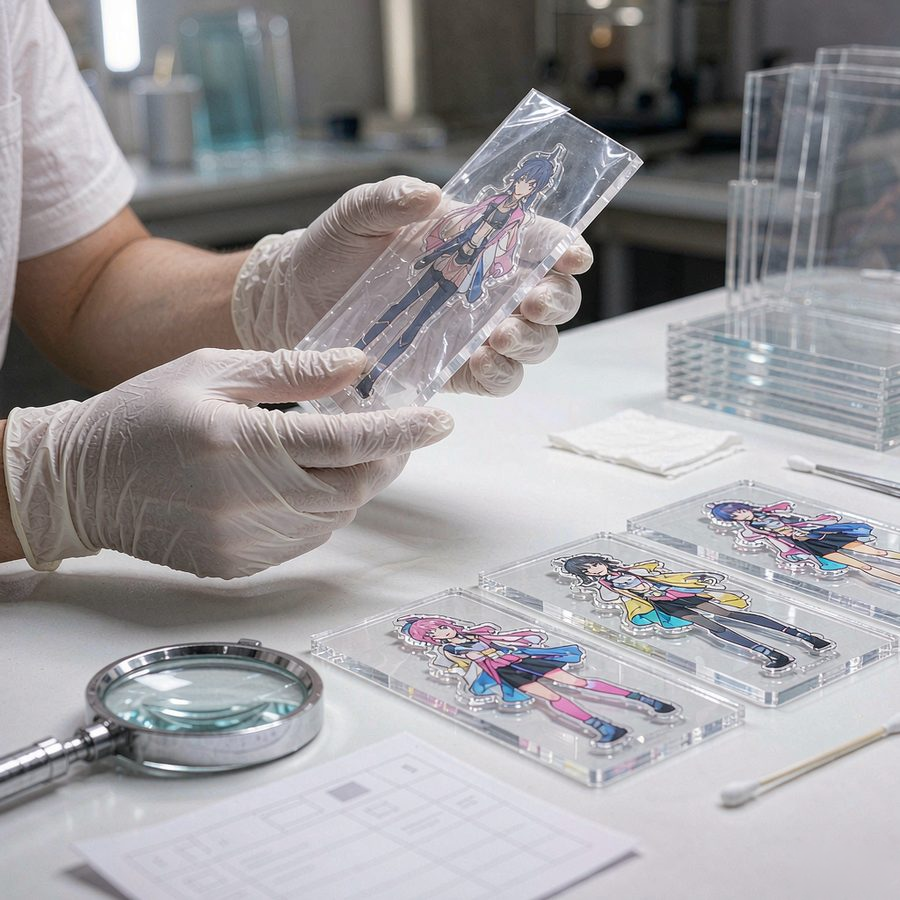
Samples are a common leak point, so we treat them like inventory. Every prototype is numbered, logged, and recorded — who made it, who approved it, how many exist. After the production run, approved samples are either returned to you or destroyed. They are never kept as display pieces in a showroom.
If you want, we can add a faint internal code to the back of samples so any unauthorized copy can be traced back to its source.
6. We Never Put Your Artwork in Our Portfolio Without Permission
Some factories use your characters on their own storefront or trade show booth to prove what they can do. We do not. Your artwork never appears in our marketing unless you agree in writing.
Want us to show the work? Great. Want complete silence? Also fine. It is your call, always.
7. Packing Is Discreet and Trackable
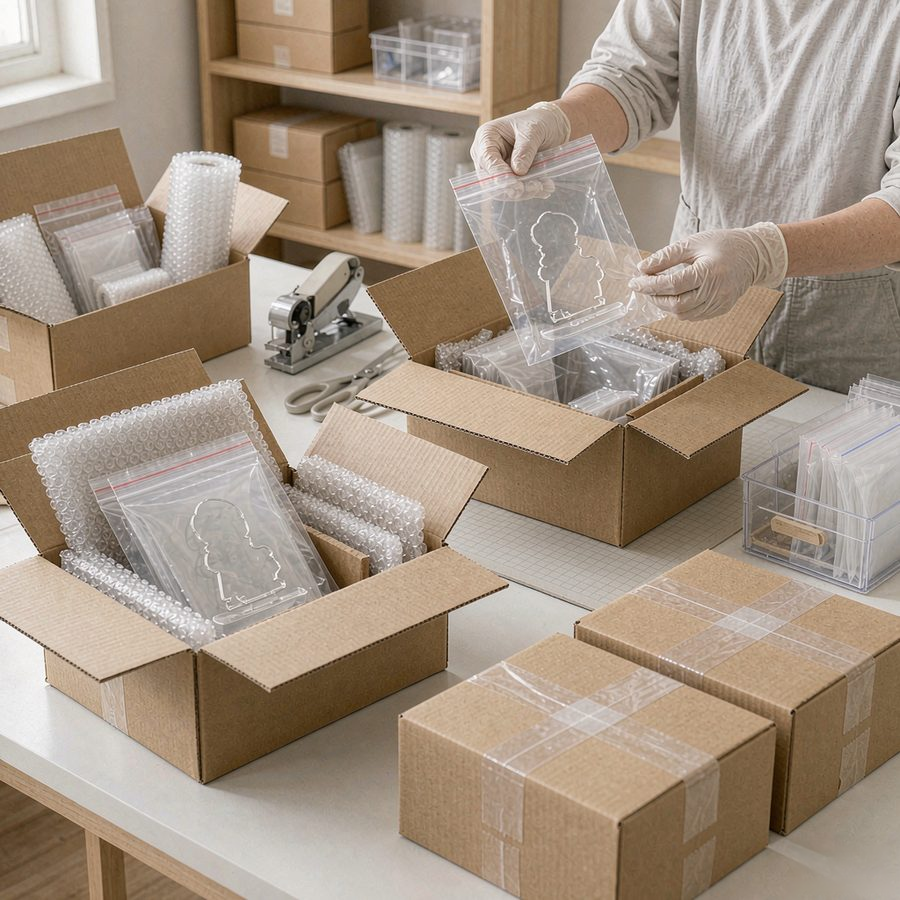
Finished units are packed individually with protective film, then placed in plain cartons with no product names or character art on the outside. Cartons are sealed and counted at packing, and you receive tracking details before dispatch. Your shipment does not advertise what is inside.
Our 6-Step OEM/ODM Process
Protection is built into every stage of our workflow:
- Request a quote — share your idea and quantity; we sign the NDA.
- Request a sample — we produce a numbered prototype for your approval.
- Place the order — 50pcs MOQ per design, with volume pricing above that.
- Start production — in-house, restricted file access, job-number workflow.
- Quality inspection — every piece checked, photos available on request.
- Shipping — discreet packing, tracked delivery worldwide.
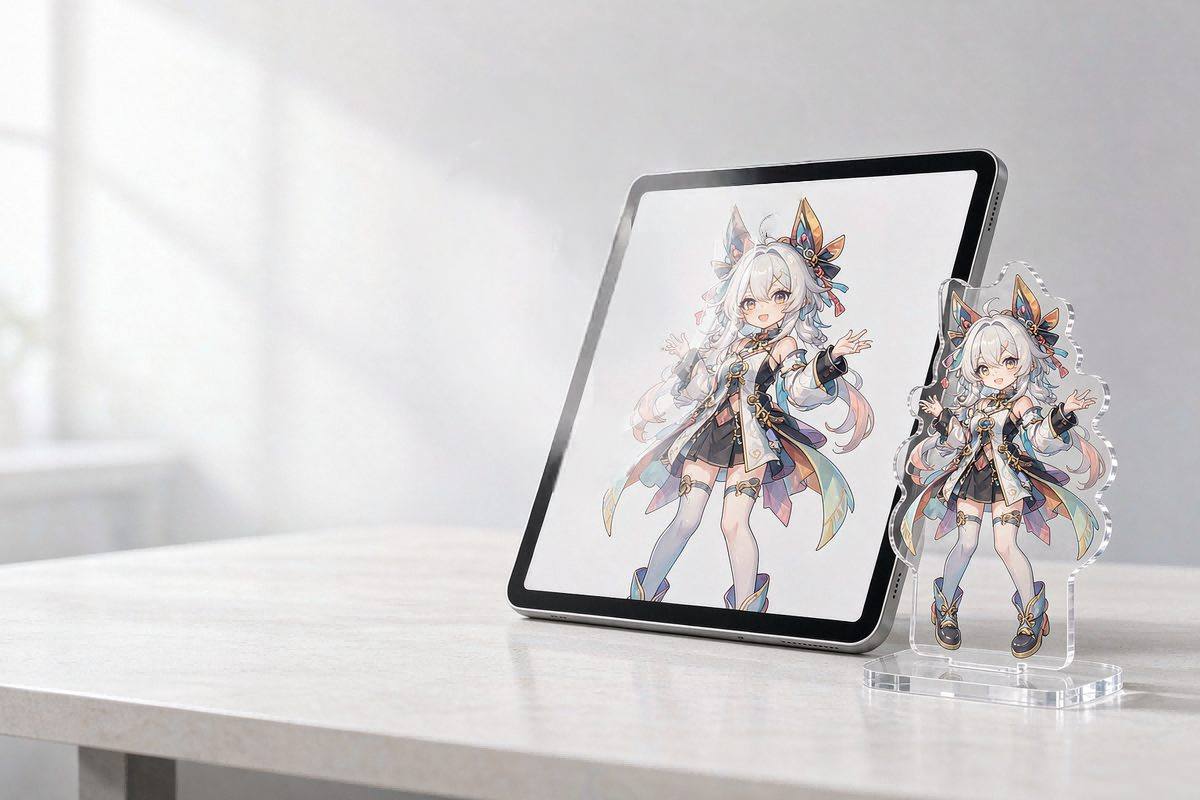
Whether you are making a custom anime acrylic standee for a convention drop or a licensed character line for retail, the process stays the same. Need something different, like a magnetic acrylic display frame? The same protection applies.
Frequently Asked Questions
Can you sign our NDA?
Yes. Send it over and we will review and sign. Most standard NDAs are acceptable, and we can also add your specific clauses if needed.
Will you use my character for other clients?
No. Files are project-locked and never reused. Your design belongs to your project, full stop.
How do I know you will not subcontract my order?
You are welcome to audit the facility, request live production photos, or join a video call on the line. We work with IP owners who ask for this regularly, and we are happy to show you around.
Does IP protection change for small orders?
No. A 50-piece trial order receives the same NDA, restricted file access, and numbered samples as a 5,000-piece production run. Protecting your work is not a premium service — it is part of manufacturing done properly.
Start With a Protected Sample
Your artwork is the reason people buy the product. Protecting it is not an extra step — it is part of doing the job right.
Tell us what you are making, and we will sign the NDA first and send a free 1:1 digital proof within 24 hours. No obligation, no risk to your design.