Choosing a character is one of the most important decisions when developing anime merchandise. A popular character may attract attention, but popularity alone does not guarantee strong merchandise sales.
Some characters work extremely well as acrylic standees, keychains, pins, apparel, or collector sets. Others may have a large fan base but limited visual flexibility for physical products.
For retailers, brands, and B2B buyers, the better question is not:
“Which character is the most popular?”
It is:
“Which character has the strongest potential to become a sellable product?”
This guide explains how to evaluate anime characters before investing in samples, inventory, and a bulk order.
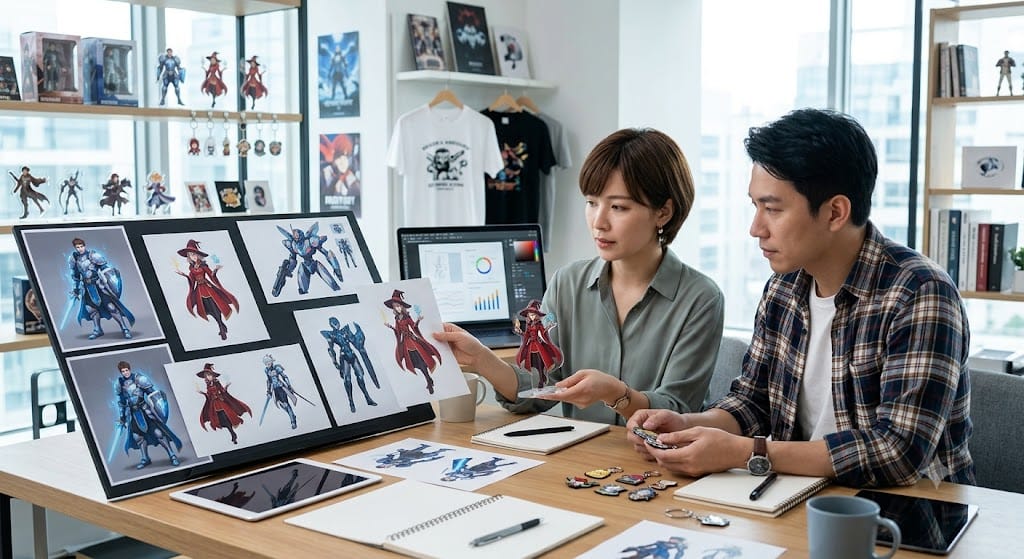
1. Start With Character Demand
The first factor is still fan demand. You need an audience before you develop merchandise. But don’t look only at overall popularity—look at how fans interact with the character.
For example:
-
Do fans actively discuss the character?
-
Do they share fan art or images?
-
Do they collect character-specific products?
-
Does the character appear frequently in community discussions?
-
Does the character have a dedicated fan base?
-
Does interest remain strong over time?
A character with a smaller but highly engaged fan base may create better merchandise opportunities than a widely recognized character with weaker purchasing intent.
Think Beyond “Popular”
Instead of ranking characters only by popularity, consider this pipeline:
Awareness → Engagement → Collecting Interest → Purchase Intent
This gives you a much better starting point for product selection.
2. Main Characters Are Usually the Safest Starting Point
Main characters often provide a strong foundation for a merchandise collection. They usually have higher recognition, stronger visibility, more official artwork, more story relevance, and greater potential for long-term demand.
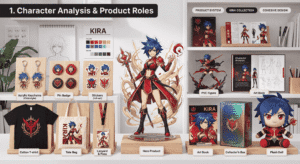
For a new collection, a main character can work well as the hero character. For example, you might launch:
Main Character
→ Acrylic Standee
→ Acrylic Keychain
→ Pin Badge
→ Sticker
Then, expand the collection after you see the customer response. However, being the main character does not automatically make every product successful. You still need to evaluate the character’s visual appeal and product fit.
3. Do Not Ignore Supporting Characters
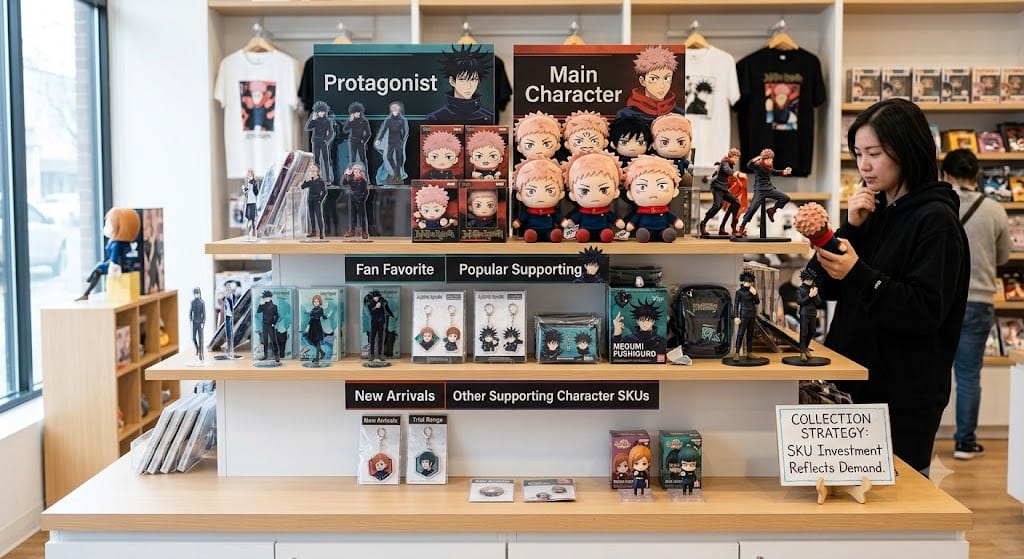
Supporting characters can create valuable opportunities for retailers. A strong supporting character may have a highly engaged fan base even if they receive less screen time. This becomes especially interesting when customers collect multiple characters from the same series.
Instead of building your collection around one character only, you can create a hierarchy:
-
Main Character: More product variations
-
Popular Supporting Character: Core products
-
Other Supporting Characters: Selected or test SKUs
This approach helps you avoid treating every character equally. Your SKU investment should accurately reflect expected demand.
4. Look for Fan-Favorite Characters
Sometimes the most commercially interesting character is not the official “main character.” Fans may strongly prefer a rival, a comic-relief character, a villain, a side character, a team member, a mascot, or a character with a distinctive personality.
These characters can create strong collector demand and give you opportunities for more specific merchandise:
-
Character personality → Expression stickers
-
Signature pose → Acrylic standee
-
Iconic symbol → Metal pin
-
Character quote/visual element → Ita-bag (痛包) insert or tote design
This creates a stronger connection between the character and the final physical product.
5. Evaluate the Character’s Visual Potential
This is one of the areas that many merchandise buyers overlook. A character may be popular but difficult to translate into a strong physical product. Before developing merchandise, look at:
-
Silhouette: Can customers recognize the character from the overall shape?
-
Colors: Does the character have a recognizable color palette?
-
Pose: Does the character have dynamic or visually interesting poses?
-
Expressions: Can you create multiple expressions for smaller products?
-
Accessories: Does the character have distinctive items, costumes, weapons, or symbols?
-
Artwork Availability: Do you have enough approved artwork to support multiple SKUs?
This matters especially for products such as acrylic standees (where double-sided sandwich printing or diamond edge polishing really makes details pop). A strong character image can become a strong display product. A complicated composition may require more artwork preparation or adaptation before production.
6. Match the Character With the Right Product
Not every character needs the same merchandise. Think about the character × product fit.
| Character Feature | Suitable Product Direction |
| Strong full-body artwork | Acrylic Standee |
| Cute / chibi design | Acrylic Keychain |
| Recognizable face or symbol | Enamel Pin / Sticker |
| Strong graphic elements | T-shirt / Tote Bag |
| Multiple character artwork | Collector Set |
| Strong fan identity | Photocard Holder / Accessories |
This approach helps you avoid creating products simply because a supplier can manufacture them. The product should reinforce what makes the character attractive.
7. Consider Different Character Types
You can divide characters into several useful development categories to plan your inventory:
-
Main Characters (Best for Core Merchandise): They often provide the strongest foundation for a long-term product line.
-
Supporting Characters (Best for Collection Expansion): Use them to give fans more reasons to collect products from the same series.
-
Fan-Favorite Characters (Best for Targeted Merchandise): These characters perform strongly with a smaller but highly engaged audience.
-
New Characters (Best for Controlled Testing): If you are preparing for a major retail launch or an upcoming exhibition like the Tokyo International Gift Show, new characters can create opportunities, but demand may remain uncertain. Use smaller test quantities where possible before making a large inventory commitment.
-
Seasonal Characters (Best for Campaigns): Great for Halloween, Christmas, Valentine’s Day, New Year, or special events. These usually need tighter planning around production and lead times.
-
Group Characters (Best for Sets): Develop individual characters → group artwork → collector sets. This creates a natural path from individual purchases to higher-value collections.
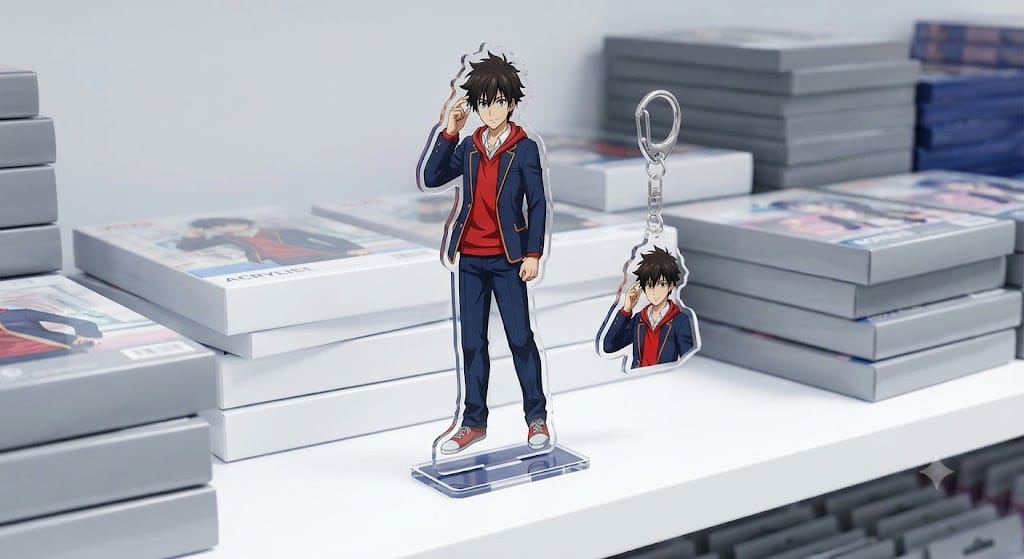
8. Think About Collection Potential
Don’t evaluate a character only as a single SKU. Ask: Can this character support multiple products?
Strong Collection Potential: Character A has 3 strong poses, 2 expressions, chibi artwork, a signature symbol, and seasonal artwork. You have enough material to develop:
Standee → Keychain → Pin → Sticker → T-shirt → Collector Set
Limited Collection Potential: Character B has one usable artwork, similar poses, and limited visual elements. The character may still deserve merchandise, but you should keep the initial SKU count lower. This distinction helps control development costs and inventory risk.
9. Consider the Retail Price Structure
A character should ideally support more than one price point because your customers do not all have the same budget.
-
Entry: Sticker / Keychain
-
Core: Pin / Acrylic Standee
-
Higher Value: T-shirt / Tote Bag
-
Premium: Collector Set / Large Standee
A retailer can attract first-time buyers with an affordable product while giving collectors opportunities to purchase higher-value items. The character therefore becomes the foundation of a product ladder, not just one SKU.
10. Consider Re-order Potential
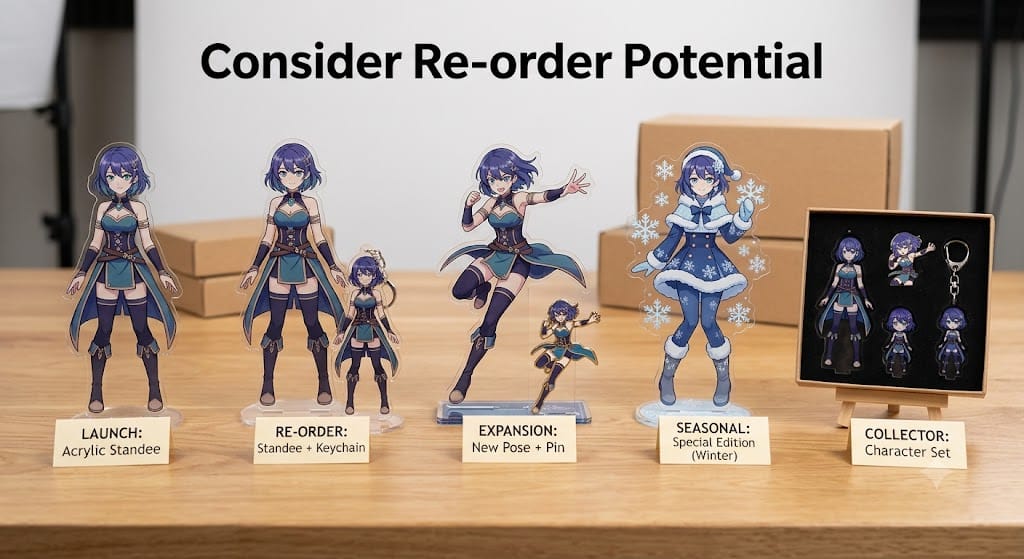
A good character should give you a reason to reorder. Before placing a bulk order, ask:
-
Can the character support new artwork or poses?
-
Can you release seasonal versions?
-
Can you introduce new product categories or limited editions?
A character with strong expansion potential can support a longer product lifecycle:
Launch (Acrylic Standee) → Re-order (Standee + Keychain) → Expansion (New Pose + Pin) → Seasonal Release (Special Edition) → Collector Product (Character Set)
11. Don’t Let Popularity Decide Everything
This is the most important point of the article: Character popularity ≠ guaranteed merchandise sales.
A character can have millions of fans and still perform poorly as a physical product because merchandise demand depends on more than awareness. You must weigh Fan Demand + Visual Appeal + Product Fit + Price + Collecting Behavior + Retail Presentation + Re-order Potential. A less famous character can outperform a more famous one when it has stronger merchandise appeal and a more engaged buying audience.
12. The Character Selection Framework
Before investing in custom manufacturing, force your team to evaluate characters from several commercial angles instead of relying on personal preference.
Use this visual framework to map out your product development journey:
Plaintext
                 ANIME CHARACTER
                       │
        ┌──────────────┼──────────────┐
        ↓              ↓              ↓
   FAN DEMAND     VISUAL POTENTIAL   PRODUCT FIT
        │              │              │
        └──────────────┴──────────────┘
                       ↓
              COLLECTION POTENTIAL
                       ↓
                PRICE STRUCTURE
                       ↓
                 TEST SKU SET
                       ↓
               SALES PERFORMANCE
                       ↓
                    RE-ORDER
                       ↓
                SKU EXPANSION
13. Start Small When Demand Remains Uncertain
You don’t always need to make a large bulk order immediately. If you are testing a new character, a supporting character, a new artwork style, or a new product category, consider starting with a controlled SKU selection:
1 character → 1 hero product → 2 supporting products
Measure the response. If customers respond well, expand the line and increase quantities in the next order.
14. Choose a Manufacturer That Can Develop More Than One Product
Once you identify a promising character, your next challenge is execution. A suitable anime merchandise manufacturer should help you move seamlessly from:
Artwork → Sample → Product Development → Bulk Order → Quality Control → Re-order
Ideally, your supplier can support multiple product categories. You may start with an acrylic standee and later add keychains, metal pins, apparel, bags, or collector packaging. A supplier with strong production capacity, consistent quality control, reliable lead times, and OEM / ODM capabilities makes that expansion much easier.
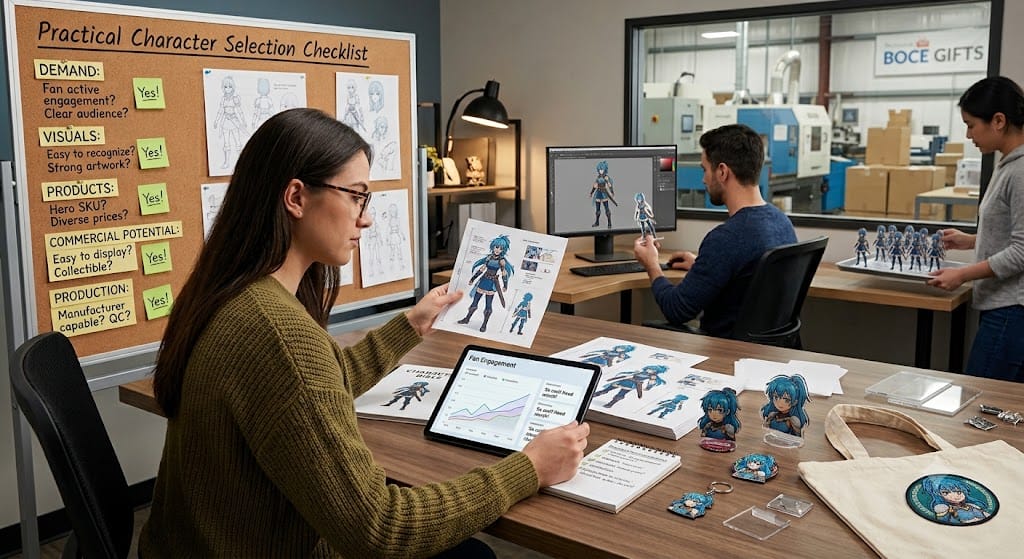
15. A Practical Character Selection Checklist
Before developing a new character, ask yourself:
-
Demand: Do fans actively engage with this character? Does the character have a clear audience?
-
Visuals: Is the character easy to recognize? Do you have strong artwork? Can it adapt to different products?
-
Products: Which product should become the hero SKU? Can the character support different price levels?
-
Commercial Potential: Can retailers display the products effectively? Can customers collect multiple versions?
-
Production: Can your manufacturer support the required products? Can they maintain quality across different SKUs and support future repeat production?
If you cannot answer these questions confidently, the character may need more evaluation before you invest in production.
Conclusion
Choosing an anime character for merchandise development requires more than checking popularity charts. The strongest opportunities often come from characters that combine fan demand, visual recognition, product flexibility, collection potential, and repeat-order opportunities.
Start with the character. Understand why fans like it. Evaluate the artwork. Match the character with the right products. Start with a focused SKU range, then use customer response to decide whether you should expand. The goal is not to turn every character into merchandise—the goal is to identify the characters that can support a commercially viable merchandise line.
Turn Your Character Ideas Into Custom Merchandise
At BOCE GIFTS, we help B2B buyers, retailers, and anime merchandise brands develop custom products around their characters and artwork. From acrylic standees and acrylic keychains to pins, apparel, bags, and other promotional merchandise, we support custom manufacturing from sampling to bulk order and repeat production.
OEM / ODM | Custom Manufacturing | Low MOQ | Factory Direct | Quality Control | Repeat Orders