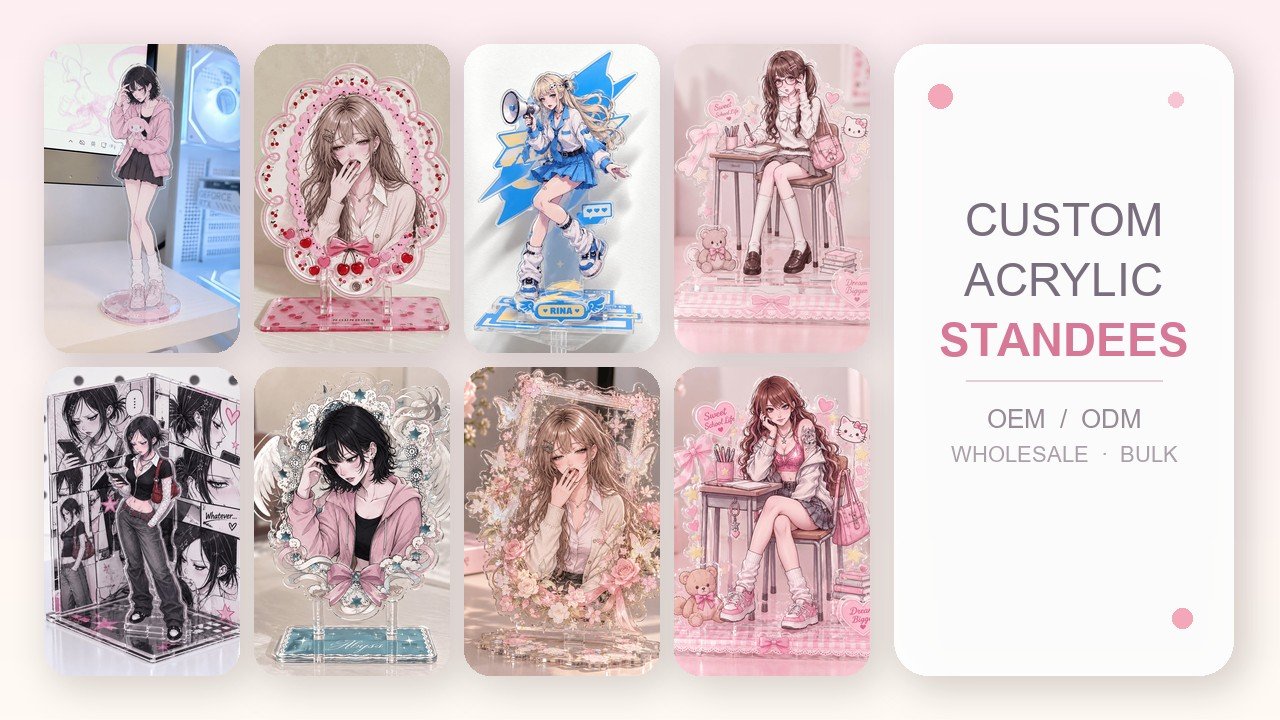
Custom Character Acrylic Standees: A Buyer’s Checklist for Anime & Game Merch
If you source merchandise for an anime title, a game IP, or a retail character line, you already know the feeling: too many suppliers, too many vague quotes, and not enough straight answers. A spec you assumed was standard turns out to be an upgrade. A “sample” takes three weeks. This checklist is written to remove those surprises. It covers the five specs you must lock before you ask for a price, what a realistic proofing and lead-time timeline looks like, how MOQ actually works for character standees, and how to keep your IP yours.
Why Character Standees Are the Steadiest Category in Anime & Game Merch
Character standees keep coming back in buyer demand year after year, and for good reason. They are flat and light, so freight stays predictable even on a bulk order. They display themselves without extra fixtures. Unlike apparel, they carry no size runs and no sizing returns. For a license holder, a standee is a low-risk way to test how strongly a character connects with fans; for a retailer, it holds shelf space without tying up much capital.
In our own inquiry data, character-display products — standees and accessories like ita bags — consistently attract buyer-level questions about bulk pricing and custom options, not just fan curiosity. That is a signal that this category is bought with intent. When a new IP line launches, standees are usually the first SKU we recommend preparing.
1. Lock These Five Specs Before You Ask for a Quote
A useful quote needs a complete brief. Decide on these five things first, and every supplier will give you a price you can actually compare:
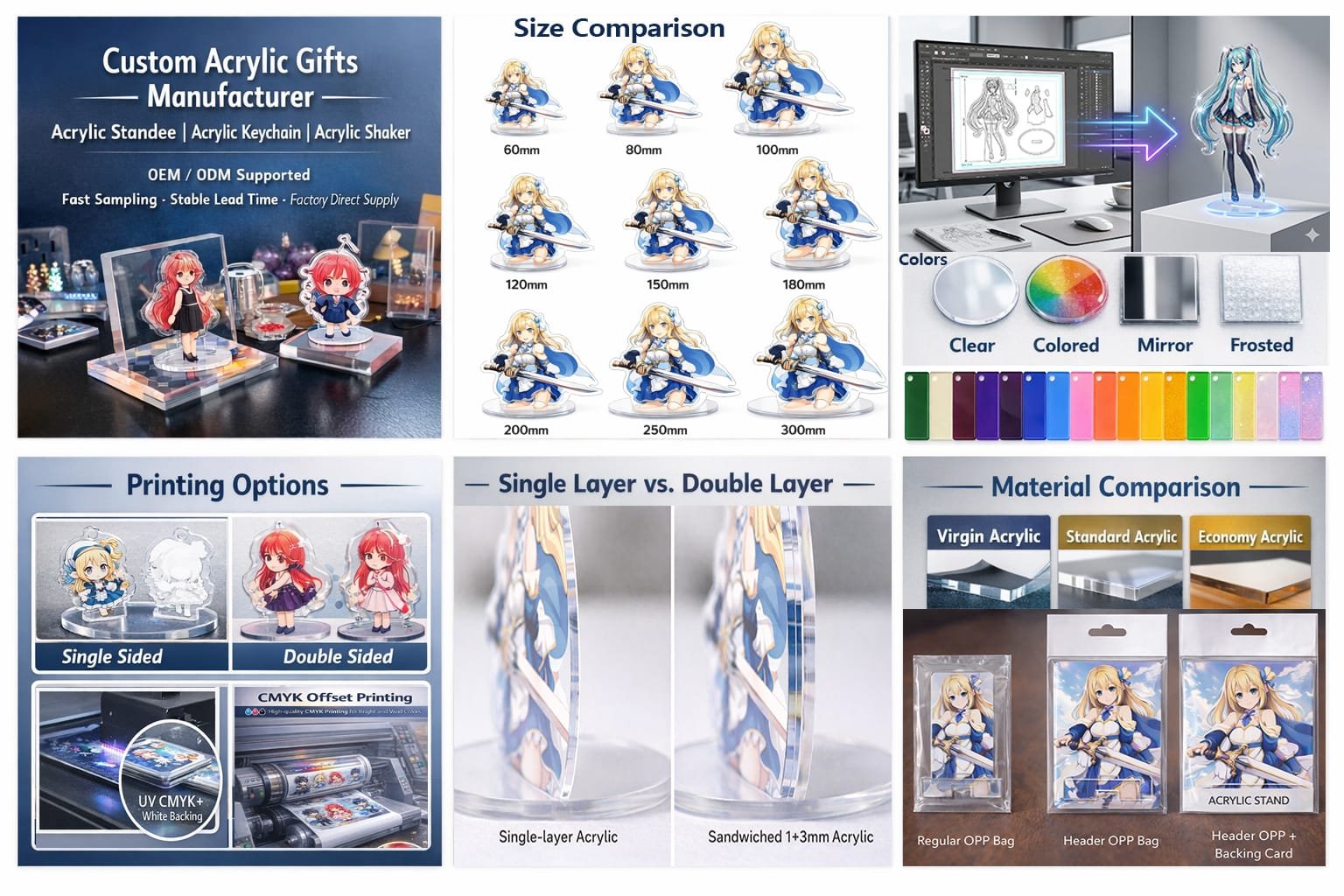
- Size. Give the finished height in centimetres. Common character standees run from 10 cm to 20 cm, but the right size depends on where they will be displayed.
- Thickness. Most standees use 3 mm acrylic; thinner or thicker options change both cost and how rigid the piece feels. Ask what is standard before you assume.
- Base. A separate insert base, a snap-in base, or a die-cut tab — each affects assembly, shipping, and perceived value.
- Printing: single or double sided. Double-sided printing costs more but matters when a standee sits on a shelf or desk where both sides are visible.
- Packaging. Opp bag, printed header card, or a retail box. Decide this early because it changes unit cost and lead time.
2. Proofing and Lead Time: A Realistic Timeline
Here is what actually happens between sending artwork and holding a finished batch. You approve a digital proof first — this is where layout, scale, and colour are signed off. Then a physical sample is produced and checked. Only after that does the bulk run begin.
For bulk production, plan on roughly 10–15 days after proof approval, depending on quantity and finishing. Custom or special processes can add time. Building that buffer into your launch schedule is the single easiest way to avoid a last-minute scramble before a convention or a retail drop.
3. How MOQ Really Works for Character Standees
MOQ is not one fixed number for every standee. It depends on the production method. Direct UV printing needs no mould, so small runs — even a single piece — are possible, which makes it ideal for testing a new character or an artist drop. Once you move to mould-based shapes, special finishes, or custom packaging, minimums are set by that specific process and order type.
So when you compare suppliers, ask them to state the MOQ per process, not as a single blanket figure. A supplier who gives you one number for everything is either simplifying or hiding a setup cost. We would rather tell you honestly what each option requires so you can plan a test run and a scale-up separately.
4. OEM / ODM and Protecting Your IP
Most buyers in this category need more than a printer. They need a partner who can take a character brief through artwork setup, sampling, production, and packaging under one roof — that is the OEM / ODM service B2B buyers expect from a manufacturer. Equally important is what happens to your design once you send it. Non-disclosure, controlled file access, in-house production, and no unauthorised resale are the basics a licensed character line should demand. If you want the full detail, read how we protect your IP during custom merchandise production before you place an order.
5. From File to Shelf: What Our Standee Line Can Do
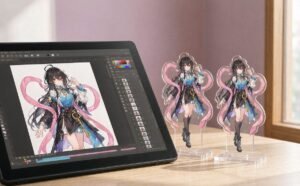
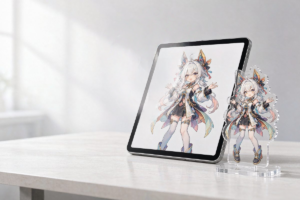
We print, cut, polish, and assemble in our own facility, which means one team owns your project from prepress to packed carton. Our custom character acrylic standees support single and double-sided printing, a range of sizes and thicknesses, white-ink backing for accurate colour, and a choice of bases and packaging — so the same line can handle a small convention test and a scaled retail release. Send us your character artwork and we will tell you exactly what it needs before we quote.
Frequently Asked Questions
Can I order a small batch first and scale up later?
Yes. Direct UV printing has no mould cost, so you can start small, test the design at a real event or in a shop, then increase the quantity once demand is proven.
What artwork format do you need?
Layered PSD or AI files are best. High-resolution PNG also works. Send the layers separated so we can set up white ink and any double-sided print correctly.
How long does a bulk order take?
Typically 10–15 days after proof approval for standard processes. Custom shapes, special finishes, or custom packaging may take longer — we confirm the exact timeline before production starts.
Can you handle licensed IP and keep it confidential?
Yes. We work with NDA protection, in-house production, and controlled file access. See our IP protection article linked above for the full process.
Ready to Plan Your Character Standee Order?
Send us your character artwork and tell us the size, finish, and quantity you have in mind. We will confirm the specs, the MOQ for your chosen process, and a realistic lead time — then get a sample in your hands before any bulk run.