When launching custom merchandise or expanding a product line, procurement teams and brand owners face a fundamental supply chain decision: Should you engineer a product from scratch, or customize an existing, production-proven foundation?
This decision defines your entire manufacturing strategy:
-
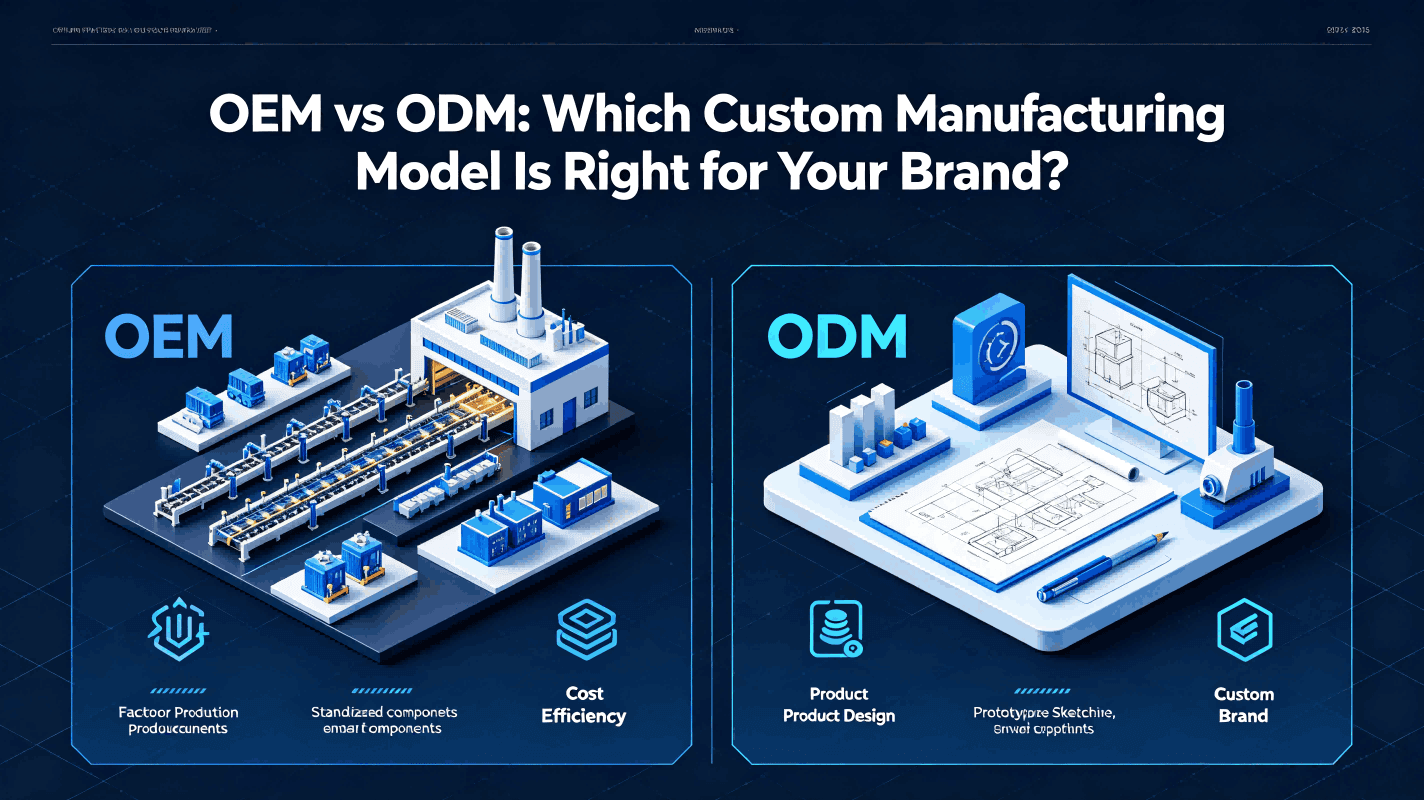
OEM (Original Equipment Manufacturing): You provide the complete design, engineering specifications, and tooling requirements. The manufacturer builds the product strictly to your proprietary blueprint.
-
ODM (Original Design Manufacturing): The manufacturer provides an existing, pre-engineered product structure or base solution. You customize it with your branding, artwork, surface finishes, colors, and retail packaging.
For B2B buyers, retailers, wholesalers, e-commerce brands, and IP licensors, choosing between OEM and ODM directly determines your upfront capital investment, development lead time, minimum order quantities (MOQs), and defensible market differentiation.
OEM vs ODM: What Is the Difference?
| Evaluation Factor | OEM (Original Equipment Manufacturing) | ODM (Original Design Manufacturing) |
| Product Design | Provided entirely by the buyer / brand | Provided by the manufacturer / factory |
| Tooling & Engineering | Custom molds, CAD engineering, custom tooling | Pre-existing tooling, standard factory molds |
| Customization Depth | Full structural, functional, and aesthetic control | Surface, graphic, color, material, and packaging customization |
| Development Cost | Higher (mold fees, 3D modeling, sampling runs) | Minimal to zero tooling / upfront engineering cost |
| Development Lead Time | 8–16+ weeks (tooling, prototypes, revisions) | 2–4 weeks (rapid sampling to production) |
| Product Uniqueness | 100% proprietary and exclusive | Shared base structure; differentiated by branding |
| MOQ Requirements | Higher (dictated by raw material batches & custom tooling) | Lower and more flexible |
| Best Suited For | Established brands, unique IP merchandise, patent holders | Startups, e-commerce sellers, seasonal retail, trend testing |
| Core Advantage | Maximum Product Control | Faster Speed-to-Market |
Strategic Rule of Thumb: OEM gives you total product control and defensible brand equity. ODM gives you speed, lower risk, and rapid market entry.
What Is OEM Manufacturing?
In an OEM project, the buyer owns the intellectual property, structural design, and technical specifications. The factory acts purely as a contract manufacturer executing your exact technical package (tech pack).
Your Proprietary Blueprint / CAD → Factory Tooling & Engineering → Exclusive Branded Product
Real-World OEM Example: Custom-Engineered Acrylic Standee
A gaming studio wants a proprietary multi-tier acrylic display for an IP launch:
-
Buyer Provides: Layered vector artwork, precise multi-slot base architecture, custom thickness specifications (e.g., 5mm high-density cast acrylic), pantone color profiles, custom injection-molded outer frame, and foil-stamped retail packaging.
-
Factory Executes: CNC tooling path programming, structural mold development for custom base attachments, precision UV print layering, dual-pass laser cutting, scratch-resistant coating, multi-point quality control (QC), and bespoke assembly.
The resulting product is completely exclusive to the client; the factory cannot sell or repurpose the tooling for any other buyer.
Who Should Choose OEM?
-
IP, Gaming & Character Brands: Licensing anime, gaming, or entertainment franchises requires strict adherence to character proportions, proprietary bases, and pantone-certified color accuracy that off-the-shelf catalog items cannot deliver.
-
Established & Direct-to-Consumer (DTC) Brands: Brands that have validated market demand and require proprietary product dimensions, premium finishes, and distinct functional features to maintain market leadership.
-
Design-Driven Retailers: Companies looking to eliminate direct price comparison on Amazon or retail shelves by developing proprietary silhouettes and uncopiable product architectures.
-
High-Volume B2B & Corporate Procurement: Buyers placing large recurring bulk orders who want to amortize one-time mold costs across tens of thousands of units to achieve the lowest possible marginal unit price.
OEM Advantages & Strategic Challenges
Advantages
-
Total Structural & Functional Control: You determine every dimension, material grade, structural tolerance, and surface treatment.
-
Defensible Market Differentiation: Competitors cannot directly purchase your product silhouette or design architecture from standard factory catalogs.
-
Stronger Private Label Equity: Creates exclusive value for retail distribution, high-tier corporate gifting, or proprietary retail lines.
Challenges
-
Higher Upfront Investment: Requires non-recurring engineering (NRE) expenses, mold/die tooling costs, and iterative prototype fees.
-
Extended Development Cycles: Engineering reviews, 3D prototypes, mold fabrication, and golden sample revisions take significant time before mass production begins.
-
Higher Minimum Order Quantities: Tooling setups and custom material sourcing often require larger volume commitments.
Related Guide: [Why MOQ Matters When Buying Custom Merchandise Wholesale]
What Is ODM Manufacturing?
With ODM manufacturing, the supplier has already invested in product development, testing, structural tooling, and production molds. You select an existing factory base and adapt it to your brand through surface design, colorways, hardware choices, and custom packaging.
Factory's Proven Product Base → Your Artwork, Color & Custom Packaging → Your Market
Real-World ODM Example: Custom Branded Acrylic Keychain
A lifestyle brand wants to launch a collection of branded keychains:
-
Factory Provides: Proven 3mm cast acrylic blanks, high-durability epoxy dome finishes, pre-tested snap-hook hardware, and standard die-lines.
-
Buyer Customizes: High-resolution graphics, double-sided UV printing treatments, specialized holographic foil overlays, branded metal clasp colors, and customized retail backing cards with barcodes.
The buyer avoids all mold and structural engineering fees, moving straight from artwork approval to mass manufacturing.
Who Should Choose ODM?
-
Startups & Emerging Brands: Businesses seeking to validate a niche or test brand appeal without deploying heavy upfront capital on custom tooling.
-
E-Commerce & Amazon/Shopify Sellers: Sellers prioritizing SKU velocity, rapid inventory replenishment, and fast turnaround to capitalize on emerging trends.
-
Retailers Expanding Catalog Depth: Multi-category retailers that need to add complementary accessories (e.g., printed tote bags, custom lapel pins, acrylic stationery) without dedicated R&D cycles.
-
Seasonal & Event-Based Buyers: Procurement teams sourcing for Christmas campaigns, Halloween drops, corporate trade shows, or annual conventions where strict delivery deadlines leave no room for lengthy tooling development.
ODM Advantages & Strategic Challenges
Advantages
-
Rapid Speed-to-Market: Skip the 6-to-12-week mold manufacturing phase; move from digital proof to bulk production in days.
-
Minimal Upfront Capital: Eliminate tooling and engineering fees, drastically lowering the financial barrier to entry.
-
Lower & More Flexible MOQs: Because the factory utilizes standard production fixtures and materials, minimum order requirements are significantly more accessible.
-
Low-Risk Market Testing: Launch multiple design variations simultaneously to identify bestselling SKUs before placing large bulk replenishment orders.
Challenges
-
Lower Structural Exclusivity: Other brands may use the same baseline physical form factor.
-
Design Differentiation Relies on Packaging & Graphics: You must lean heavily on distinct artwork, surface treatments (e.g., glitter, holographic, matte finishes), and custom packaging to stand out.
OEM vs ODM: Cost Comparison
B2B manufacturing cost is not simply “expensive vs. cheap.” It is a balance between Upfront Capital Expenditure (CapEx) and Unit Production Cost (OpEx).
OEM Financial Model: Higher Initial Tooling Cost + Lower Long-Term Unit Cost (at High Scale)
ODM Financial Model: Zero Initial Tooling Cost + Steady, Predictable Unit Cost (at Low-to-Mid Scale)
| Cost Component | OEM Project | ODM Project |
| Product Engineering & CAD | Buyer responsibility or billed by factory | Included in base factory offering ($0) |
| Tooling, Molds & Dies | $500 – $5,000+ (depending on complexity) | $0 (existing factory tooling utilized) |
| Pre-Production Sampling | Higher (multiple iterative structural runs) | Lower (standard pre-production proof) |
| Minimum Capital Required | Medium to High | Low to Moderate |
| Unit Production Cost | Highly scalable with volume | Highly competitive from low to mid tiers |
| Custom Retail Packaging | Fully bespoke die-lines & structures | Standard or custom die-lines available |
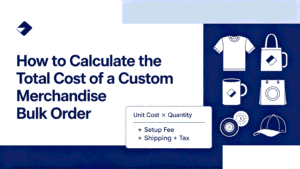
Related Guide: [How to Calculate the Total Cost of a Custom Merchandise Bulk Order]
Lead Time Comparison: Which Model Is Faster?
If your priority is meeting a fixed retail launch date or event deadline, the development pipeline makes a substantial difference.
OEM Production Timeline (Total: 8–16+ Weeks)
[ Concept / CAD ] ➔ [ Tooling & Mold Build ] ➔ [ First Article Sample ] ➔ [ Revisions ] ➔ [ Bulk Run ] ➔ [ QC & Logistics ]

ODM Production Timeline (Total: 2–5 Weeks)
[ Select Base Model ] ➔ [ Apply Artwork / Finish ] ➔ [ Pre-Production Proof ] ➔ [ Bulk Run ] ➔ [ QC & Logistics ]
-
Choose ODM if you must have finished goods delivered within 30 to 45 days for seasonal sales, trade shows, or sudden viral trends.
-
Choose OEM if you have a structured product development roadmap with at least 3 to 6 months of lead time before market launch.
OEM or ODM? Decision Framework by Buyer Type
| Buyer Profile | Recommended Model | Strategic Rationale |
| Startup / Early-Stage Brand | ODM | Preserves capital; allows fast market validation with lower inventory risk. |
| Fast-Moving E-Commerce Brand | ODM | Enables rapid SKU expansion and quick response to shifting consumer trends. |
| IP / Anime / Character Franchise | OEM | Demands precise aesthetic fidelity, custom structural dimensions, and strict brand control. |
| High-Volume Wholesaler | ODM or OEM | ODM for high-turnover commodity lines; OEM for proprietary hero products. |
| Seasonal / Holiday Buyer | ODM | Ensures strict adherence to critical event deadlines (e.g., Christmas, Halloween). |
| Proprietary Hardware / Design Brand | OEM | Essential for defending unique utility, ergonomics, and structural design patents. |
| Corporate Gifting / Event Planner | ODM | High visual customization on reliable, proven merchandise with guaranteed turnaround. |
Case Study: Sourcing Custom Acrylic Standees
To illustrate the operational trade-offs, consider a merchandise brand launching a new collector’s item:
                  ┌─ Option A: OEM Model (Bespoke Product Architecture)
                  │  • Custom multi-layered interlocking base with proprietary locking pins
                  │  • Non-standard acrylic thickness and custom injection-molded acrylic frame
Custom Acrylic ───┤  • Requires new tooling/molds; 8–10 week development window
Standee Project   │  • Result: 100% proprietary, defensible collector product
                  │
                  └─ Option B: ODM Model (Rapid Market Customization)
                     • Utilizes standard high-transparency cast acrylic and factory-stock base slots
                     • Customizes via double-sided UV printing, spot-gloss epoxy, and holo foil
                     • Zero mold fees; pre-production sample in 3 days; bulk turnaround in 12 days
                     • Result: Immediate market launch with minimal initial risk
The Hybrid Model: Semi-Custom Manufacturing
Modern B2B supply chains are rarely strictly binary. Many high-growth brands utilize a Semi-Custom (Hybrid) Manufacturing Model: combining proven ODM structural foundations with bespoke OEM finishing elements.
How the Hybrid Model Works:
-
Use an existing, proven base structure (e.g., standard acrylic body thickness, standard canvas tote pattern, standard metal pin mold base).
-
Add high-tier OEM customization layers (e.g., custom die-cut base shapes, specialized surface treatments, proprietary hardware platings, and bespoke multi-layer packaging).
This approach yields 80% of the uniqueness of pure OEM while maintaining the speed, low tooling cost, and flexible MOQs of ODM.
10 Questions to Ask an OEM/ODM Manufacturer
When evaluating a custom manufacturing partner in China, use this checklist to assess capability, transparency, and production reliability:
-
Service Scope: Do you provide pure contract OEM manufacturing, ready-to-customize ODM catalogs, or a hybrid of both?
-
MOQ Flexibility: What are your distinct MOQs for custom tooling (OEM) versus customized standard bases (ODM)?
-
Tooling & Mold Ownership: If we pay for custom molds/tooling, do we retain 100% intellectual property ownership, and will you sign an NNN agreement?
-
Sampling Policy: What is the cost, lead time, and revision protocol for pre-production golden samples?
-
Production Capacity: What is your daily/monthly factory throughput across laser cutting, UV printing, assembly, and packaging lines?
-
In-House Capabilities vs. Subcontracting: Which processes are executed directly in your facility, and which (if any) are outsourced?
-
Quality Control Standards: What formal QC checkpoints (e.g., raw material inspection, mid-production inline checks, final AQL standard sampling) are conducted prior to packing?
-
Packaging & Private Labeling: Can you manufacture custom backing cards, blister packs, branded barcodes, and export cartons in-house?
-
Lead Times: What is the guaranteed production timeline for initial sample approvals and subsequent bulk re-orders?
-
Re-Order / Repeat Run Efficiency: Do you archive production color profiles, cutting paths, and tooling specs to ensure exact color and dimension consistency on repeat runs?
BOCE Gifts: Direct OEM & ODM Manufacturing in China
BOCE Gifts operates as a direct-from-factory custom manufacturing partner in China, providing end-to-end OEM and ODM supply chain solutions for global retailers, IP brand licensors, wholesalers, and e-commerce companies.
                      BOCE Manufacturing Solutions
                                   │
         ┌─────────────────────────┴─────────────────────────┐
         ▼                                                   ▼
  OEM Capabilities                                    ODM Capabilities
  • Proprietary structural engineering                • Fast-turn catalog customization
  • Custom mold & tooling development                 • Zero mold fees & low MOQ options
  • Strict IP & visual fidelity control               • Rapid 3-5 day sampling cycles
  • Ideal for: Exclusive retail & hero products       • Ideal for: Seasonal drops & trend testing
Whether you need complete custom product engineering or rapid, low-MOQ catalog personalization, our production infrastructure delivers consistent quality, competitive factory-direct pricing, and dependable lead times.
Core Manufacturing Strengths
-
Factory-Direct Pricing: Eliminate intermediary trading markups with transparent, tier-based wholesale pricing.
-
Flexible MOQs: Scale smoothly from small-batch product-market testing to full container-load bulk orders.
-
Multi-Process Customization: In-house UV flatbed printing, precision CNC laser cutting, epoxy casting, screen printing, and hardware assembly.
-
Rigorous Quality Control: Multi-tier quality checkpoints verifying material transparency, scratch resistance, color accuracy, and packaging integrity prior to dispatch.
-
Archived Production Data: All print profiles, tooling paths, and packaging specs are digitally archived for seamless, color-matched repeat orders.
Next Steps for Your Project
Choosing between OEM and ODM comes down to your priorities:
-
Select OEM if you have proprietary designs, strict IP requirements, and the timeline to build a defensible product line.
-
Select ODM if your priority is speed-to-market, low upfront investment, and flexible order quantities.
-
Select a Hybrid Model if you want custom visual impact built on a proven, cost-effective structural foundation.
To discuss product specifications, evaluate tooling feasibility, or receive a factory-direct quote for your upcoming production run, send over your design files, target quantity, and delivery timeline.
Frequently Asked Questions (FAQ)
What is the primary difference between OEM and ODM?
In OEM (Original Equipment Manufacturing), the client designs the product from scratch, and the factory manufactures it to those exact specifications. In ODM (Original Design Manufacturing), the factory designs the base product, and the client customizes it with their branding, surface graphics, colors, and packaging.
Is OEM manufacturing always more expensive than ODM?
OEM requires higher upfront capital expenditure due to tooling, CAD engineering, and prototype testing. However, at large production scales (tens of thousands of units), the unit manufacturing cost of an OEM product can be equal to or lower than an ODM product because tooling costs are fully amortized.
Can a startup brand use OEM manufacturing?
Yes, provided the startup has sufficient capital for upfront tooling, clear technical specifications, and a timeline that accommodates prototyping and testing. However, most early-stage brands start with ODM or semi-custom manufacturing to preserve cash flow and validate market demand first.
Can an ODM product have fully customized private label packaging?
Yes. ODM suppliers routinely support custom private labeling, including custom-printed backing cards, retail boxes, hangtags, barcodes, and custom master cartons, allowing you to build a cohesive retail presence without structural product mold fees.
How does intellectual property (IP) work with OEM vs ODM in China?
With OEM, you pay for the custom molds and engineering, meaning you retain structural and design ownership (provided you execute clear manufacturing agreements with your factory). With ODM, the factory owns the underlying structural molds, while you retain ownership of your proprietary surface artwork, logos, and branded packaging.
What is the typical lead time difference between OEM and ODM?
ODM projects typically move from artwork approval to finished production in 2 to 4 weeks. OEM projects generally require 8 to 16 weeks or more, depending on the complexity of mold design, tooling fabrication, prototype revisions, and final sample approval.
Can a single manufacturer provide both OEM and ODM services?
Yes. Established manufacturing partners like BOCE Gifts offer both pure OEM contract manufacturing for proprietary designs and flexible ODM solutions for fast-turnaround, low-MOQ branded merchandise.