

In 2026, the global anime merchandising and ACG (Anime, Comic, and Games) peripheral goods market is shedding its label as a niche otaku subculture.
As global streaming penetration hits saturation, content monetization online has slowed, driving IP owners and manufacturers to turn to physical merchandise and derivative consumption as their core engines for profit growth. Today, the merchandise industry is rapidly evolving into a mature industrial ecosystem characterized by heavy capitalization, globalized IP licensing, and omnichannel distribution.
This is no longer just a fan phenomenon—it is a massive commercial wave that businesses cannot afford to ignore.

1. A Ten-Billion-Dollar Market: Hard Data from Global Authorities
While top-tier market research institutions vary slightly in their exact statistical boundaries, their long-term forecasts for the 2026 global anime merchandising market are unanimously and remarkably optimistic.
According to the latest data from Grand View Research, Persistence Market Research, and Fortune Business Insights, the core market indicators shape up as follows:
| Research Institution | 2026 Global Market Valuation | Long-Term Forecast & Valuation | Compound Annual Growth Rate (CAGR) |
| Grand View Research | $13.30 Billion | $23.90 Billion (by 2033) | 8.8% (2026-2033) |
| Persistence Market Research | $10.70 Billion | $19.80 Billion (by 2033) | 9.3% (2026-2033) |
| Fortune Business Insights | $13.22 Billion | $27.35 Billion (by 2034) | 9.52% (2025-2034) |
Market Insight: Across all major statistical metrics, the global anime merchandise market has firmly crossed the $10 billion threshold in 2026 and is poised to maintain a near-double-digit growth rate over the next 7 to 8 years.
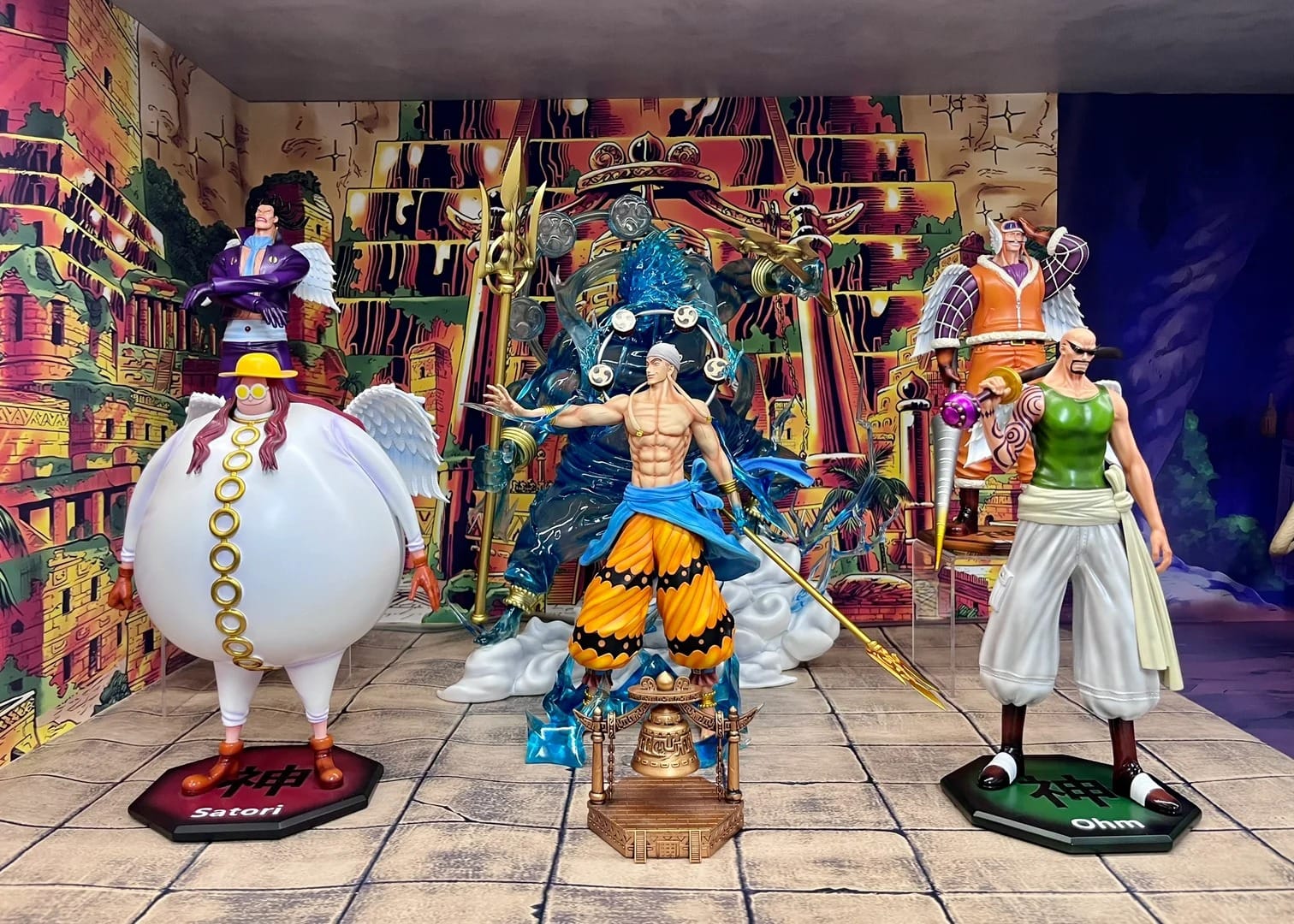
2. Product Matrix: Core Collectibles Hold Steady While Lightweight “Goods” Explode
The product landscape of 2026 showcases a fascinating dual dynamic: steady growth in heavy, high-end collectibles contrasted with an explosive boom in lightweight, everyday merchandise.
1. Toys & Figurines: The Market Anchor
Remaining the largest revenue driver for the entire industry, figurines and high-precision models command a 28% to 37% share of the global market. In 2026 alone, global sales for toys and figurines are projected to surpass $3.0 billion.
-
The Technological Dividend: The widespread adoption of 3D printing prototyping has dramatically slashed figurine development cycles down to just 9 months, allowing manufacturers to capture trending IP hype at unprecedented speeds.
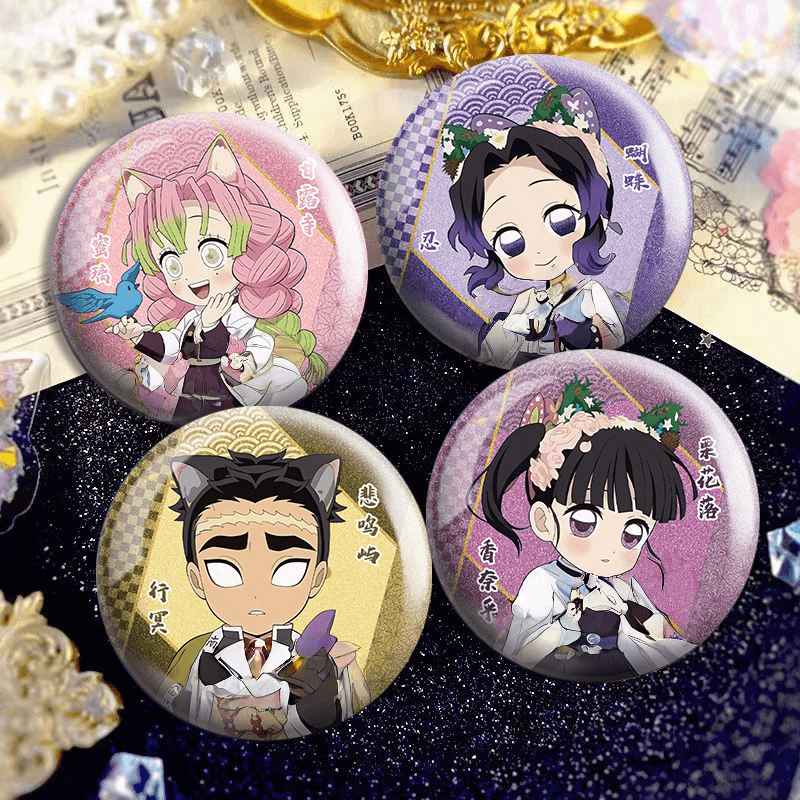
2. Apparel & Accessories: The Fastest-Growing Golden Track
This sector is surging forward at a staggering CAGR of 13.9% and is projected to reach $5.9 billion by 2033.
-
Identity and Expression: The cross-over of anime IPs with streetwear brands and accessible luxury accessories has transformed badges, pins, “itabags,” and themed apparel from idle cabinet collectibles into active “social currency” for the younger generation’s daily identity expression.
3. Books & Light Novels: High-Value Physical Collectibles
Maintaining a steady annual growth of around 10% starting in 2026. In an era dominated by digital reading, physical manga and art books are shifting toward premium hardcover formats and deluxe limited editions, leveraging higher price points to cater to die-hard collectors.
3. Geographic Outlook: APAC Dominance and Dual Growth Engines
The global consumption footprint in 2026 reflects a distinct reality: absolute dominance by the APAC region, alongside rapid growth in North America. Within this framework, China’s role has undergone a profound, fundamental shift.
【2026 Key Geographic Sectors in Global Anime Merchandising】
 ├── Japan (The IP Cradle): Valuation >$5.2B, holding ~49% global share (Bandai, GSC dominate licensing)
 ├── China (Consumption Boom + Global Super-Factory): $22B (¥160B) market, driving the global supply chain
 ├── North America (High-Ticket Haven): Projected $3.2B by 2033, robust purchasing power for limited editions
 └── India (The Blue Ocean): 14.2% high-growth trajectory fueled by localized streaming content
-
Japan: The Irreplaceable Monetization Center. Japan’s domestic market valuation exceeds $5.2 billion, commanding nearly half of the global market share. Driven by its mature “Production Committee” system and an established network of giants like Bandai and Good Smile Company, Japan maintains an unshakeable monopoly on IP licensing.
-
North America & India: Two Speeds of Expansion. North America, backed by tremendous consumer purchasing power, has become a high-ticket haven for limited-edition collectibles (with the US market projected to surpass $2.4 billion by 2033). Meanwhile, India is charting a 14.2% growth rate, emerging as a high-potential blue ocean fueled by localized anime streaming.
-
China: A $22 Billion (¥160B) “Goods Economy” & The Global Super-Factory.
-
On the Demand Side: China’s anime derivative industry is projected to reach ¥160 billion RMB ($22 billion USD) in 2026, with merchandise licensing accounting for ¥130 billion. The frenzy for small-scale merchandise—such as badges, acrylic standees, and keychains—has sparked an emotional fulfillment shopping wave among young consumers. Brick-and-mortar “goods shops” and dedicated ACG retail zones have even emerged as the primary savior for traditional shopping malls undergoing retail restructuring.
-
On the Supply Side (The Core Upgrade): China is no longer just a booming consumer market; it is the vital “World Factory” and powerhouse supplier keeping the global anime economy running. Whether it is the prototypes for Japanese manufacturers, limited editions for North American collectors, or the millions of acrylic standees and badges lining retail shelves worldwide, the underlying backbone is China’s highly sophisticated manufacturing supply chain.
-
From rigorous sourcing of premium raw acrylic materials to high-precision mold cutting executed by industrial-grade CNC machinery, Chinese factories utilize exceptional industrial manufacturing power and agile supply chains to push production precision and efficiency to the limit. Advanced printing techniques, high-speed CNC routing, and massive economies of scale give Chinese suppliers absolute pricing power and delivery speed advantages in international B2B procurement. Ultimately, no matter how high global demand spikes, it relies entirely on the industrial foundation built by Chinese manufacturing.
-
4. Channel Restructuring: The Synergy of Direct Online Sales and Offline Communities
The restructuring of distribution channels is the underlying logic behind the 2026 merchandising boom. The traditional multi-tiered distributor model is rapidly being replaced by a streamlined “Direct Online + Offline Community” hybrid framework.
-
Online Channels (Commanding over 53% Share): The global online distribution sector for anime merchandise is valued at over $5.7 billion in 2026. Beyond traditional e-commerce giants like Amazon, eBay, and AliExpress, vertical streaming platforms—such as Crunchyroll with its 21 million+ paid subscribers—are leveraging massive digital traffic to cross-sell merchandise directly to their user base. This “watch-and-buy” direct-to-consumer model significantly cuts acquisition costs while boosting repeat purchases.
-
Offline Experiences (Holding a Solid 40% Share): Specialty brick-and-mortar retail stores and major conventions (such as Japan Expo in Paris and AFA in Singapore) remain indispensable drivers of retail revenue. The anime demographic relies heavily on physical spaces for community socialization, trading merchandise, and showcasing collections (such as itabag meetups). The immediate emotional value and physical connection provided by offline retail guarantee its enduring vitality.
Conclusion
The anime merchandising industry of 2026 is no longer a self-contained subculture; it has matured into a premier global sector powered by technological innovation (3D printing), heavy capital injection, and integrated international supply chains.
From Japan’s powerhouse IP licensing and North America’s premium buying power to China’s unique position—combining a massive $22 billion consumer appetite with industrial-grade CNC manufacturing capabilities—the market is ripe with opportunity. The businesses that successfully bridge the gap between consumer emotional value and robust industrial supply chain efficiency are the ones that will claim the largest share of this multi-billion-dollar windfall.