Part 1: Why is Selling Hats So Profitable Right Now?
What is the biggest fear in the apparel business? Stockpiling unsellable inventory due to incorrect sizing estimates (like XS, S, M, L, XL). Hats perfectly avoid this trap because they are almost entirely “one-size-fits-all” (adjustable). This minimizes your inventory risk when starting a business.
Much like the lucrative market of promotional drinkware, hats offer incredible margin flexibility.

How much can you actually earn?
-
The Standard Play (DTC/Selling on your own website): The landed cost of a custom hat, including shipping and packaging, is about $12, and you can easily retail it for $30-$35. The profit margin is substantial, leaving you plenty of room to cover advertising and operational expenses.
-
The Wholesale Play: The profit margins per unit are lower, but you can sell hundreds or thousands of pieces to retail shops in a single order, making money through sheer volume. This is identical to the highly profitable B2B model of selling custom mugs with logo or personalized cups bulk to corporate clients.
-
The Dropshipping Play (Zero Inventory): The factory only produces and ships the item after a customer places an order. While completely hassle-free, the product costs are higher, leaving you with the lowest net profit margin (often under 10%).
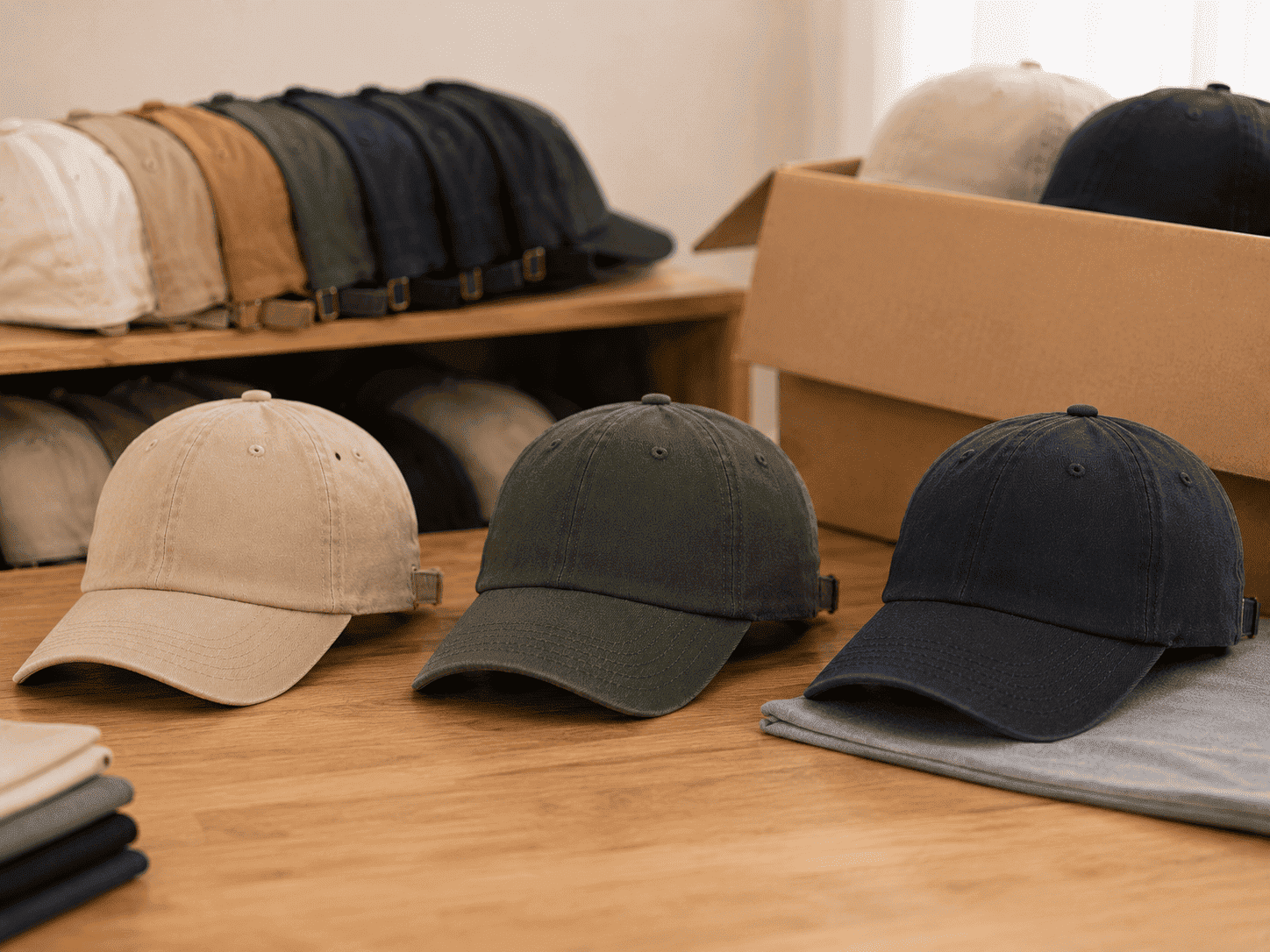
The Core Secret: Find ways to make the hat look expensive. For example, a basic cotton cap might sell for $25. If you add a premium leather logo patch, even though your production cost only increases by a few dollars, you can effortlessly push the retail price up to $40.
Part 2: Which Styles and Materials Are the Most Profitable?
You need to know which styles are currently trending and what materials command premium pricing.
1. The Two Current “Mega Hits“
-
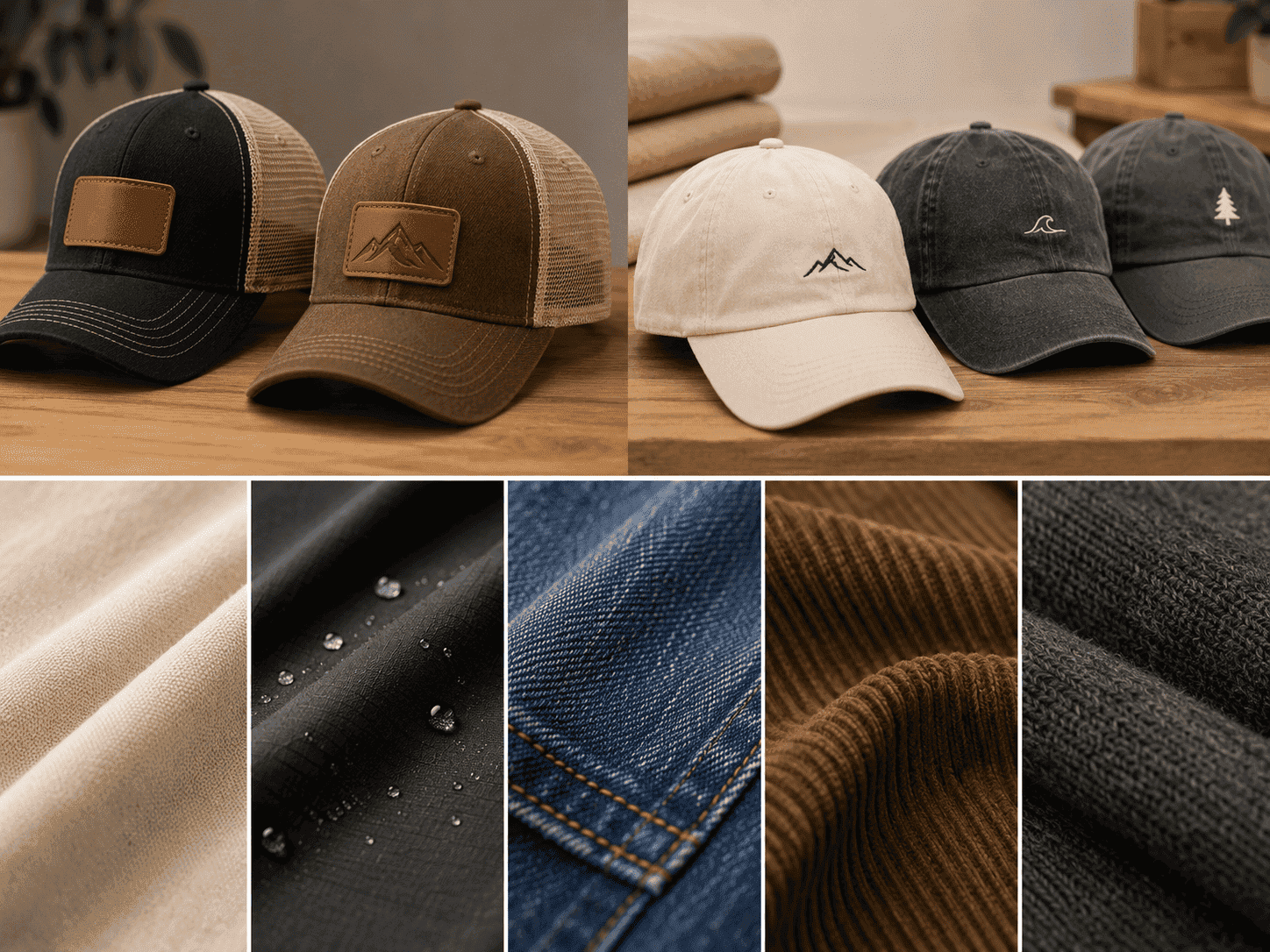
Trucker Hats with Leather Patches: The absolute “king of profits.” Featuring breathable mesh and a vintage genuine or faux leather logo patch on the front. Consumers associate leather with artisanal craftsmanship and premium quality, so they are willing to pay nearly $40 for it, while your underlying cost is only a dozen dollars.
-
Minimalist Embroidery Dad Hats: Soft, unstructured, and highly casual baseball caps. Paired with a tiny embroidered logo, these easily trigger impulse purchases on short-video platforms like TikTok. The cost is extremely low, making this the “ballast stone” that generates a steady, continuous stream of daily cash flow for your brand.
2. The “Fabric and Material” Codes You Must Know The material directly dictates the hat’s end-use and how much you can charge for it:
-
Cotton / Canvas: The most common and comfortable. Dad hats are mostly made of pure cotton. Breathable and sweat-absorbing, perfect for daily casual wear.
-
Polyester / Nylon: The top choice for sports and quick-dry performance hats. Water-repellent, colorfast, and highly durable. Golf and running caps frequently use these fabrics. By adding a “UV protection” marketing angle, you can logically raise the price by 30%.
-
Denim / Corduroy: The ultimate vintage tools. These materials naturally carry a sense of age and visual weight. They are perfect for fall/winter streetwear collections and yield exceptional profit margins.
-
Wool / Acrylic: The staple for winter beanies. If you take a basic, inexpensive acrylic beanie and apply a high-quality leather patch to it, it instantly transforms from a cheap flea-market item into a high-end boutique commodity.
Part 3: How to Put Your Logo on the Hat?
This step involves customization techniques, and choosing the right method will save you a massive amount of money.
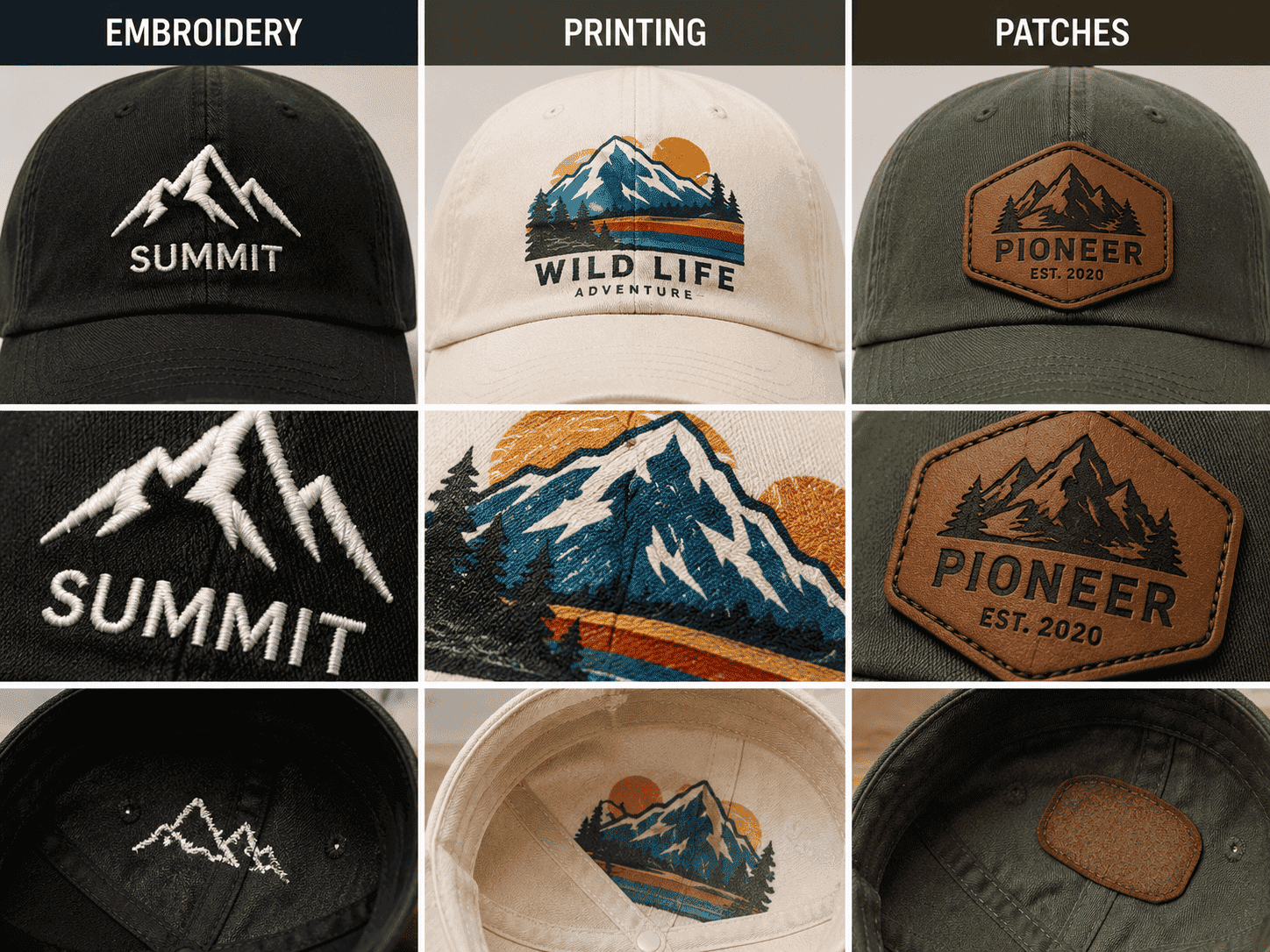
-
Embroidery (Looks the most premium, but has limitations): Stitched directly with thread, offering a strong 3D texture that will never wash off. However, its drawback is that it cannot handle complex color gradients or extremely small text (the machine will bunch tiny letters into a messy clump). 3D Puff Embroidery (which uses a foam base to raise the design) looks the coolest but is more expensive.
-
Printing (Vibrant colors, suitable for bulk orders): Can print virtually any complex design, but the “setup fees” are notoriously expensive. If you only make 10 hats, the average cost per unit is shockingly high; if you order 300 hats at once, the cost per unit drops off a cliff. Therefore, printing must rely on volume.
-
Patches (The king of cost-effectiveness): The logo is manufactured elsewhere as a standalone leather, woven, or rubber patch, and then heat-pressed or sewn onto the hat. This method is almost foolproof, ensures the hat remains comfortable to wear (without messy embroidery threads rubbing against the inside), and looks incredibly professional.
Part 4: Where to Find Factories to Make Hats?
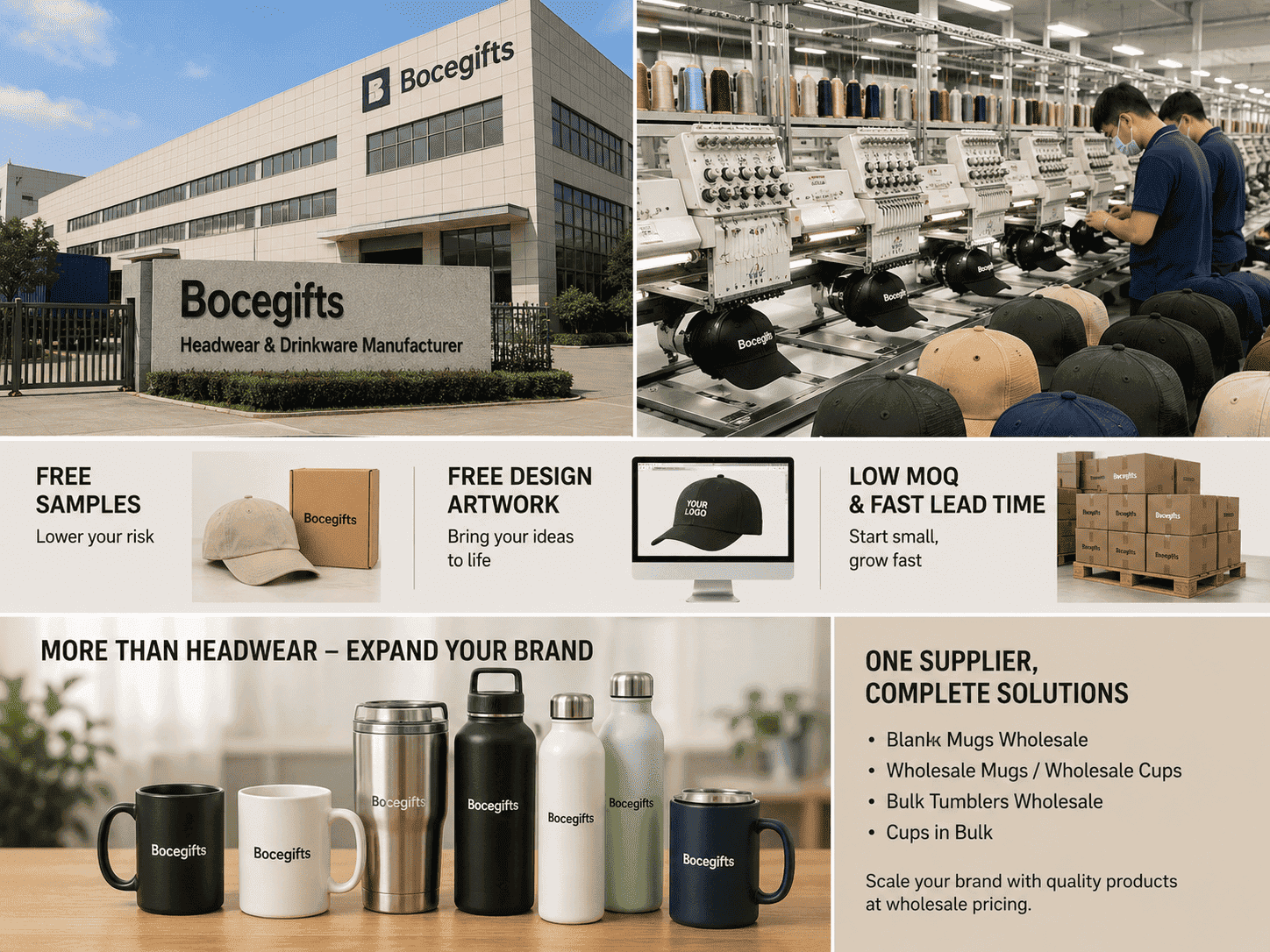
The vast majority of global headwear manufacturing comes from China due to its unmatched technology and supply chain flexibility. For anyone looking to source goods, we highly recommend the following source factory:
Bocegifts
-
Pros: They provide free samples and complimentary design artwork services, helping you drastically lower trial-and-error costs and design barriers in the early stages, making it incredibly easy to bring your product concepts to life.
-
Expansion Bonus: Beyond apparel, Bocegifts is also a premier drinkware supplier. If you want to scale your brand’s promotional merchandise, you can directly buy cups in bulk from them. Their extensive catalog allows you to source blank mugs wholesale, wholesale mugs / wholesale cups, and even bulk tumblers wholesale all in one place.