
As global ACGN (Anime, Comic, Games, and Novels) culture transitions from niche subcultures into mainstream consumer markets, anime conventions (ACGN expos) have evolved far beyond mere community gatherings. Today, they serve as high-efficiency monetization and promotion hubs for massive IP derivative supply chains. From Tokyo Big Sight’s Comic Market (Comiket) and Los Angeles’ Anime Expo (AX) to San Diego Comic-Con (SDCC) and Paris’ Japan Expo, major exhibitions have established highly differentiated entry barriers shaped by unique regional regulations, union policies, and cultural attributes. To successfully deploy at global conventions, exhibitors must deeply understand booth application processes, localized tax and labor compliance, scientific product selection logic, and efficient collaboration mechanisms with cross-border supply chains and source factories.
I. Booth Application and Regulatory Compliance Mechanisms at Major Global Conventions
Due to varying market positions, global ACGN conventions have established a strict two-track entry system dividing Non-profit/Artist Alley (Circles) from Commercial Exhibitors (Corporate Areas). Conventions across different regions enforce stringent regulatory red lines regarding qualification audits, tax registration, and on-site booth construction.
1. Asia-Pacific Market Access and Operational Realities
ACGN conventions in the Asia-Pacific region feature a blend of deep localization and community-driven management.
-
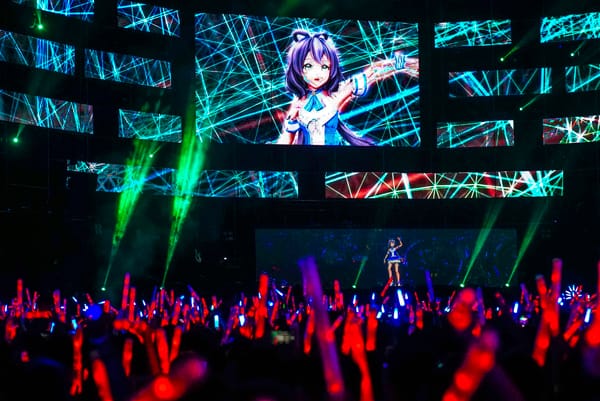
Comic Market (Comiket – Tokyo, Japan): As the world’s largest fan-made (doujin) marketplace, Comiket focuses on non-commercial, direct peer-to-peer transactions.
-
Strict Stratification: Participants are strictly divided into Circles (individual creators) and Corporate Booths.
-
Localization Barriers: Individual Circle applicants must possess basic Japanese communication skills and a physical Japanese address/phone number to receive mail; direct overseas applications are rejected. Corporate booths are closed to direct overseas applicants, requiring foreign companies to operate through a local Japanese proxy or agent.
-
Analog Tooling: Operations rely heavily on physical tools. Exhibitors and attendees frequently use the Web Catalog system via the “Gold Service” (costing 660 JPY per month) to locate target circles.
-
Cash Dominance: Transactions are overwhelmingly cash-based. Due to long lines and rapid micro-transactions, international exhibitors and buyers must carry sufficient cash.
-
-
Mainland China Market (BW, Firefly, ChinaJoy): Compliance focuses primarily on content censorship and public safety.
-
Ticketing Segregation: At mega-events like Bilibili World (BW), domestic and international ticketing channels are separated. Domestic attendees utilize real-time identity verification via Bilibili Member Buy, while overseas attendees purchase single-day passes via Trip.com.
-
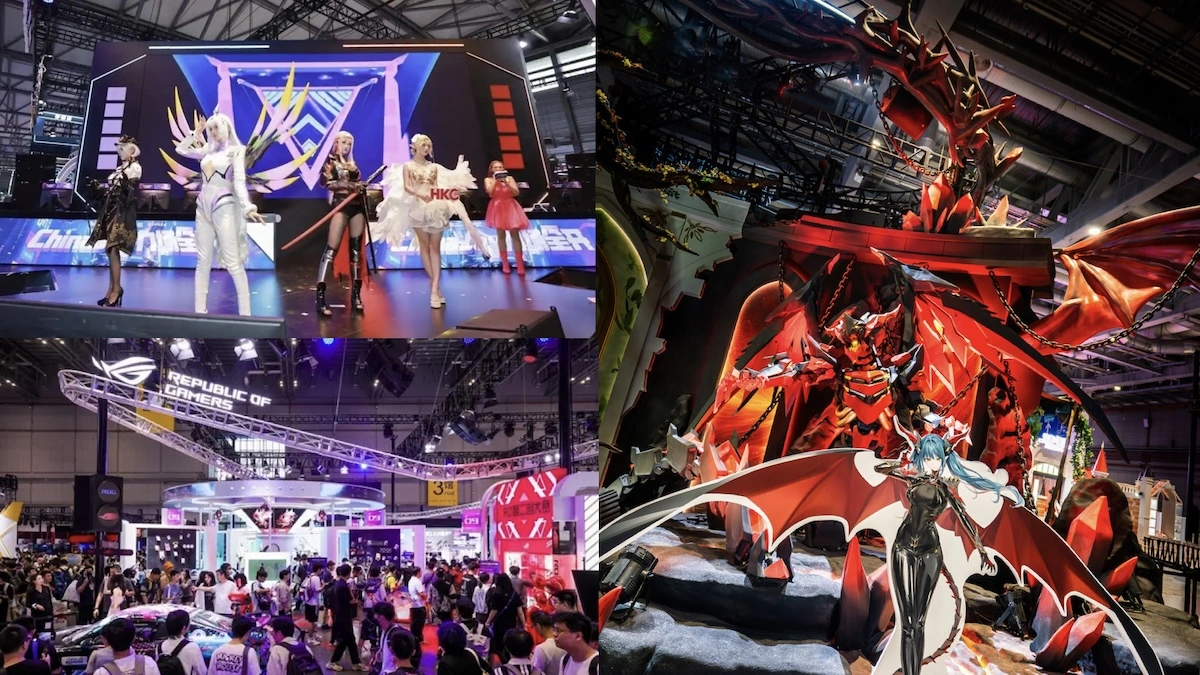
Cosplay & Personnel Audits: Regional events like Guangzhou Firefly Anime Games Expo and ChinaJoy enforce strict regulations on costumed attendees. ChinaJoy requires all cosplayers to submit identity information and costume designs in advance through an official Cosplay Costume Review Portal; unapproved attire is denied entry.
-
Content Restrictions in Doujin Zones: Firefly’s doujin zone (TW Project) employs a strict Product Review System. Applying circles must email a complete application package—including product previews and physical prototype photos—to the organizing committee for initial compliance review. To prevent commercial inventory from diluting the creator space, rules state that commercial merchandise cannot exceed 50% of a doujin booth’s total layout area. Selling non-ACGN handicrafts or any food and beverage items is strictly prohibited.
-
2. Western Market Access: Tax and Union Labor Barriers
North American and European markets represent core consumer bases for commercial derivatives, but booth applications and on-site management are constrained by high compliance costs and local labor union laws.
-
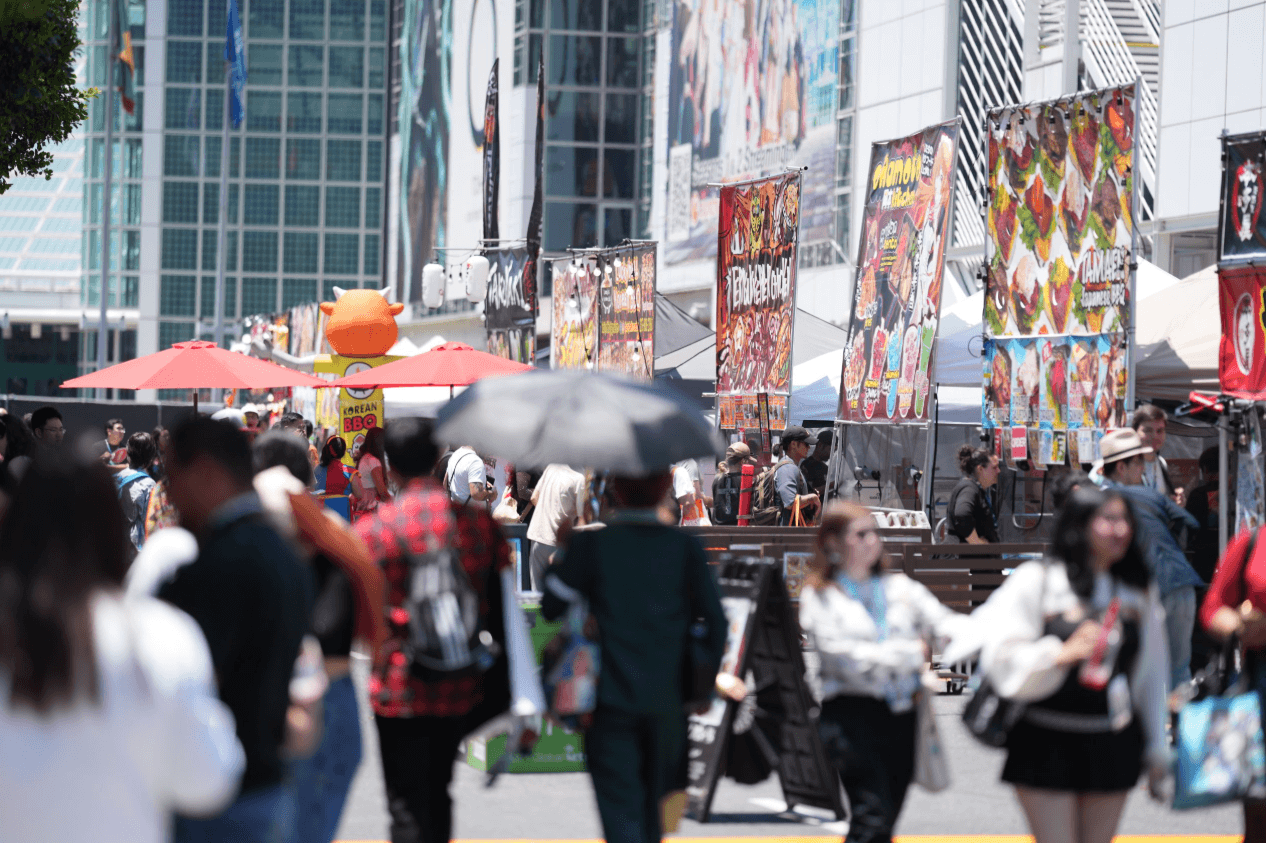
Anime Expo (AX – Los Angeles, USA): Starting in 2025, AX’s Artist Alley transitioned completely from a “first-come, first-served” model to a strict Jury System, significantly raising the entry barrier. Artists are restricted to purchasing a single booth package.
-
Tax Compliance: California state law mandates that any individual or entity selling items on-site must apply for and submit a unique California Seller’s Permit from the California Department of Tax and Fee Administration (CDTFA) at least 90 days before the event. Joint or shared permits (e.g., permits formatted as “et al.”) are rejected.
-
Physical Display Restrictions: AX enforces precise structural rules for Artist Alley: tables are standardized at 6 ft x 2 ft without table skirts. All merchandise, props, and backstocks must be stored on or directly beneath the table, keeping aisles clear. Display structures cannot exceed 7 ft 6 in from the ground. To maintain visibility and safety, displays must feature a clear line-of-sight opening measuring at least 8.5 in x 11 in (preventing solid poster walls). End tables are prohibited from spilling over into peripheral aisles.
-
-
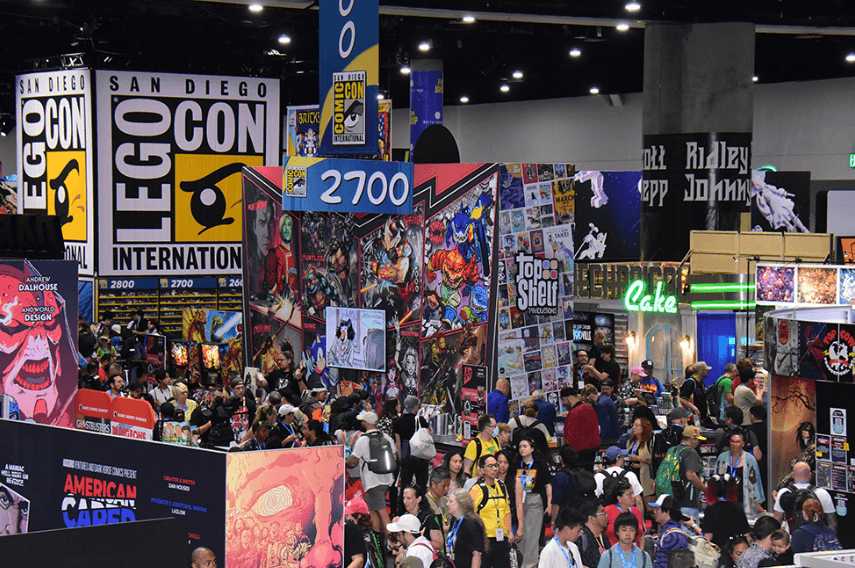
San Diego Comic-Con (SDCC / WonderCon – USA): SDCC imposes complex commercial audits.
-
Professional Audits: Applicants must submit professional portfolios or proof of industry employment from the past three years into the Member ID system. Temporary or expiring cloud storage links (such as Dropbox) are rejected.
-
Tax Lockouts: Upon securing a booth, exhibitors must pass the CDTFA 410-D tax audit and settle all outstanding balances to unlock and view their Exhibitor Badge Allotment.
-
High Badge Costs: Extra exhibitor badges are expensive. An Exhibitor badge (granting access during setup and teardown) costs $725, while an Exhibitor Attendee badge (restricted to public hours) costs $383. In contrast, WonderCon offers lower entry barriers, providing 10 ft x 10 ft uncarpeted spaces and 8 ft Dealers’ Tables with back drapes alongside affordable badge top-ups.
-
The Union Labor Hurdle: At the San Diego Convention Center, moving materials that exceed standard Hand-carry Rules requires hiring union labor. Hand-carry rules dictate that items must be transported by a single person, unassisted, through the main lobby entrance in a single trip. Using two-wheeled hand trucks or folding carts is strictly prohibited. If an exhibitor attempts to use a cart, union stewards have the right to impound the goods and levy steep drayage fees. Furthermore, exhibitors hiring an Exhibitor Appointed Contractor (EAC) must submit a Notice of Intent (NOI) at least 25 days in advance, and the EAC must hold a Certificate of Insurance (COI) with a minimum liability coverage of $1,000,000; otherwise, setup crews will be denied entry.
-
-
Japan Expo (Paris, France): As Europe’s largest celebration of Japanese culture, Japan Expo categorizes booths into Amateur, Young Professional, and Commercial.
-
European Tax & Registration: All sales must comply with French tax laws, requiring exhibitors to remit a 20% French Value Added Tax (TVA). Commercial applicants must submit a KBIS certificate (French business registration) or an extract from the National Register of Enterprises (RNE) issued within the last three months, alongside mandatory local public liability insurance.
-
Fire Safety & Space Caps: Pop-up tents and display racks must carry European fire-retardant and explosion-proof safety certifications (such as French NF standards) and must be weighted down with sandbags at all four corners. Additionally, commercial sales activities are restricted to a maximum of 20% of the exhibitor’s total booth footprint.
-
Summary Table: Global Convention Comparisons
| Convention Name | Core Booth Types | Physical Structure & Display Restrictions | Registration & Core Tax Compliance Requirements |
|
Comic Market
(Tokyo, Japan) |
· Circle (Doujin)
· Corporate |
· Allotted standard tables and chairs.
· Alterations to basic layouts are prohibited; cosplaying/lingering outside designated areas is banned. |
· Individuals require Japanese communication skills, plus a local address and phone number.
· Corporate booths must apply via a local Japanese proxy.
· Transactions are heavily cash-dependent. |
|
Anime Expo
(Los Angeles, USA) |
· Artist Alley
· Exhibitor |
· Standard 6’x2′ tables with no table skirts.
· Display heights are limited to 7’6″ maximum.
· Displays must maintain an 8.5″x11″ sight opening.
· Storing inventory on aisle floors is prohibited. |
· Artist Alley operates on a strict Jury System.
· Must submit a unique CDTFA Seller’s Permit before setup; shared permits are banned.
· Minors aged 16-17 require a full-time guardian. |
|
San Diego Comic-Con
(San Diego, USA) |
· Exhibitor
· Small Press |
· Custom/island booths require detailed blueprints submitted early for fire safety audits.
· Bound by strict union labor laws; self-hauling large cargo is prohibited. |
· Must submit industry work history or professional portfolios from the past 3 years (no temporary cloud links).
· Must pass CDTFA 410-D tax verification to unlock badges.
· High exhibitor badge costs. |
|
Japan Expo
(Paris, France) |
· Amateur
· Young Professional
· Commercial |
· Standard booth size is 3m × 3m ($9 \text{ m}^2$).
· Pop-up tents must be anchored at all four corners with sandbags.
· The Japanese national flag must be hung higher than commercial branding logos. |
· Mandatory 20% French VAT (TVA) registration and reporting.
· Must provide KBIS/RNE extracts and local liability insurance.
· Display materials require European fire-retardant safety certification (NF standards). |
|
Firefly / TW Project
(Guangzhou, China) |
· TW Doujin Booth
· Commercial Standard / Custom |
· Standard booth size is 3m × 3m.
· Basic configurations (e.g., simple trusses without electrical connections) are eligible for a 50% discount on construction deposits. |
· Must submit preview drafts or physical prototype photos for content review.
· Commercial goods are restricted to under 50% of the doujin booth footprint.
· Unauthorized counterfeit goods and food items are banned. |
II. Merchandise Selection Logic, Supply Chain Lifecycles, and IP Copyright Compliance
In a convention setting, product selection blends consumer psychology, supply chain turnover velocity, and intellectual property boundaries. Exhibitors should focus on strategies prioritizing low unit cost, high profit margins, and lightweight profiles, backed by rock-solid copyright compliance.
1. High-Demand Merchandise Categories and Lifecycles
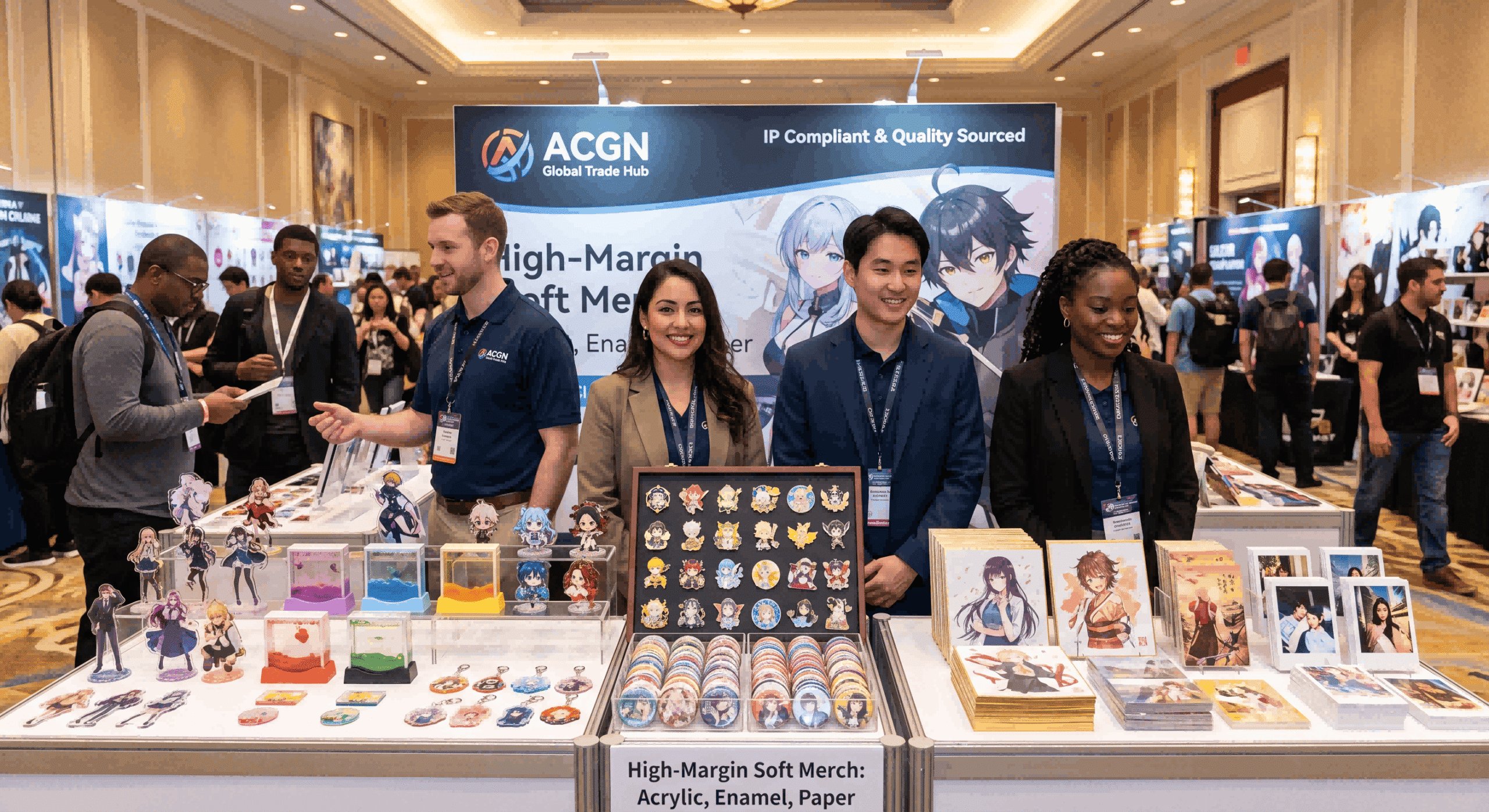
Convention purchasing is highly impulse-driven. Lightweight, visually impactful, and affordably priced “soft merchandise” dominates on-site sales.
-
Acrylic Products (Standees, Quicksand Blocks, Double-Sided Charms): These items feature mature manufacturing processes and excellent color fidelity, making them staples for ACGN consumers. Production cycles can be as short as 14 days, offering exceptional profit margins and easy display setups.
-
Enamel Pins & Tinplate Badges: Tinplate badges feature low production costs and rapid turnaround times, making them excellent low-barrier lead generators. Metal enamel pins offer premium tactile quality and collectibility, commanding high price premiums in Western markets.
-
Miniature Paper Goods (Shikishi Boards, Postcards, Instax-style Art Prints): These items require minimal display space and carry negligible shipping weight. Due to their visual appeal, their profit margins frequently exceed 80%.
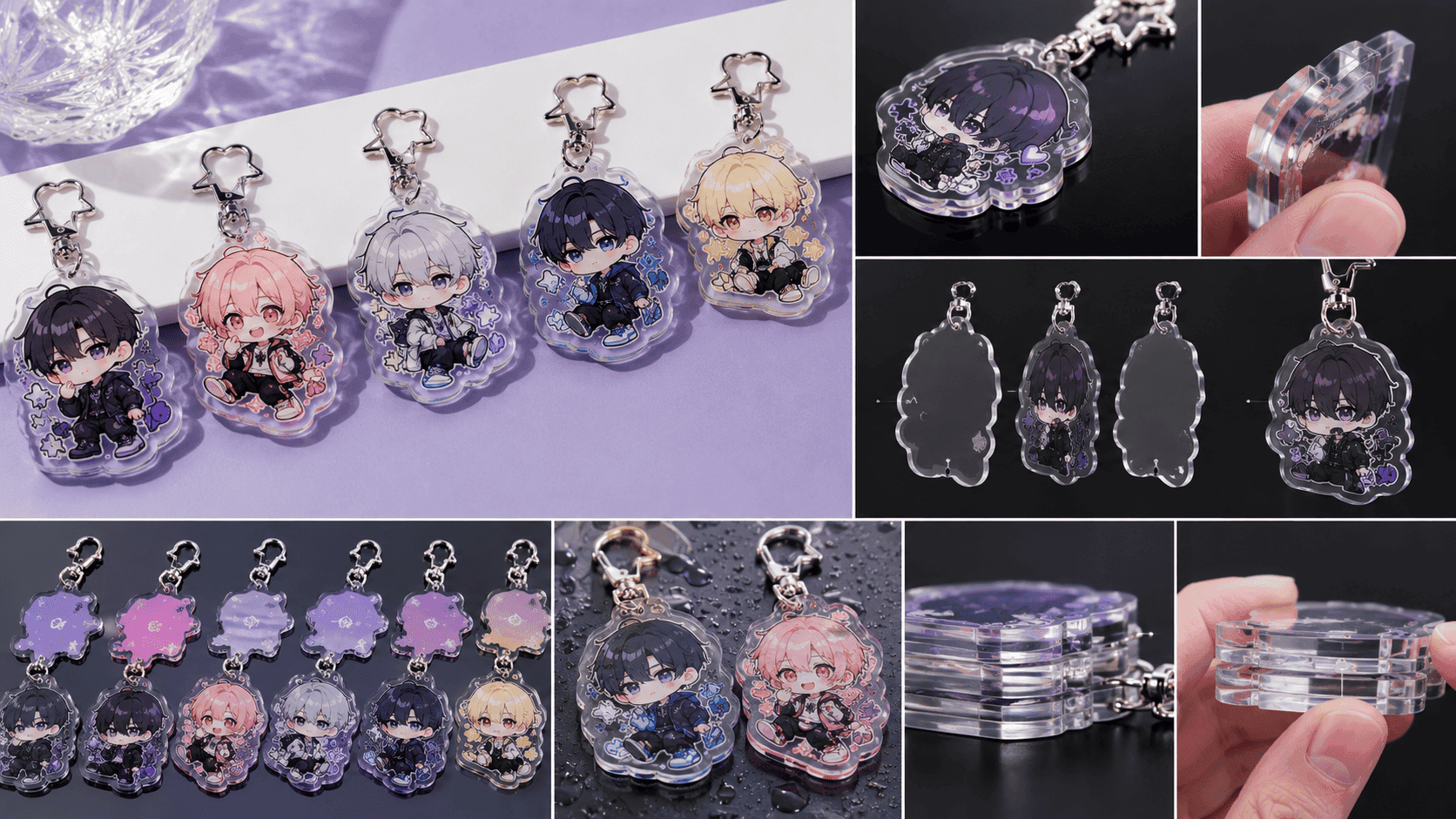
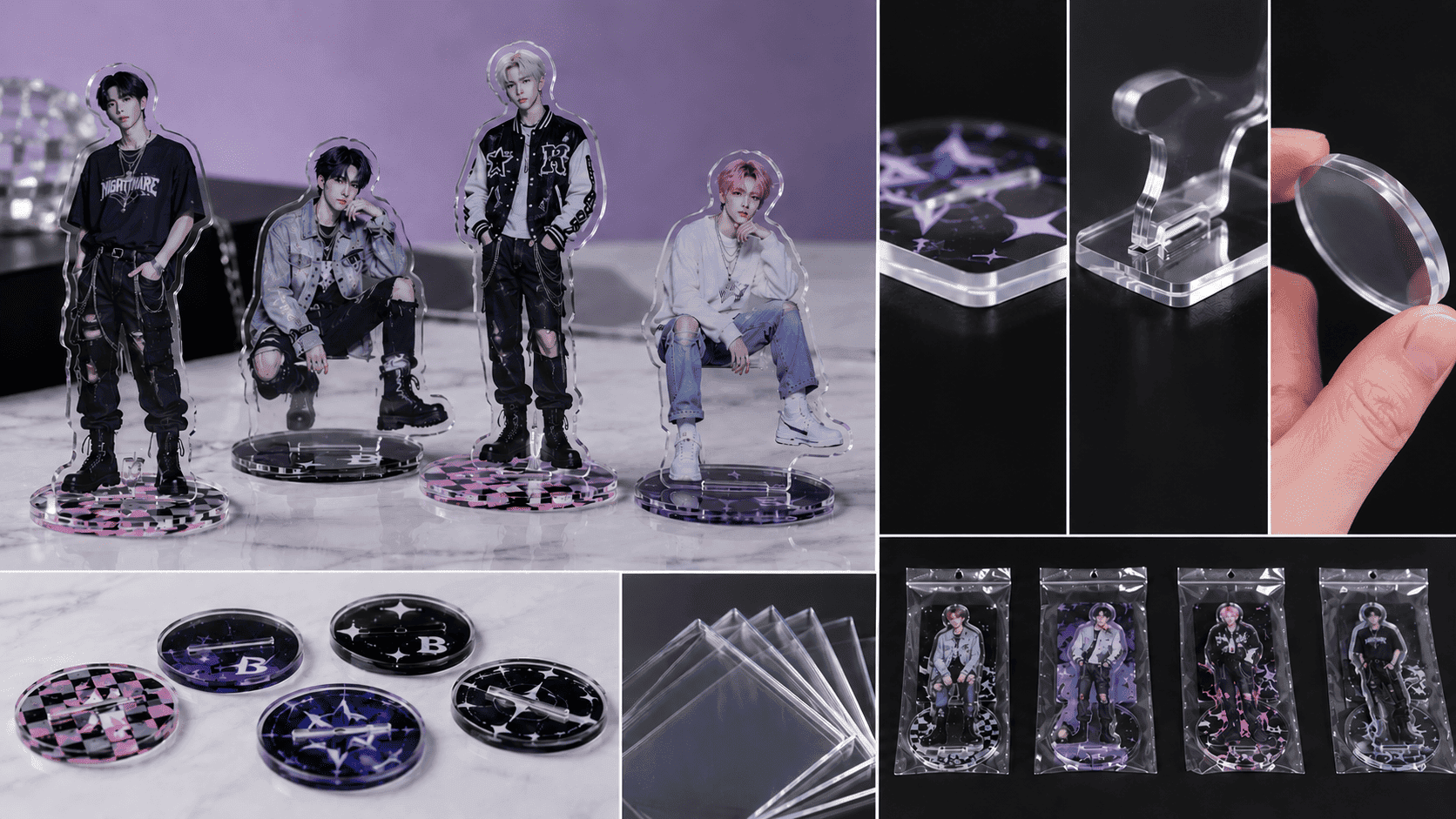
[Merchandise Tier List by Margin & Logistics]

High Margin / Low Freight  --> Paper Goods (Shikishi, Prints) & Acrylics (Standees, Charms)

High Premium / Mid Freight --> Metal Enamel Pins & Collectibles

Low Barrier / High Volume  --> Tinplate Badges (Lead Generators)
Industry experience shows that initial production runs for individual designs should remain conservative. While metal badges carry high tooling mold fees—setting their Minimum Order Quantity (MOQ) between 50 to 100 pieces—acrylic charms and standees can be stocked at 20 to 30 units per design. Instead of ordering large volumes of a single design, exhibitors can maximize sales by offering a wide visual matrix (e.g., 60+ unique charm designs or 80+ unique pin designs), which effectively increases the average transaction value and offsets fixed booth costs.
2. Strict Copyright Guidelines: The MiHoYo Fan-Merchandise Model
Copyright holders are increasingly monitoring fan-made and commercial merchandise through digital and structured frameworks. MiHoYo—the developer behind global mega-IPs like Genshin Impact, Honkai: Star Rail, and Zenless Zone Zero—sets the industry benchmark for fan-merchandise compliance. Their policy implements a tiered management structure for online and offline sales:
-
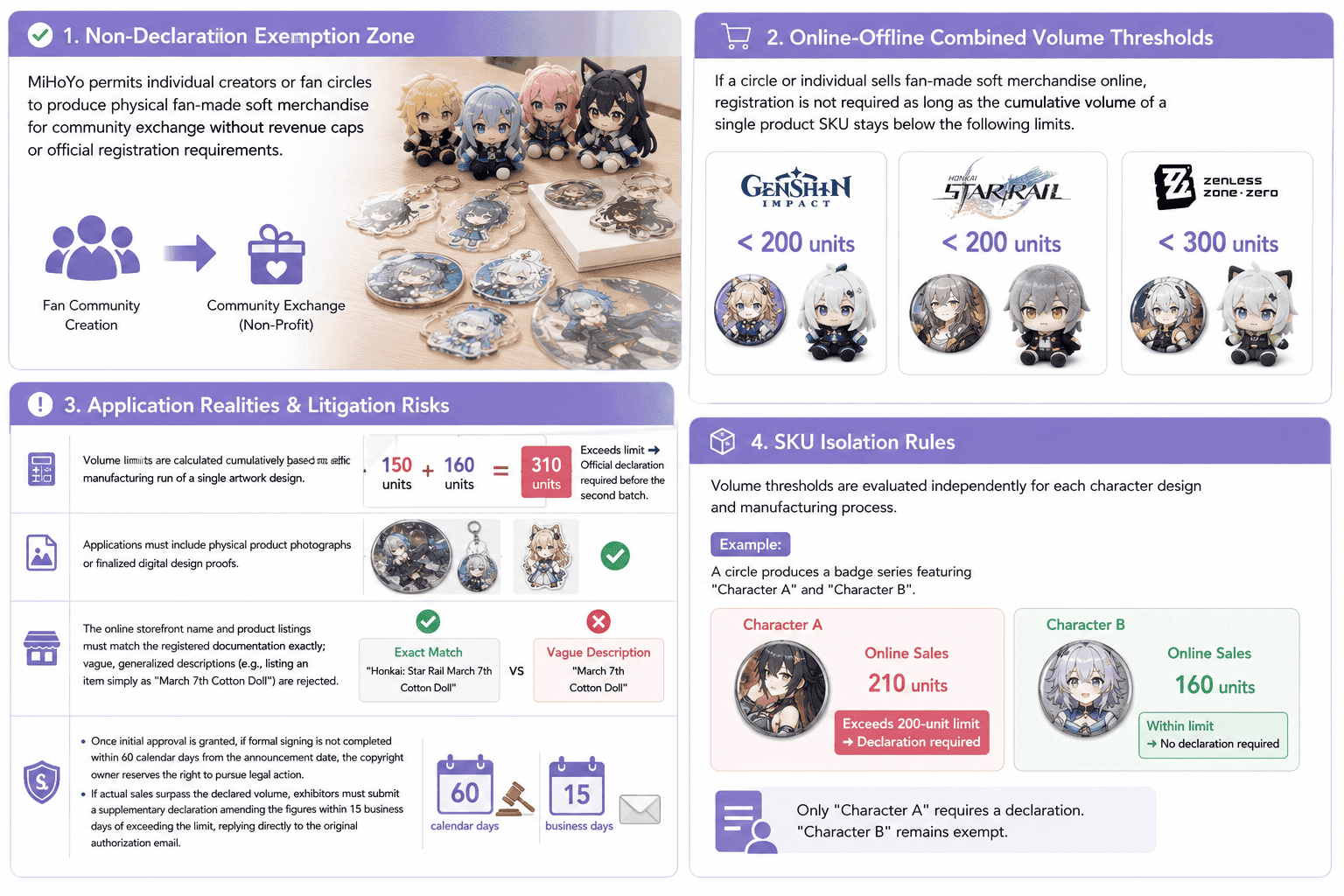
Non-Declaration Exemption Zone: MiHoYo permits individual creators or fan circles to produce physical fan-made soft merchandise for community exchange without revenue caps or official registration requirements.
-
Online-Offline Combined Volume Thresholds: If a circle or individual sells fan-made soft merchandise online, registration is not required as long as the cumulative volume of a single product SKU stays below 200 units (for Genshin Impact and Honkai: Star Rail) or 300 units (for Zenless Zone Zero). If planned or actual sales volumes breach these limits, the creator must initiate an official fan-merchandise authorization application.
-
Application Realities & Litigation Risks: Volume limits are calculated cumulatively based on the specific manufacturing run of a single artwork design. For example, if a creator prints an initial batch of 150 badges using a specific character design and later orders a second batch of 160 badges, the cumulative volume reaches 310 units—requiring an official declaration prior to printing the second batch.
-
Applications must include physical product photographs or finalized digital design proofs. The online storefront name and product listings must match the registered documentation exactly; vague, generalized descriptions (e.g., listing an item simply as “March 7th Cotton Doll”) are rejected.
-
Once initial approval is granted, if formal signing is not completed within 60 calendar days from the announcement date, the copyright owner reserves the right to pursue legal action. If actual sales surpass the declared volume, exhibitors must submit a supplementary declaration amending the figures within 15 business days of exceeding the limit, replying directly to the original authorization email.
-
-
SKU Isolation Rules: Volume thresholds are evaluated independently for each character design and manufacturing process. For instance, if a circle produces a badge series featuring “Character A” and “Character B,” and the online sales for “Character A” reach 210 units (exceeding the 200-unit cap) while “Character B” stands at 160 units (below the cap), the circle is only required to file a declaration for the “Character A” badge. “Character B” remains exempt.
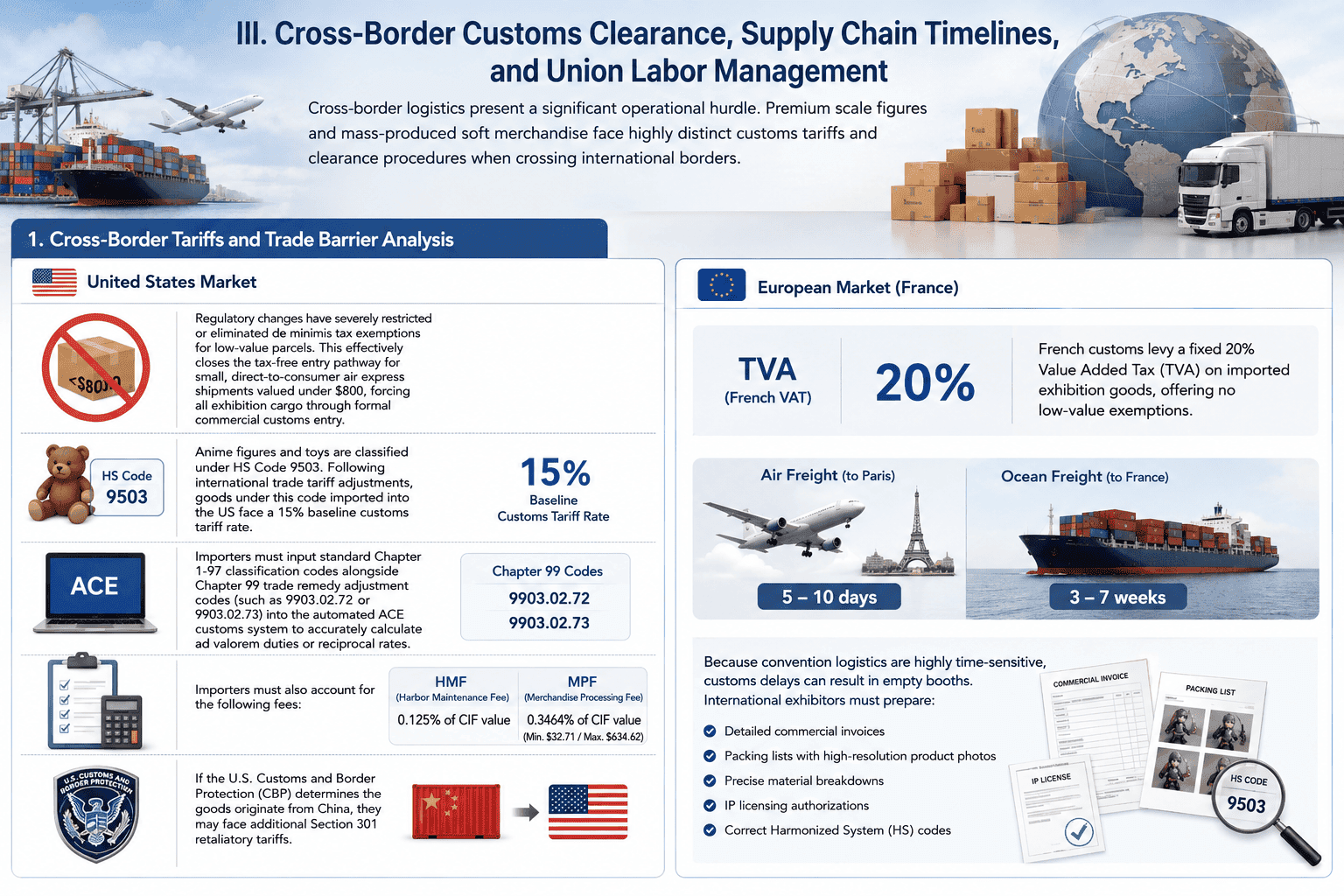
III. Cross-Border Customs Clearance, Supply Chain Timelines, and Union Labor Management
Cross-border logistics present a significant operational hurdle. Premium scale figures and mass-produced soft merchandise face highly distinct customs tariffs and clearance procedures when crossing international borders.
1. Cross-Border Tariffs and Trade Barrier Analysis
-
United States Market: Regulatory changes have severely restricted or eliminated de minimis tax exemptions for low-value parcels. This effectively closes the tax-free entry pathway for small, direct-to-consumer air express shipments valued under $800, forcing all exhibition cargo through formal commercial customs entry.
-
Anime figures and toys are classified under HS Code 9503. Following international trade tariff adjustments, goods under this code imported into the US face a 15% baseline customs tariff rate.
-
Importers must input standard Chapter 1-97 classification codes alongside Chapter 99 trade remedy adjustment codes (such as 9903.02.72 or 9903.02.73) into the automated ACE customs system to accurately calculate ad valorem duties or reciprocal rates.
-
Importers must also account for the Harbor Maintenance Fee (HMF, 0.125% of CIF value) and the Merchandise Processing Fee (MPF, 0.3464%, with a minimum of $32.71 and a maximum of $634.62). If the U.S. Customs and Border Protection (CBP) determines the goods originate from China, they may face additional Section 301 retaliatory tariffs.
-
-
European Market (France): French customs levy a fixed 20% Value Added Tax (TVA) on imported exhibition goods, offering no low-value exemptions. Customs clearance via air freight into Paris typically takes 5 to 10 days, while ocean freight requires 3 to 7 weeks. Because convention logistics are highly time-sensitive, customs delays can result in empty booths. International exhibitors must prepare detailed commercial invoices and packing lists featuring high-resolution product photos, precise material breakdowns, IP licensing authorizations, and correct Harmonized System (HS) codes.
2. Backward-Scheduled Logistics and On-Site Deployment Timeline
To guarantee that all merchandise and booth materials arrive safely ahead of setup day, exhibitors must implement an inverted timeline tied to official warehouse delivery windows:
[60+ Days Out: Docs & Compliance] --> [30+ Days Out: QA & Advanced Whse] --> [25 Days Out: NOI/COI Filing] --> [14 Days Out: Palletization] --> [Day 1: Hand-Carry / Move-In]
-
60+ Days Before Day 1:
-
Core Tasks: Review the Exhibitor Service Manual (ESM) in detail. Verify destination customs regulations, and begin preparing export documentation and customs clearance manifests.
-
Compliance Requirements: Clarify venue regulations regarding custom booth restrictions, height limitations, fire codes, and electrical capacities. If hiring an Exhibitor Appointed Contractor (EAC), secure a Certificate of Insurance (COI) demonstrating at least $1,000,000 in general liability coverage.
-
-
30+ Days Before Day 1:
-
Core Tasks: Finalize mass manufacturing runs and conduct secondary quality assurance. Arrange cross-border shipping, routing freight directly to the convention’s officially designated Advance Warehouse (such as specialized logistics providers like Juujbox or Freeman).
-
Compliance Requirements: Never ship cargo directly to the convention center venue floor or personal hotel accommodations ahead of schedule; these locations will reject unsolicited deliveries. Ensure all exterior cartons carry official labels detailing the exhibitor name, booth number, and box sequence count.
-
-
25 Days Before Day 1:
-
Core Tasks: Confirm on-site service orders via the official exhibitor portal, including temporary electrical drop hookups, carpet rentals, booth cleaning, and dedicated event Wi-Fi access.
-
Compliance Requirements: Formally submit the Notice of Intent (NOI) to the organizers and upload the contractor’s COI credentials. Late submissions will result in setup crews being denied venue entry, delaying construction.
-
-
14 Days Before Day 1:
-
Core Tasks: Finalize exterior palletization and structural strapping of cargo to ensure goods withstand long-haul transit and forklift handling. Monitor the tracking status of air or ocean customs clearance.
-
Compliance Requirements: Double-check the HS codes of all outgoing goods. Confirm if specialized materials (such as timber accents, integrated electronics, or chemical paints) require supplementary safety data sheets or technical compliance certificates.
-
-
Move-In Day (Day 1):
-
Core Tasks: Ensure operations personnel arrive at the venue during their assigned Target Move-In Window. Check in at the General Service Contractor (GSC) desk to confirm that freight forwarded to the advance warehouse has been successfully delivered to the booth space.
-
Compliance Requirements: If self-hauling a small volume of products into the hall, strictly adhere to hand-carry regulations (unassisted, single-trip, via the main lobby entrance) without using rolling carts. Inspect temporary electrical lines and verify display heights match local regulations.
-
-
Show Days:
-
Core Tasks: Restock booth displays early each morning before doors open. Monitor real-time sales velocities of high-demand items to adjust post-convention allocations or online marketing strategies if stock runs low.
-
Compliance Requirements: Keep physical or digital copies of local retail permits (e.g., California Seller’s Permit) prominently displayed at the booth for potential inspections by tax officials. Vacate the show floor within designated hours after closing time; unauthorized loitering is prohibited.
-
-
Move-Out / Teardown:
-
Core Tasks: Perform a final inventory count of sold and remaining assets. Complete and submit Outbound Material Handling Agreements (Bills of Lading/Drayage Forms) to the service desk.
-
Compliance Requirements: Pack and secure remaining stock or returning booth components onto pallets, attaching outbound shipping labels, and staging them in designated pick-up zones. Document the finalized booth condition with photographs to protect against subsequent disputes regarding carpet damage or left-behind debris fees.
-
IV. Source Supply Chain Engagement, Payment Terms, and Quality Control
Competitiveness in the anime derivative space depends on supply chain responsiveness and manufacturing precision. Exhibitors must navigate vendor networks and secure favorable terms with source factories.
1. Industrial Manufacturing Clusters and Sourcing Channels
In China, ACGN derivative manufacturing exhibits distinct geographic clustering:
-
Acrylic and Tinplate Manufacturing: The premier hubs are located in Guangdong Province (Shenzhen, Dongguan, and the Panyu District of Guangzhou). Due to their proximity to the primary supply lines of tech giants like Tencent, NetEase, and MiHoYo, these factories excel at precise color management (e.g., managing transparency levels and eliminating air bubbles in quicksand items) and support low-volume prototyping.
-
Metal Enamel Pins and Keychains: Production is concentrated in Zhongshan City (Xiaolan and Gangkou towns) within Guangdong Province, as well as Cangnan County in Wenzhou City, Zhejiang Province. Wenzhou facilities offer significant cost advantages for massive high-volume runs, while Zhongshan factories deliver superior precision in multi-color enamel filling and complex die-cast electroplating.
-
Plush Toys and Ita-Bags: Sourcing is clustered in Yangzhou City, Jiangsu Province (the plush manufacturing capital) and Dongguan City, Guangdong Province.
Sourcing Strategy Tip: Beyond traditional B2B e-commerce directories, exhibitors can discover vetted, white-label manufacturers by attending major trade events like the Shenzhen International Licensing Merchandise Fair or the China Toy Expo (CTE) in Shanghai, or by tapping peer-reviewed supplier lists within creator communities like the Artist Alley Network on Discord.
2. Quality Assurance and Technical Manufacturing Specifications (QA/QC)
Anime merchandise demands exact translation of character artwork. Structural defects and visual errors typically occur when converting digital designs into physical production formats.
-
Color Space Conversion: Designers typically export digital files in the screen-based RGB spectrum, whereas manufacturing machinery (such as UV flatbed printers or offset presses) operates on physical CMYK four-color inks. Prior to factory submission, designers must execute color space conversions, checking for shifts or muting in highly saturated tones (such as neon or iridescent gradients) under CMYK output.
-
Bleed Lines and White-Underlay Choking: For acrylic standees and charms, cutting files must include a 1.5mm to 2.0mm bleed margin to prevent raw edge clipping during high-precision laser cutting. Furthermore, double-sided acrylic designs require a white opaque mid-layer to prevent back-to-front light bleeding. This white underlay vector layer must be “choked” (shrunk inward) by 0.1mm to 0.2mm to prevent white ink bleeding past the colored borders.
-
Specialty Finish Layering: When specifying spot finishes like metallic foil stamping, dimensional spot UV coatings, or phosphorescent glow-in-the-dark paint, the production files must separate these effects into isolated, distinct vector layers (typically rendered in solid 100% Process Black, K100) to allow accurate mold and plate fabrication.
3. Commercial Negotiations, Credit Terms, and Lead-Time Integration
Under the high-pressure environment of international event deadlines, structured payment milestones mitigate supply chain disruption risks.
For unverified, new factory relationships, the standard commercial payment structure is 50% T/T advance deposit + 50% T/T balance due upon passing quality control inspection. Balance payments should be withheld until a randomized batch inspection confirms the shipment meets quality standards. As relationships mature, exhibitors can negotiate more favorable credit terms, such as Net 15 to Net 30 day terms, or reduce initial deposit thresholds down to 30%.
Production lifecycles vary significantly across different product categories. Exhibitors can map out their manufacturing lead times using the following formula:
-
Acrylic Items: Standard mass production requires 10 to 15 days.
-
Plush Toys: Sourcing fabrics, executing computer embroidery, fabric die-cutting, sewing, and manual stuffing typically requires 30 to 45 days.
-
Enamel Pins: The most complex process—involving custom steel die-engraving, heavy stamping, manual multi-color enamel filling, high-temperature baking, and hand polishing—demands a 30 to 60-day manufacturing window.
Note: If production schedules overlap with major holidays like Chinese New Year, when factory labor forces travel early, exhibitors must factor in at least an additional 30 days of supply chain buffer.
V. Conclusion and Strategic Recommendations
In the modern, highly institutionalized ACGN landscape, exhibitors must balance defensive compliance with offensive supply chain strategies.
-
Front-Load All Compliance Cost Calculations: Do not attempt to sell at North American or European conventions without proper local seller’s permits, or attempt to bypass union labor rules in heavily regulated venues. On-site citations, booth closures, and retroactive union labor penalties can completely erase event profitability.
-
Establish Localized Supply Chain Buffers: Balance long-haul transit risks by shipping primary, high-volume inventory early via cost-effective ocean freight into regional fulfillment hubs. Concurrently, partner with one or two local, quick-turn digital print shops or acrylic fabricators near the venue to serve as an emergency backup supply chain. If an item sells out unexpectedly during the opening days, local producers can execute 24-hour express runs to capture unmet demand and maximize event revenue.
-
Strictly Monitor IP Copyright Boundaries: Independent booths and fan circles must continuously track the evolving fan-merchandise policies of major publishers like MiHoYo. Keep production targets strictly below official declaration thresholds, or secure formal approvals well in advance to establish a legally secure, long-term commercial presence.