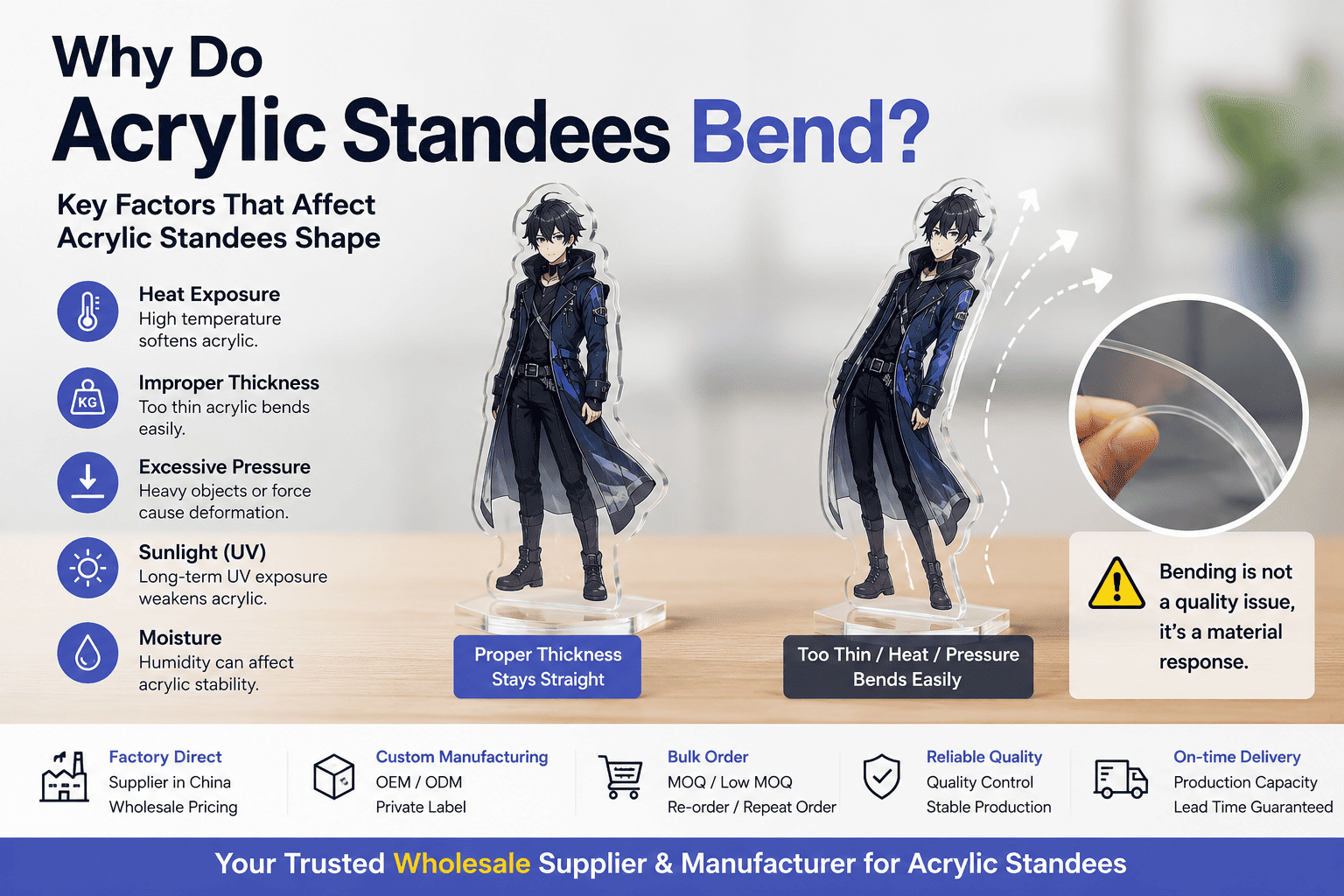
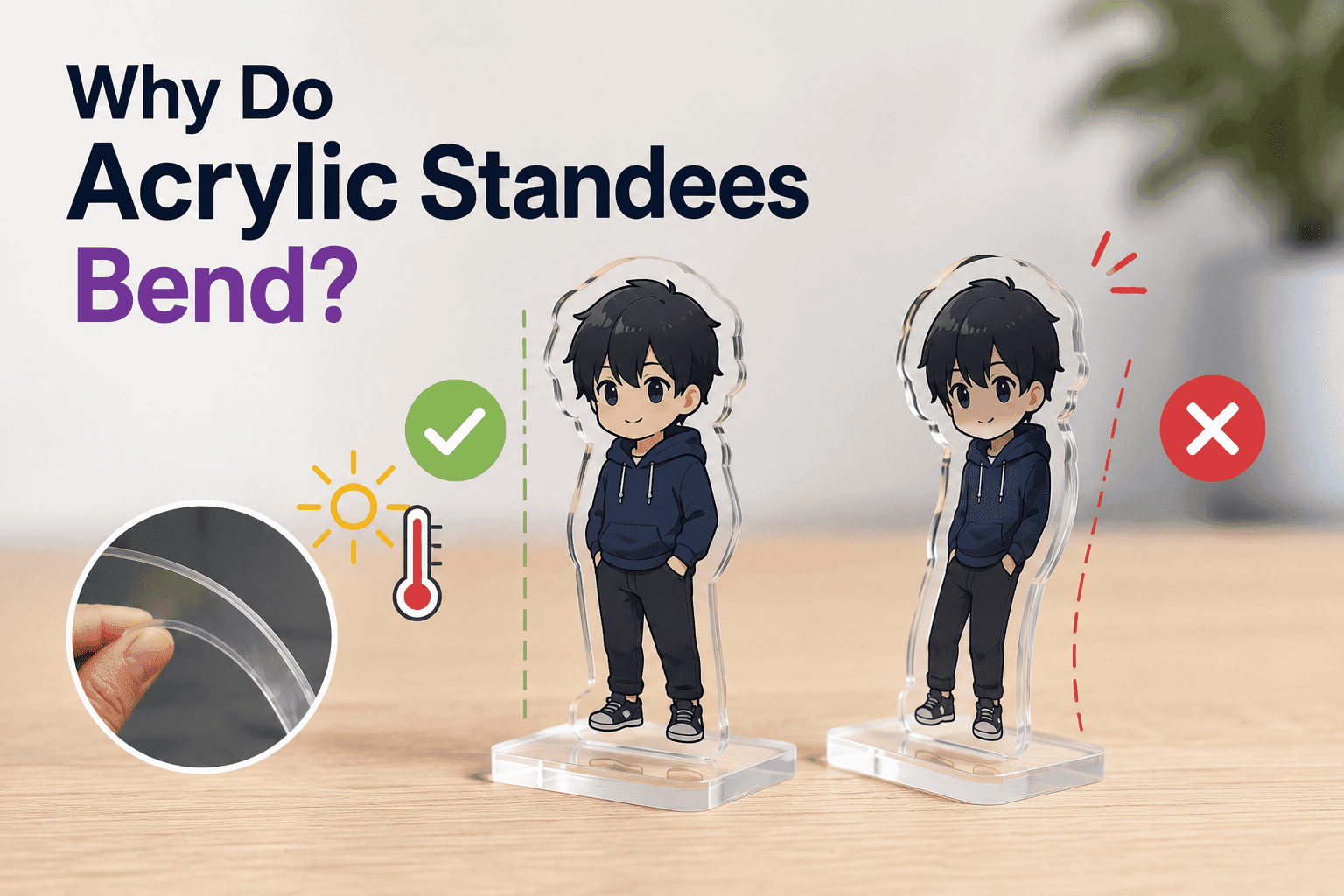
Acrylic (essentially high-grade “plastic glass”) is clear, tough, and the perfect material for an acrylic standee. However, many collectors notice that their favorite pieces “sneakily” start to bow over time. Why does this happen? Here are the major pitfalls:
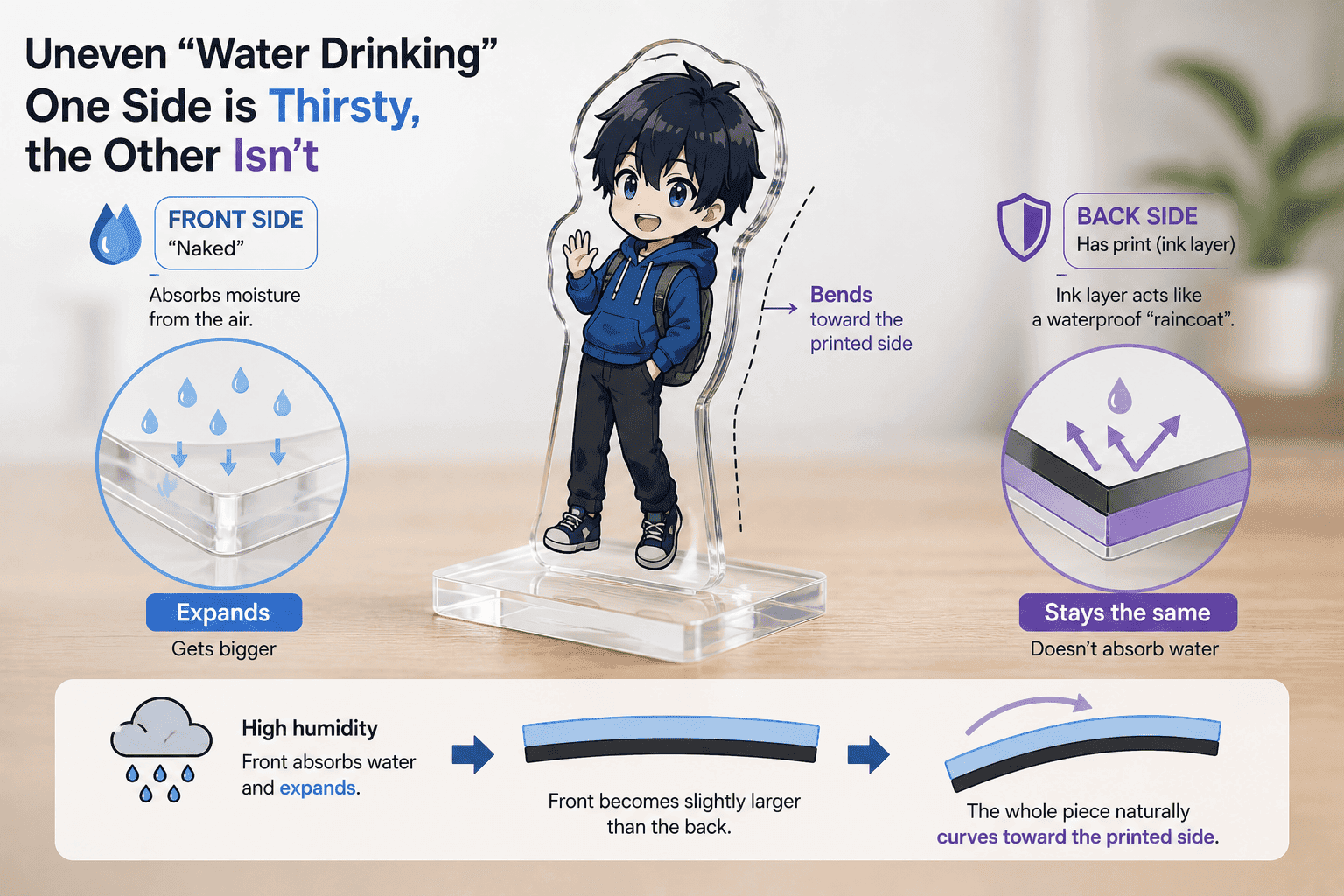
1. Uneven “Water Drinking”: One Side is Thirsty, the Other Isn’t
Even though it feels smooth, acrylic actually absorbs tiny amounts of moisture from the air. Most pieces are made using an acrylic standee printing service that applies ink to the back. This ink layer acts like a waterproof “raincoat.” The front side, however, is left “naked.” In humid weather, the front side absorbs water and expands, while the back remains the same size. Since the front becomes slightly larger than the back, the whole thing naturally curves toward the printed side.
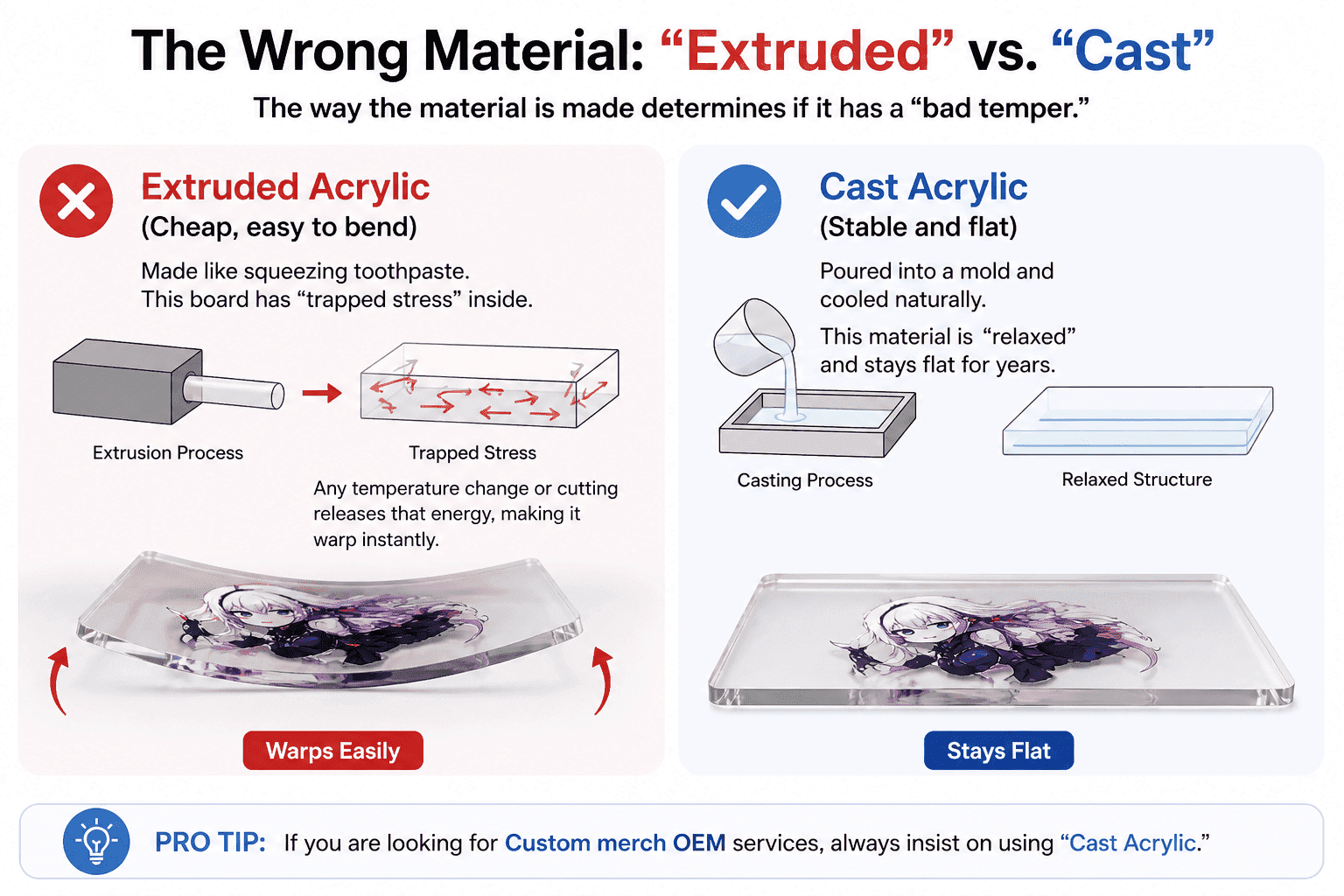
2. The Wrong Material: “Extruded” vs. “Cast”
The way the material is made determines if it has a “bad temper.”
-
Extruded Acrylic (Cheap, easy to bend): Made like squeezing toothpaste. This board has “trapped stress” inside. Any temperature change or cutting releases that energy, making it warp instantly.
-
Cast Acrylic (Stable and flat): Poured into a mold and cooled naturally. This material is “relaxed” and stays flat for years.
-
Pro Tip: If you are looking for Custom merch OEM services, always insist on using “Cast Acrylic.”
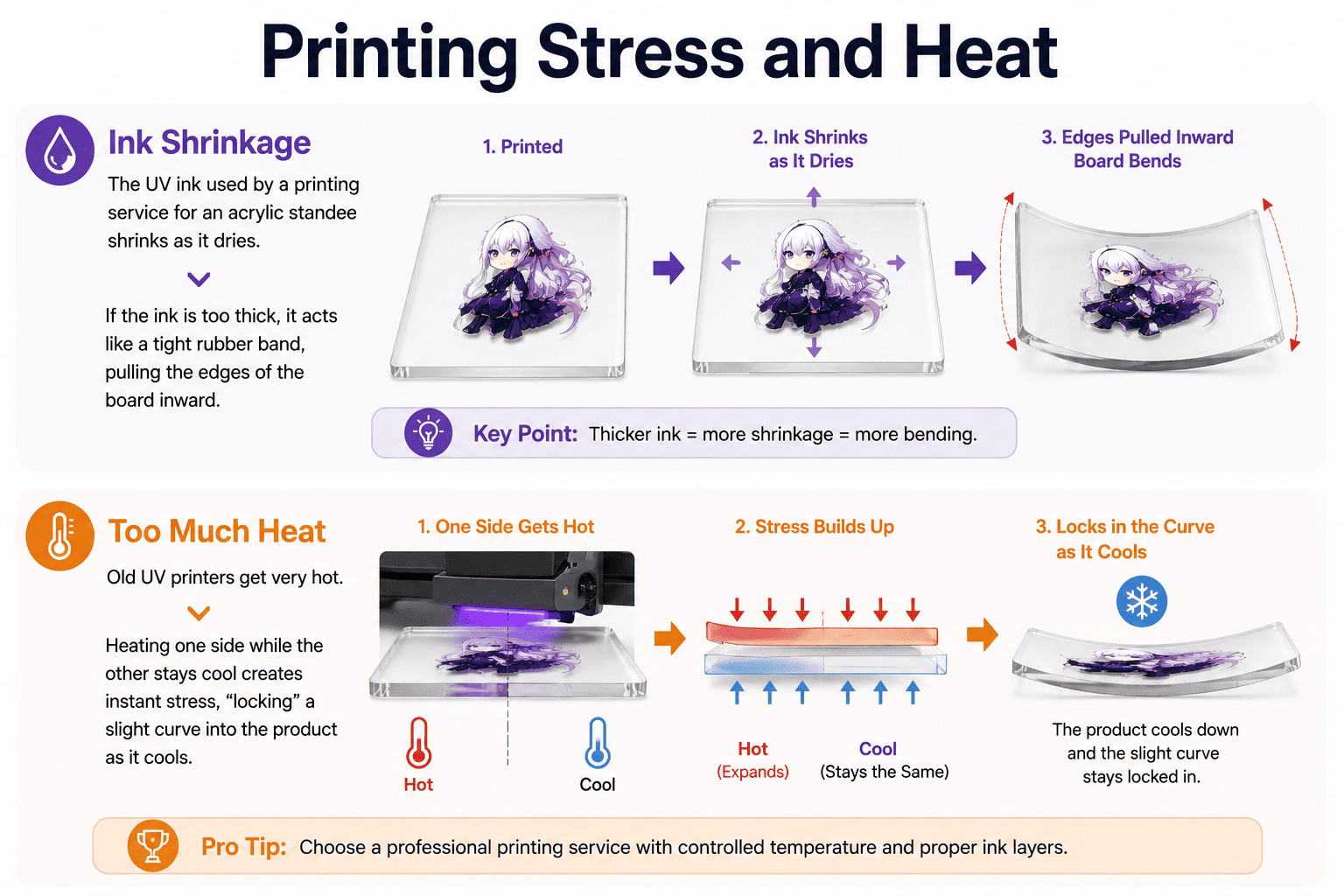
3. Printing Stress and Heat
-
Ink Shrinkage: The UV ink used by a printing service for an acrylic standee shrinks as it dries. If the ink is too thick, it acts like a tight rubber band, pulling the edges of the board inward.
-
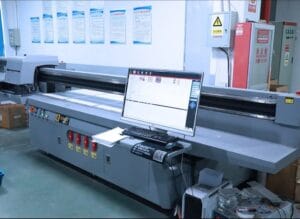
Too Much Heat: Old UV printers get very hot. Heating one side while the other stays cool creates instant stress, “locking” a slight curve into the product as it cools.
4. Too Thin or Poor Posture
-
Thickness Matters: A 3mm board is much stronger than a 2mm one. Large standees made of custom acrylic that are too thin will eventually sag under their own weight.
-
Gravity (Creep): If a piece sits in its base at a sharp angle for months, gravity will slowly pull the molecular chains apart, causing a permanent “arc” bend.
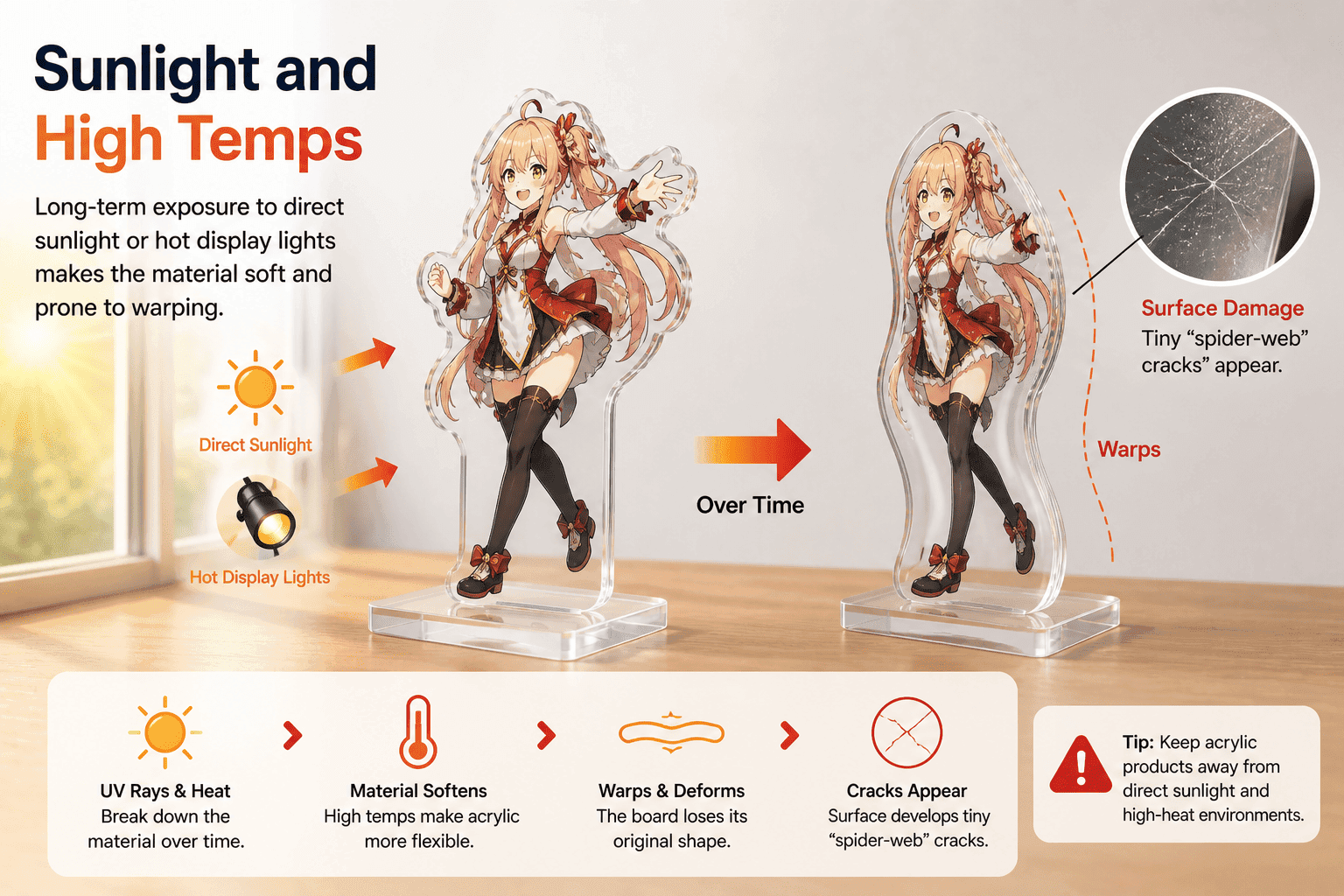
5. Sunlight and High Temps
Long-term exposure to direct sunlight or hot display lights makes the material soft and prone to warping. It can even cause the surface to develop tiny “spider-web” cracks.
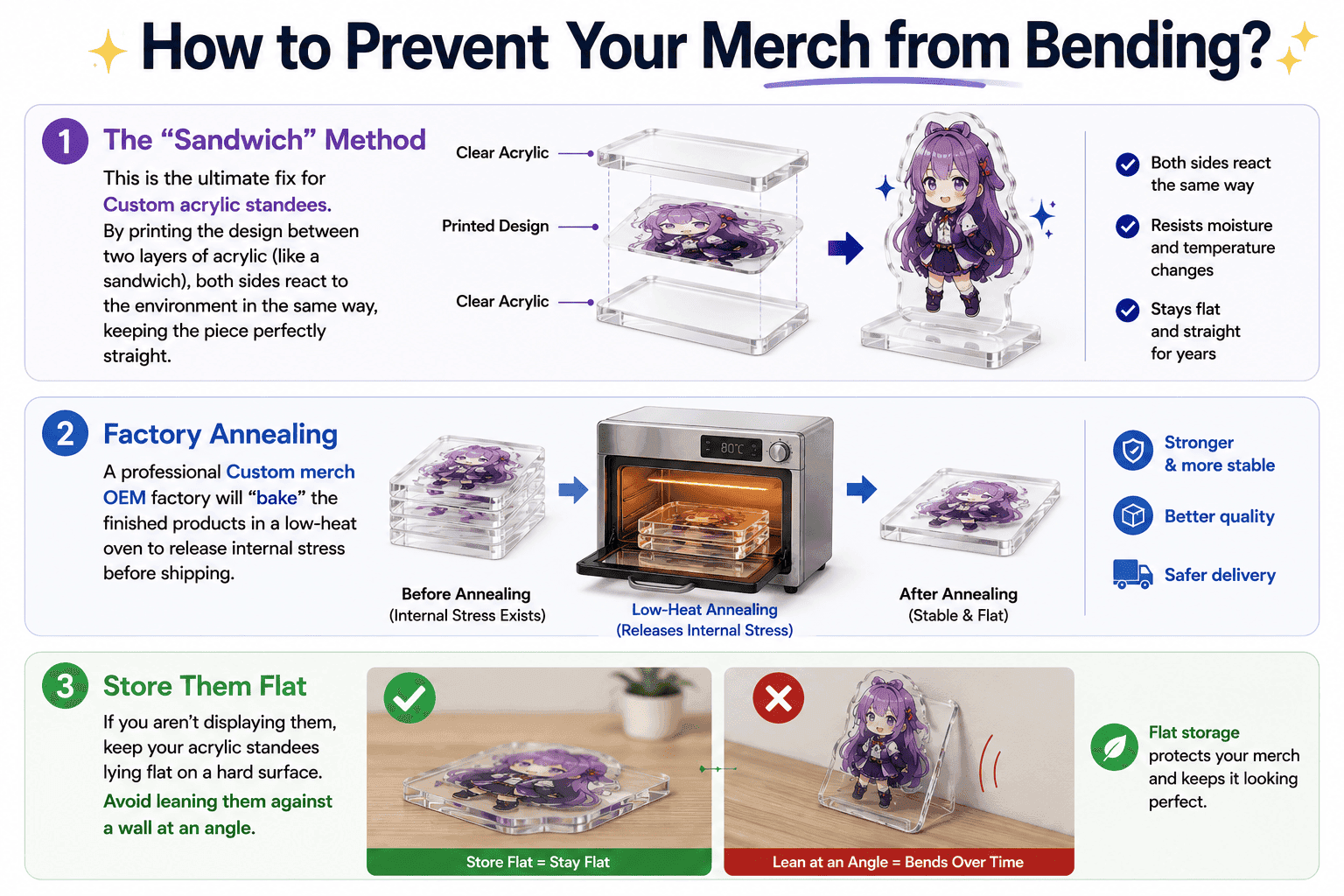
How to Prevent Your Merch from Bending?
-
The “Sandwich” Method: This is the ultimate fix for Custom acrylic standees. By printing the design between two layers of acrylic (like a sandwich), both sides react to the environment in the same way, keeping the piece perfectly straight.
-
Factory Annealing: A professional Custom merch OEM factory will “bake” the finished products in a low-heat oven to release internal stress before shipping.
-
Store Them Flat: If you aren’t displaying them, keep your acrylic standees lying flat on a hard surface. Avoid leaning them against a wall at an angle.
🛠️ Already Bent? How to Rescue It!
Because acrylic is a thermoplastic, you can “reset” its shape with a little heat.
-
The Hairdryer Method: Use a high-power dryer about 15cm away and blow evenly across the curved area. Once the material feels slightly flexible, place it on a flat table and stack some heavy books on top until it is completely cool.
-
The Hot Water Bath (Recommended): To avoid damaging the print with direct hot air, soak the bent part in 70°C (158°F) water for about 30 seconds. Once soft, take it out, press it flat under weights, and let it dry.
Final Warning: Never use “Super Glue” (502) to repair or assemble your custom acrylic pieces! It will cause the material to turn white, become brittle, and eventually crack. Always use specialized acrylic cement or neutral silicone.