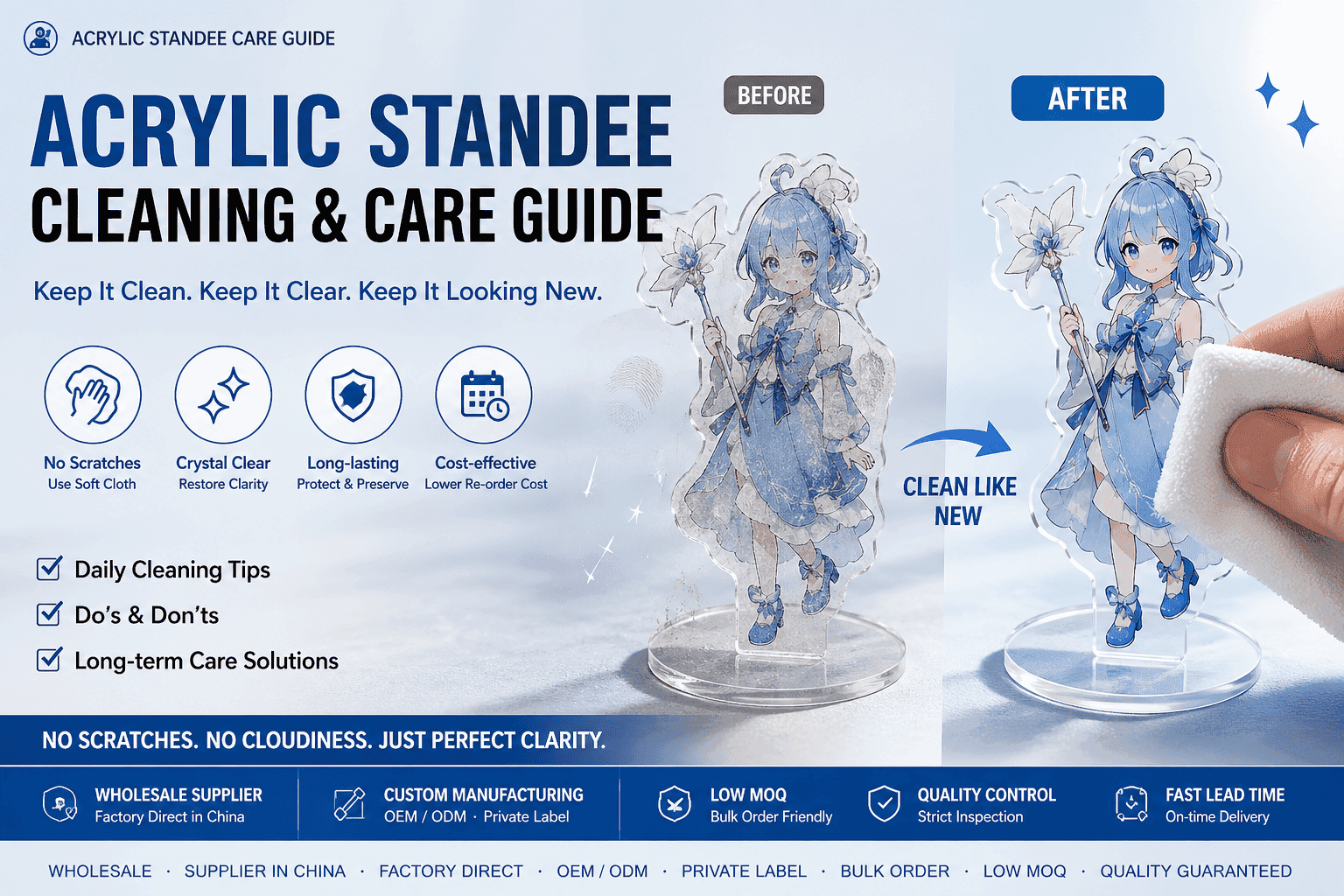
Although acrylic (PMMA) is transparent and beautiful, it is inherently more delicate than glass. It is vulnerable to alcohol, hard wiping, and static electricity. As a professional Custom merch OEM, we remind you that if mishandled, your exquisite acrylic standee will quickly become covered with fine scratches, turn yellow, or even crack.
Step Zero: Peel off the protective film first!
The very first thing to do when you receive the standee is to peel off the protective film. If left on, the film will eventually merge with the standee, the adhesive will turn yellow, and it will attract dust, causing the acrylic colors to oxidize.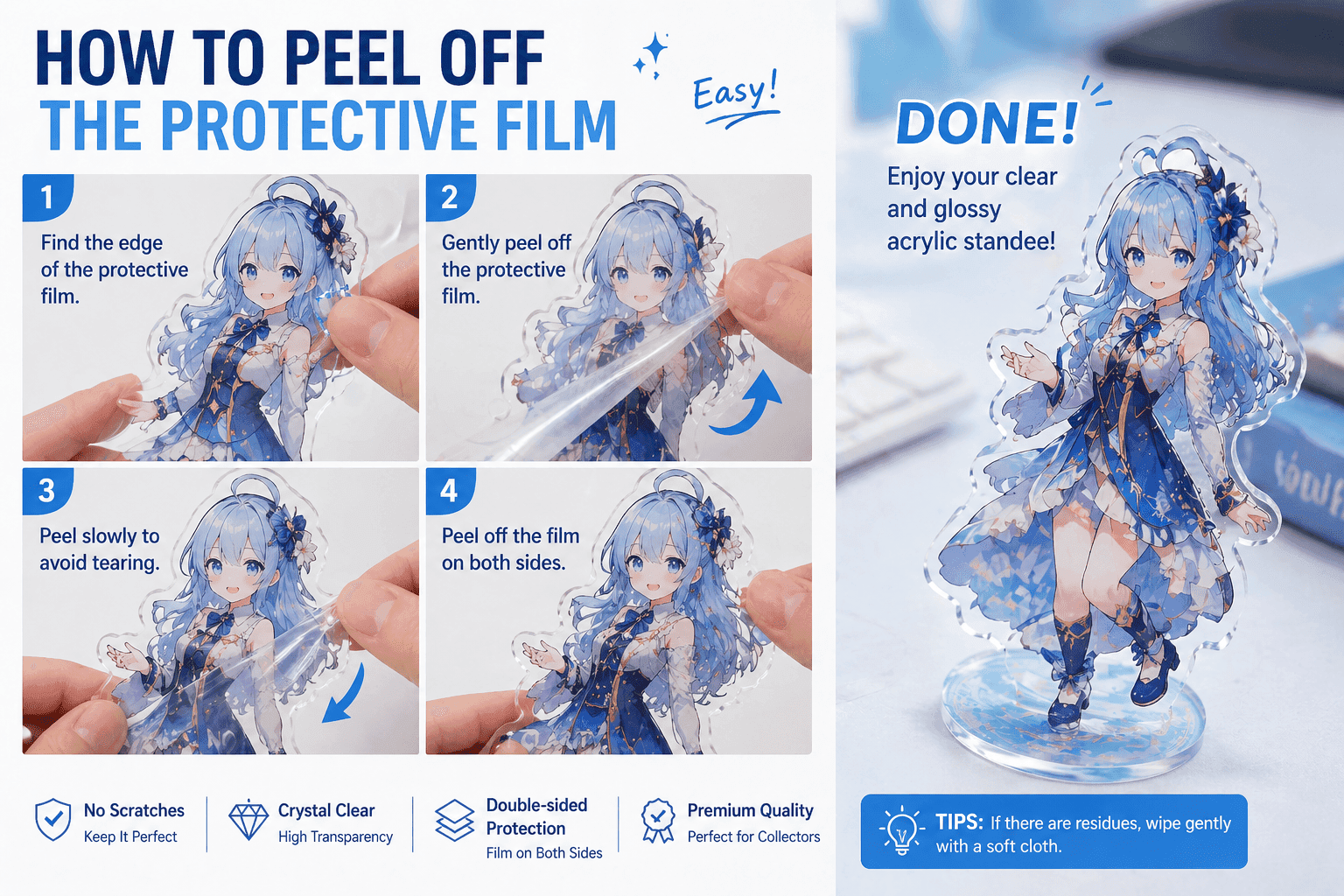
I. Core Taboos: The “Minefield” You Must Never Touch
Before starting the cleaning process, please remember to avoid these “suicidal” operations: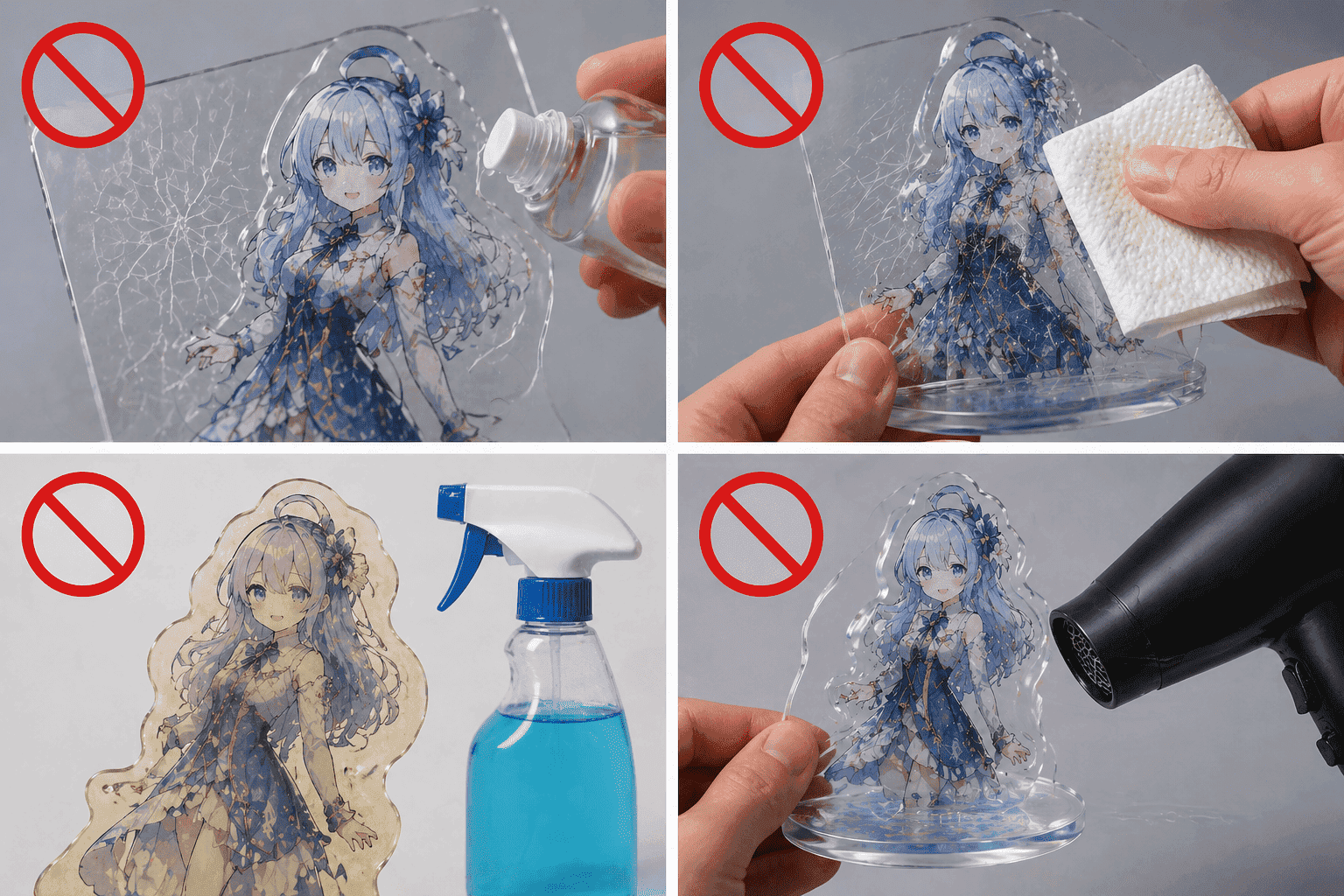
Strictly No Alcohol: Alcohol (isopropyl alcohol) will penetrate the acrylic’s microstructure, causing an instant release of internal stress, resulting in dense “crazing” or direct cracking.
Strictly No Wiping with Paper Towels: Paper towel fibers contain hard wood pulp. Under a microscope, it acts like sandpaper; wiping even once will leave a layer of fine scratches.
Strictly No Glass Cleaners/Ammonia: Cleaners containing ammonia (like some blue glass cleaners) will cause the acrylic to chemically turn yellow and become hazy.
Strictly No Direct Hot Air: Want to dry it quickly? The high temperature from a hair dryer will cause the acrylic to deform, warp, and lose its flat shape.
II. Three-Step Scientific Cleaning: Achieving Optical-Grade Flawlessness
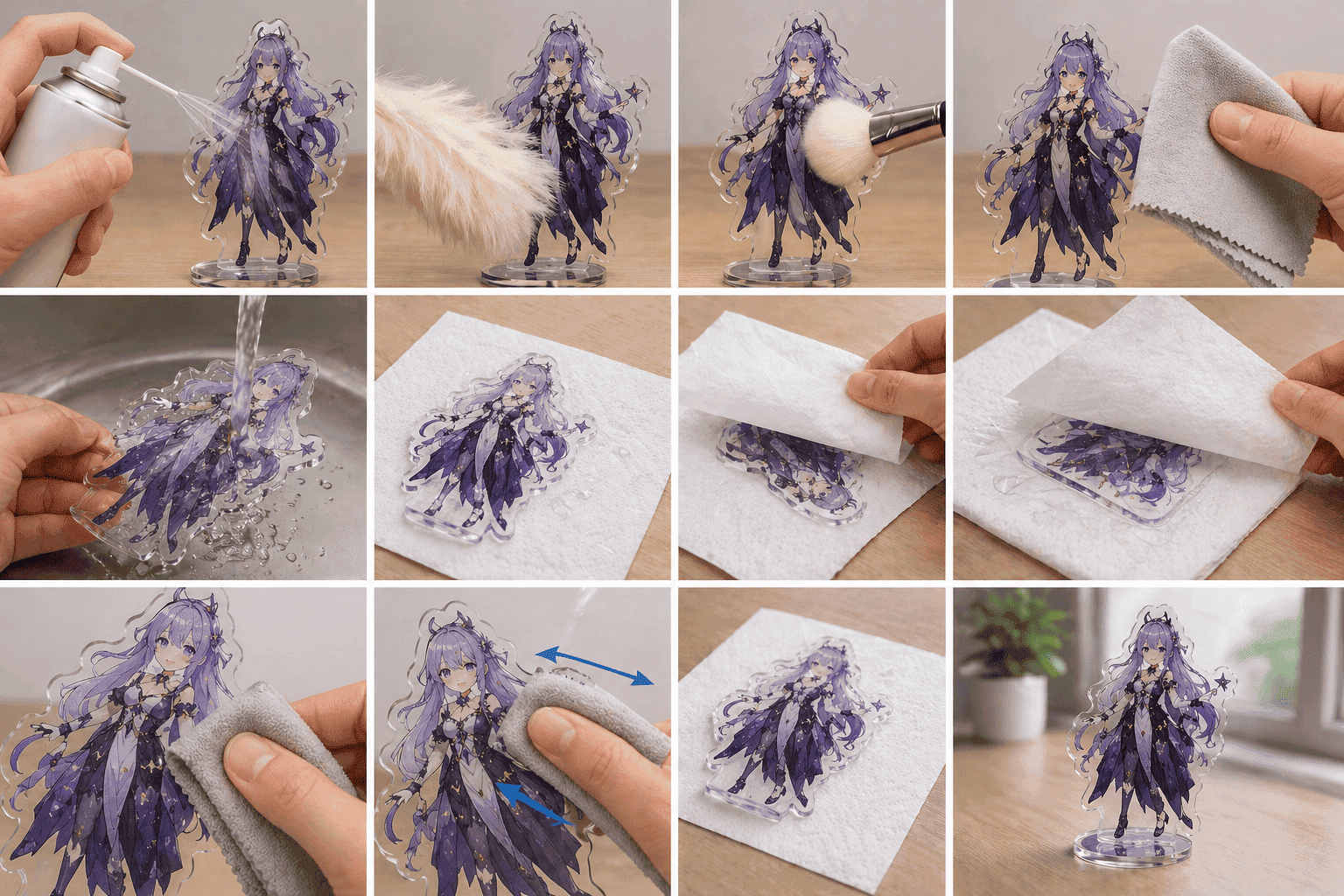
1. Physical Dust Removal (Zero Contact)
Do not wipe directly! First, use a compressed air can, a soft feather duster, glasses cloth, or a makeup brush to sweep away the surface dust. If you wipe directly, tiny sand particles in the air (which are extremely hard) will act as an abrasive and scratch the surface.
2. Traceless Rinsing and Wet Cleaning
The best and most scratch-proof method: Lay a soft facial tissue flat on the table in advance. Quickly rinse the standee with water (use purified water if available to avoid water spots), then lay it flat on the tissue to absorb the moisture. There is no need to rub; just let it sit to absorb the water. Once one side is dry, flip it over to absorb the other side. This leaves no water spots and cleans it perfectly!
For targeted stain removal (like fingerprints): Use lukewarm water with 1-2 drops of neutral dish soap and a high-density microfiber cloth. Wipe gently in a single straight direction. Do not wipe in circles! Circular motions will rub the captured dust repeatedly into the surface, creating swirl marks.
If the standee has exposed printing on the back, never rub the printed side horizontally, or the pattern will peel off. However, if you opt for a premium acrylic standee printing service that utilizes sandwich printing technology, you won’t have to worry about scratching the artwork.
3. Natural Drying (Reject Heat Sources)
After gently “absorbing” residual water drops with a dry tissue or microfiber cloth, let it air dry in a cool, ventilated place. Do not expose it to direct sunlight, and do not use a hair dryer.
III. Advanced Maintenance: Solving Yellowing and Static Electricity
Anti-Static Treatment: Acrylic is an insulator, and static from friction turns it into a “dust magnet.” It is recommended to use professional acrylic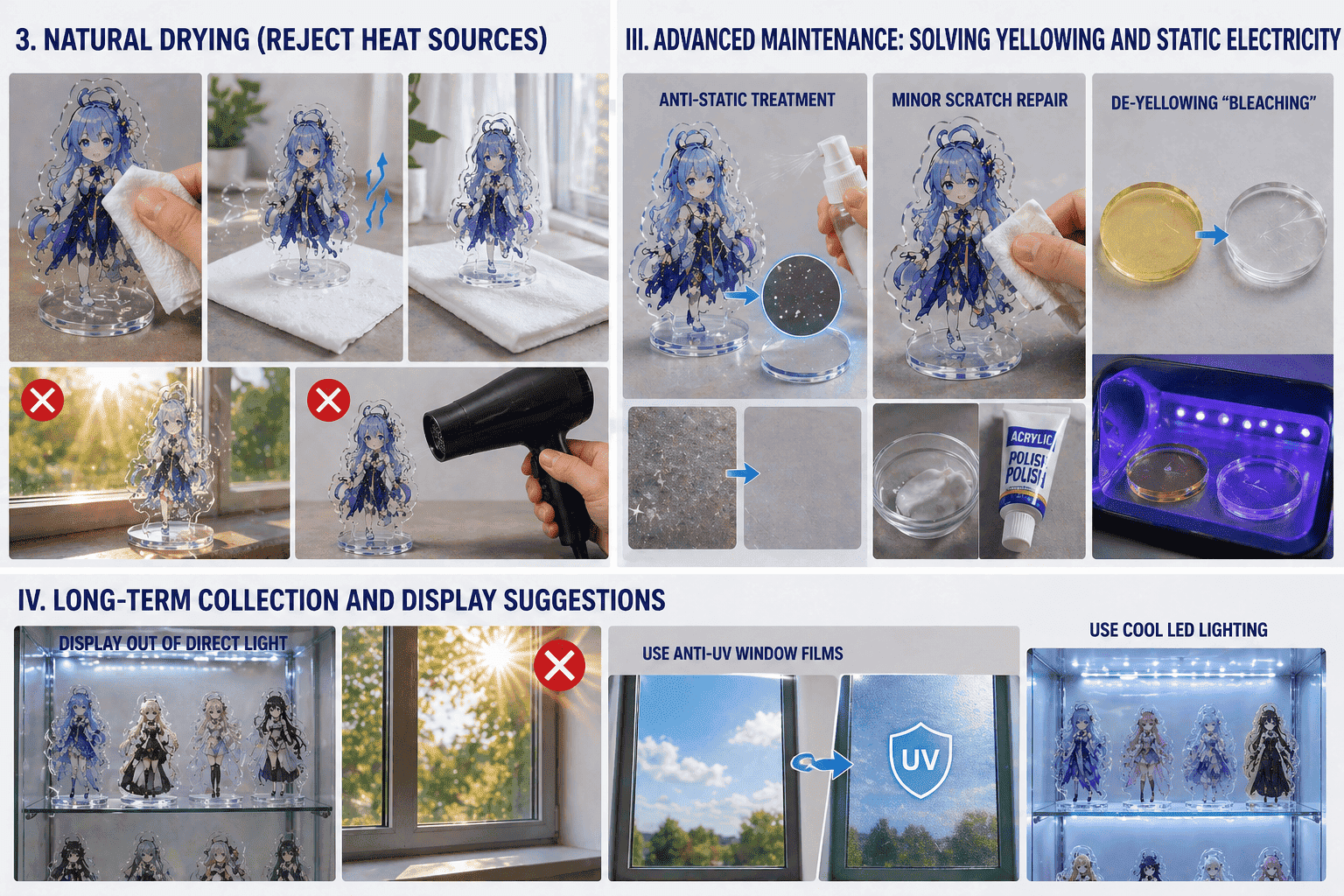 cleaners. These form a nano-level protective film, neutralizing static so dust cannot stick.
Minor Scratch Repair: If the standee already has fine scratches, mix baking soda and water into a paste and gently polish the area with a microfiber cloth, or use a professional acrylic polishing paste.
De-yellowing “Bleaching”: For old, yellowed transparent bases, apply high-concentration hydrogen peroxide (40-volume hair developer) and expose it to UV light for 4 hours. This “bleaches” the molecular chains through an oxidation-reduction reaction.
IV. Long-Term Collection and Display Suggestions
Display Out of Direct Light: Long-term direct sunlight (UV radiation) is the number one culprit for acrylic yellowing. Install anti-UV window films on display cabinets or use cool LED lighting.